Author: Paul Zalonski
Advent: a recognition of the point of the Birth of Christ
It is truly meet and just, right and available to salvation, that we should give thanks to thee, O Lord God, almighty: and that we
should, whilst invoking Thy power, celebrate the feasts of the blessed Virgin Mary; from whose womb grew the Fruit, which has filled with the Bread of angels. That Fruit which Eve took from us when she sinned, Mary has restored to us, and it has saved us. Not as the work of the serpent is the work of Mary. From the one, came the poison of our destruction; from the other, the mysteries of salvation. In the one, we see the malice of the tempter; in the other, the help of the divine Majesty. Be the one, came death to the creature; by the other the resurrection of the Creator, by whom human nature, now not captive but free, is restored; and what it lost by its parent Adam, it regained by its Maker Christ.
Saint Juan Diego
Lord God, through Saint Juan Diego You made known the love of Our Lady of Guadalupe toward Your people. Grant by his intercession that we who follow the counsel of Mary, our Mother, may strive continually to do Your will.
The Vatican biography on Saint Juan Diego and Pope John Paul’s 2002 canonization homily. Also, there is a part of the beatification homily here.
The Pope said in part at the canonization:
Happy Juan Diego, true and faithful man! We entrust to you our lay brothers and sisters so that, feeling the call to holiness, they may imbue every area of social life with the spirit of the Gospel. Bless families, strengthen spouses in their marriage, sustain the efforts of parents to give their children a Christian upbringing. Look with favor upon the pain of those who are suffering in body or in spirit, on those afflicted by poverty, loneliness, marginalization or ignorance. May all people, civic leaders and ordinary citizens, always act in accordance with the demands of justice and with respect for the dignity of each person, so that in this way peace may be reinforced.
Beloved Juan Diego, “the talking eagle”! Show us the way that leads to the “Dark Virgin” of Tepeyac, that she may receive us in the depths of her heart, for she is the loving, compassionate Mother who guides us to the true God. Amen.
Grace at work in Mary Immaculate
The privilege of Mary Immaculate does not consist solely in the absence of original sin, but much more in being “full of grace.” The Mother of Jesus gave to the world that very life which renews all things … and was enriched by God with gifts befitting such a role … She was adorned from the first instant of her conception with the splendors of an entirely unique holiness (Lumen Gentium 56).
Gabriel’s greeting, “Hail, full of grace, the Lord is with you!” is the strongest testimony of the Immaculate Conception of Mary, who would not be “full of grace” in the complete sense of the word if she had been stained by sin for a single moment.
Thus the Blessed Virgin began life with a richness of grace which far surpasses that which the greatest saints acquire at the end of their lives. When we also consider her absolute fidelity and her total availability to God, we can faintly imagine to what heights of love and communion with God she attained far beyond all other creatures in heaven and on earth (Lumen Gentium 53).
Fr. Gabriel of St. Mary Magdalen, O.C.D.
Divine Intimacy
Paying down debt to follow Christ
You wouldn’t believe it, but young people discerning a
vocation to the consecrated life and/or priesthood in the USA, today, face the
problem of debt.
Personal debt is one thing and we all have to watch our
spending. And we are the ones who to repay the credit card companies, not someone else. It is a very true experience to say that consumerism often replaces Christ as the focus of our lives.
BUT the
significant problem at hand is the amount of education debts young people have to pay
off before following the vocation given to them. Many young people went to the university, received a good education and now felt called to serve the Lord and the Church as a priest or sister and can’t because they have repay their college loans. It is the responsible thing to do. It is also the thing that will prevent someone from actually fulfilling their calling. Large college debts make a
person ineligible from entering a religious order or a diocesan formation
program. Some religious orders will make some arrangement if the debt is “reasonable”
especially if the candidate is “worthy.” Many will not because their own income is not capable to lend that kind of assistance. Again, personal debts are the responsibility
of the person. The video on the Mater Ecclesiae website (see below) speaks of grants and the tough call made in discerning who gets help, who doesn’t. These grants assist in paying off
those college debts.
Perhaps as an act of charity we could make a charitable offering
to one of the agencies helping these young men and women deal with their
educational debts. Christmas is a time for giving with love.
This article, “Debt, the Vocation Killer” gives some perspective on the matter. Plus, there are worthy organizations that help in dealing with the educational debt like the Laboure Society and Mater Ecclesiae Fund for Vocations.
Immaculate Conception of Mary
Weinandy – Tilley: disputes between theologians or the Tradition?
disputation they quickly surmise that they can be tedious, if not irrelevant.
Connections are not made for the average Catholic between relevance of a theological truth or an idea to the spiritual life and the teaching of Truth and one’s salvation. Believe it or not, theology means something. Admittedly, I don’t blame people’s reluctance to enter into the fray of the
issues because they are complicated, convoluted and cause considerable
consternation between the interlocutors. But what else would you expect from
intelligent people? Theological matters are incredibly important for the life
of the Church particularly in the realm of protecting the deposit of faith from
charlatans. I, for one, love the controversy that’s stirred up because it gets
people talking and thinking about the issues posited by Catholic theologians.
Capuchin Father Thomas G. Weinandy (Dir. of Doctrine
Committee, USCCB) thinks Dr. Terrence W. Tilley (Fordham Univ. theologian &
chair of the Dept of Theology) is on the outer limits of what theological
reflection and research legitimately allows for. Tilley believes he and others
are recovering an older theological approach (method).
has the stronger argument.
Tilley’s theological argument.pdf and Dr. Tilley’s address is found here Tilley CTSA
address 2009.pdf.
Benedictine named bishop in Chur, Switzerland: Abbot Dr. Marian Eleganti
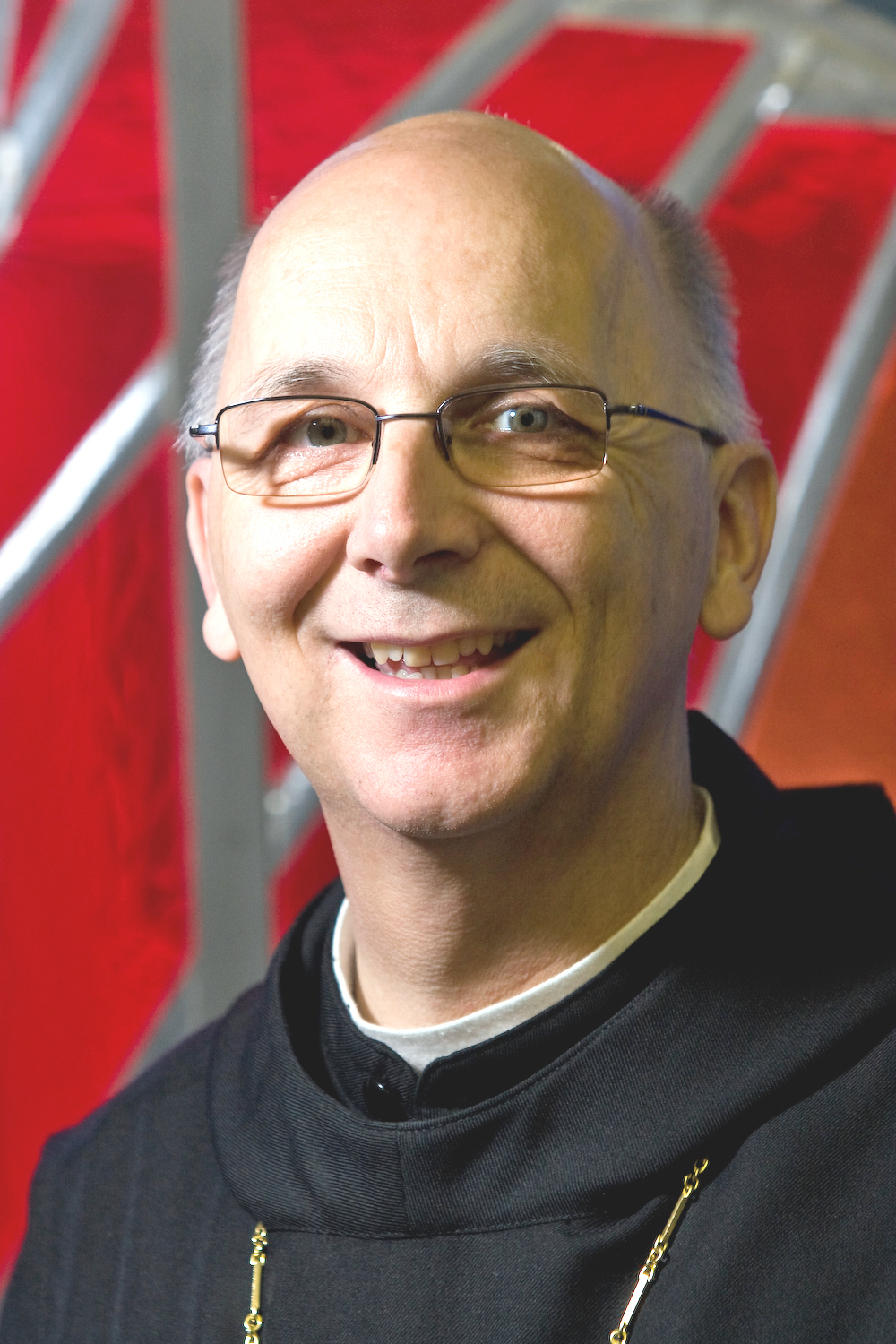
Abbot Dr. Marian Eleganti, 54, until now the Abbot of the Abbey of Saint Otmasberg (Abtei St. Otmarsberg), has been nominated by the Holy Father to be an auxiliary bishop of the Diocese of Chur, Switzerland. He was elected abbot of his monastery on 15 July 1999 and in 2003 defended a doctoral dissertation on Romano Guardini at the University of Salzburg. Abbot Marian speaks seven languages and is a published author.
The Abbey of Saint Otmasberg belongs to the Congregation of Saint Ottilien, a grouping of missionary Benedictine monks who take vows to a particular monastery as other monks do, but since mission work is their common apostolate, monks are assigned from various monasteries for this mission work in monasteries in other parts of the world. This congregation of monks have a slightly different understanding of the monastic of stability but no less vital for monasticism and for the Church. There are two monasteries of the Congregation of Saint Ottilien in the USA: Saint Paul’s Abbey (Newton, NJ) and Christ the King Priory (Schuyler, NE).
Bishop-elect Marian is one of 32 Benedictine monks ordained to the episcopacy worldwide.
May God grant many years to Bishop-elect Marian and may Saint Ambrose sustain the bishop with his prayers. So, we pray for Abbot Marian and for his Benedictine community who will now prepare to elect a new abbot.
Saint Ambrose
The Liturgy’s prayer for Saint Ambrose may be found here.
But lest perchance any one should speak against as it were
the littleness of the Spirit and from this should endeavour to establish a
difference in greatness, arguing that water seems to be but a small part of a
Fount, although examples taken from creatures seem by no means suitable for
application to the Godhead; yet lest they should judge anything injuriously
from this comparison taken from creatures, let them learn that not only is the Holy
Spirit called Water, but also a River, as we read: “From his belly shall flow
rivers of living water. But this He said of the Spirit, Whom they were
beginning to receive, who were about to believe in Him” (Jn 7:38-39).
So, then,
the Holy Spirit is the River, and the abundant River, which according to the
Hebrews flowed from Jesus in the lands, as we have received it prophesied by
the mouth of Isaiah (Is 66:12). This is the great River which flows always and
never fails. And not only a river, but also one of copious stream and
overflowing greatness, as also David said: “The stream of the river makes glad
the city of God.
For neither is that city, the heavenly Jerusalem, watered by
the channel of any earthly river, but that Holy Spirit proceeding from the
Fount of Life, by a short draught of Whom we are satiated, seems to flow more
abundantly among those celestial Thrones, Dominions and Powers, Angels and
Archangels, rushing in the full course of the seven virtues of the Spirit. For
if a river rising above its banks overflows, how much more does the Spirit, rising
above every creature, when He touches the as it were low-lying fields of our
minds, make glad that heavenly nature of the creatures with the larger
fertility of His sanctification. (St. Ambrose, On the Holy Spirit, Book One, 176-178)
Dolan calls for a truce: don’t mall each other at Christmas
Today the NY Daily News published a letter written by Archbishop Timothy M. Dolan, archbishop of New York. I am happy that the News published this letter because it is not only a message for Christians, but people of faith, and those looking for the gift of faith. The substance of the Archbishop’s letter can be summarized in this way: this is a time for peace among peoples; for love and reconciliation. And even though not all go about observing this season in the same way, we ought to respect one another!