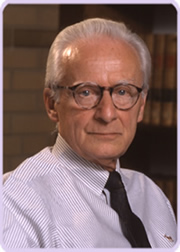
Interesting issues regarding the pastoral care of the sick viz. the numbers of priests available to be sacramentally present. USA Today a story that deserves some attention. Catholics are sacramental people: no priesthood, no sacraments…
Author: Paul Zalonski
Praying for what God wants
Blessed Roger of Todi, companion of Saint Francis
Known as being on fire for the salvation of souls, Saint Francis admitted Roger to his fraternity and later asked him to help guide a community of women under the leadership of Blessed Philippa Mareri, who became what is known today as Poor Clares. Pope Gregory IX knew Roger personally and gave witness to his holiness. Roger died in 1237.
Anglicans coming to Rome? Why? … Here’s your answer
If you want to know the reasons why the bishops and vicars of the Traditional Anglican Communion petitioned the Holy Father for full communion –which led to the motu proprio for the Anglicans (given on Nov. 4, 2009), then read their October 2007 letter. The It was recently published by a blogger of Anglo-Catholic sensiblities. Here it is…
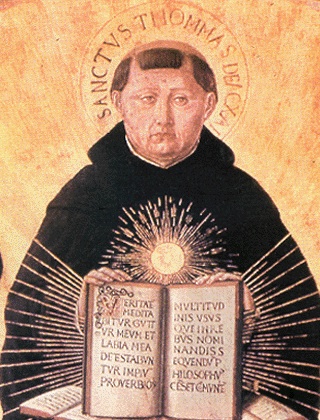
Saint Thomas Aquinas
Blessed be the Lord; for love of him Saint Thomas Aquinas spent long hours in prayer, study, and writing. (Gospel antiphon for Lauds)
poor without servility, chaste without compromise, humble without pretense,
joyful without depravity, serious without affectation, active without
frivolity, submissive without bitterness, truthful without duplicity, fruitful
in good works without presumption, quick to revive my neighbor without
haughtiness, and quick to edify others by word and example without simulation.
me, O Lord, an ever-watchful heart that no alien thought can lure away from
You; a noble heart that no base love can sully; an upright heart that no
perverse intention can lead astray; an invincible heart that no distress can
overcome; an unfettered heart that no impetuous desires can hold back.
my God, also bestow upon me understanding to know You, zeal to seek You, wisdom
to find You, a life that is pleasing to You, unshakable perseverance, and a
hope that will one day take hold of You.
bear your chastisements. May I also receive the benefits of your grace, in
order to taste your heavenly joys and contemplate your glory. AMEN.
St. Francis: Innovator with and not against the Pope
In a recent catechesis, I already illustrated the
providential role that the Order of Friars Minor and the Order of Preachers,
founded respectively by St. Francis of Assisi and St. Dominic Guzmán, had in
the renewal of the Church of their time. Today I would like to present to you
the figure of Francis, an authentic “giant” of holiness, who
continues to fascinate very many people of every age and every religion.
“A
son is born to the world.” With these words, in the Divine Comedy
(Paradiso, Canto XI), the greatest Italian poet, Dante Alighieri, alludes to
Francis’ birth, which occurred at the end of 1181 or the beginning of 1182, in
Assisi. Belonging to a wealthy family — his father was a textile merchant —
Francis enjoyed a carefree adolescence and youth, cultivating the chivalrous ideals
of the time. When he was 20 he took part in a military campaign, and was taken
prisoner. He became ill and was released. After his return to Assisi, a slow
process of spiritual conversion began in him, which led him to abandon
gradually the worldly lifestyle he had practiced until then.
Striking at this
time are the famous episodes of the meeting with the leper — to whom Francis,
getting off his horse, gave the kiss of peace; and the message of the Crucifix
in the little church of San Damiano. Three times the crucified Christ came to
life and said to him: “Go, Francis, and repair my Church in ruins.”
This simple event of the Word of the Lord heard in the church of San Damiano
hides a profound symbolism. Immediately, St. Francis is called to repair this
little church, but the ruinous state of this building is a symbol of the tragic
and disturbing situation of the Church itself at that time, with a superficial
faith that does not form and transform life, with a clergy lacking in zeal,
with the cooling off of love; an interior destruction of the Church that also
implied a decomposition of unity, with the birth of heretical movements.
However,
at the center of this Church in ruins is the Crucified and he speaks: he calls
to renewal, he calls Francis to manual labor to repair concretely the little
church of San Damiano, symbol of the more profound call to renew the Church of
Christ itself, with his radical faith and his enthusiastic love for Christ.
This
event, which probably occurred in 1205, makes one think of another similar
event that happened in 1207: the dream of Pope Innocent III. He saw in a dream
that the Basilica of St. John Lateran, the Mother Church of all churches, was
collapsing and a small and insignificant religious supported the church with
his shoulders so that it would not collapse. It is interesting to note, on one
hand, that it is not the Pope who helps so that the church will not collapse,
but a small and insignificant religious, whom the Pope recognizes in Francis
who visited him. Innocent III was a powerful Pope, of great theological
learning, as well as of great political power, yet it was not for him to renew
the Church, but for the small and insignificant religious: It is St. Francis,
called by God.
On the other hand, however, it is important to note that St.
Francis does not renew the Church without or against the Pope, but only in
communion with him. The two realities go together: the Successor of Peter, the
bishops, the Church founded on the succession of the Apostles and the new
charism that the Holy Spirit created at this moment to renew the Church. True
renewal grows together.
Let us return to St. Francis’ life. Because his father
Bernardone reproved him for excessive generosity to the poor, Francis, with a
symbolic gesture, and before the bishop of Assisi, stripped himself of his
clothes, thus intending to renounce his paternal inheritance: As at the moment
of creation, Francis had nothing, but only the life that God gave him, and into
whose hands he entrusted himself. Then he lived as a hermit until, in 1208,
another fundamental event took place in the journey of his conversion. Hearing
a passage of the Gospel of Matthew — Jesus’ discourse to the Apostles sent on
mission — Francis feels he is called to live in poverty and to dedicate
himself to preaching. Other companions associated themselves to him and, in
1209, he went to Rome, to submit to the Pope the project of a new form of
Christian life. He was given a paternal reception by the great Pontiff who,
enlightened by the Lord, intuited the divine origin of the movement awakened by
Francis. The Poverello of Assisi had understood that every charism given by the
Holy Spirit is placed at the service of the Body of Christ, which is the
Church; hence, he always acted in full communion with the ecclesiastical
authority. In the life of saints there is no opposition between a prophetic
charism and the charism of government and, if some tension is created, they
must wait patiently for the times of the Holy Spirit.
In reality, some
historians in the 19th century and also in the last century tried to create
behind the Francis of tradition, a so-called historical Francis, just as there
is a desire to create behind the Jesus of the Gospels, a so-called historical
Jesus. Such a historical Francis would not have been a man of the Church, but a
man linked immediately only to Christ, a man who wished to create a renewal of
the people of God, without canonical forms and without the hierarchy. The truth
is that St. Francis really had a very immediate relationship with Jesus and
with the Word of God, which he wished to follow sine glossa, exactly as it is,
in all its radicalism and truth. It is also true that initially he did not have
the intention of creating an order with the necessary canonical forms, but,
simply, with the Word of God and the presence of the Lord, he wished to renew
the people of God, to call them again to listening to the Word and to literal
obedience to Christ. Moreover, he knew that Christ never is “mine” but
always is “ours,” that “I” cannot have Christ and
“I” cannot reconstruct against the Church, his will and his teaching
— but only in communion with the Church, built on the succession of the
Apostles, is obedience to the Word of God also renewed.
It is also true that he
did not intend to create a new order, but only to renew the people of God for
the Lord who comes. But he understood with suffering and pain that everything
must have its order, that even the law of the Church is necessary to give shape
to renewal and thus he really inserted himself totally, with the heart, in the
communion of the Church, with the Pope and the bishops. He knew always that the
center of the Church is the Eucharist, where the Body and Blood of Christ are
made present. Through the priesthood, the Eucharist is the Church. Where
priesthood, and Christ and communion of the Church go together, only there does
the Word of God also dwell. The true historical Francis and the Francis of the
Church speaks precisely in this way also to non-believers, to believers of other
confessions and religions.
Francis and his friars, ever more numerous,
established themselves in the Porziuncola, or church of Saint Mary of the
Angels, sacred place par excellence of Franciscan spirituality. Also Clare, a
young lady of Assisi of a noble family, placed herself in Francis’ school. Thus
the Second Franciscan Order originated, that of the Poor Clares, another
experience destined to bear outstanding fruits of sanctity in the Church.
The
successor of Innocent III, Pope Honorius III, with his bull “Cum
dilecti” of 1218, also upheld the singular development of the first Friars
Minor, who were opening their missions in several countries of Europe, and even
in Morocco. In 1219 Francis obtained permission to go to speak with the Muslim
Sultan Melek-el-Kamel in Egypt, and also to preach the Gospel of Jesus there. I
want to underline this episode of the life of St. Francis, which is very
timely. At a time in which there was under way a clash between Christianity and
Islam, Francis, armed deliberately only with his faith and his personal
meekness, pursued with efficacy the way of dialogue. The chronicles tell us of
a benevolent and cordial reception by the Muslim Sultan. It is a model that
also today should inspire relations between Christians and Muslims: to promote
a dialogue in truth, in reciprocal respect and in mutual understanding (cf. Nostra
Aetate, 3).
It seems, then, that in 1220 Francis visited the Holy Land, thus
sowing a seed that was to bear much fruit: his spiritual sons, in fact, made of
the places in which Jesus lived a privileged realm of their mission. With
gratitude I think today of the great merits of the Franciscan Custody of the
Holy Land.
Returning to Italy, Francis entrusted the government of the order to
his vicar, Friar Pietro Cattani, while the Pope entrusted the order, which
continued gathering more followers, to the protection of Cardinal Ugolino, the
future Supreme Pontiff Gregory IX. For his part the founder, totally dedicated
to preaching, which he carried out with great success, wrote a Rule, later
approved by the Pope.
In 1224, in the hermitage of La Verna, Francis saw the
Crucified in the form of a seraphim and from the encounter with the crucified
seraphim, he received the stigmata; he thus became one with the crucified
Christ: a gift, hence, which expresses his profound identification with the
Lord.
Francis’ death — his transitus — occurred on the evening of Oct. 3,
1226, at the Porziuncola. After blessing his spiritual sons, he died, lying on
the naked earth. Two years later Pope Gregory IX inscribed him in the register
of saints. A short time later, a large basilica was raised in Assisi in his
honor, still today a destination for very many pilgrims, who can venerate the
tomb of the saint and enjoy Giotto’s frescoes, a painter who illustrated in a
magnificent way the life of Francis.
It has been said that Francis represents
an alter Christus, he was truly a living icon of Christ. He was even called
“Jesus’ brother.” Indeed, this was his ideal: to be like Jesus; to
contemplate the Christ of the Gospel, to love him intensely and to imitate his
virtues. In particular, he wished to give a fundamental value to interior and
exterior poverty, teaching it also to his spiritual sons. The first Beatitude
of the Sermon on the Mount — blessed are the poor in spirit for theirs is the
Kingdom of Heaven (Matthew 5:3) — found a luminous fulfillment in the life and
in the words of St. Francis.
Truly, dear friends, the saints are the best
interpreters of the Bible; they, incarnating in their lives the Word of God,
render it more than attractive, so that it really speaks to us. Francis’
witness, who loved poverty to follow Christ with dedication and total liberty,
continues to be also for us an invitation to cultivate interior poverty to grow
in trust of God, uniting also a sober lifestyle and detachment from material
goods.
In Francis, love for Christ is expressed in a special way in adoration
of the Most Blessed Sacrament of the Eucharist. In Franciscan sources one reads
moving expressions, such as this: “The whole of humanity fears, the whole
universe trembles and heaven exults, when on the altar, in the hand of the
priest, there is Christ, the Son of the living God. O wonderful favor! O
sublime humility, that the Lord of the universe, God and Son of God, so humbles
himself as to hide himself for our salvation, under the low form of bread”
(Francis of Assisi, Scritti, Editrici Francescane, Padua, 2002, 401).
In this
Year for Priests, it pleases me also to recall a recommendation addressed by
Francis to priests: “When you wish to celebrate Mass, certainly in a pure
way, carry out with reverence the true sacrifice of the most holy Body and
Blood of our Lord Jesus Christ” (Francis of Assisi, Scritti, 399).
Francis
always showed great deference to priests, and recommended that they always be
respected, even in the case when, at the personal level, they are not very
worthy. He cherished, as motivation for this profound respect, the fact that
they have received the gift of consecrating the Eucharist. Dear brothers in the
priesthood, let us never forget this teaching: the holiness of the Eucharist
asks us to be pure, to live in a consistent way with the mystery we celebrate.
From
the love of Christ is born love of people and also of all God’s creatures. Here
is another characteristic trait of Francis’ spirituality: the sense of
universal fraternity and love for Creation, which inspired his famous Canticle
of Creatures. It is a very timely message. As I reminded in my recent encyclical
Caritas in Veritate, the only sustainable development is one that respects
Creation and does not damage the environment (cf. No. 48-52), and in the
Message for the World Day of Peace of this year I underlined that also the
building of a solid peace is linked to respect for creation. Francis reminds us
that in creation is displayed the wisdom and benevolence of the Creator. In
fact, nature is understood by him as a language in which God speaks with us, in
which reality becomes transparent and we can speak of God and with God.
Dear
friends, Francis was a great saint and a joyful man. His simplicity, his
humility, his faith, his love of Christ, his kindness to every man and woman
made him happy in every situation. In fact, between sanctity and joy there
subsists a profound and indissoluble relation. A French writer said that there
is only one sadness in the world: that of not being saints, that is, of not
being close to God. Looking at St. Francis’ witness, we understand that this is
the secret of true happiness: to become saints, close to God!
May the Virgin,
tenderly loved by Francis, obtain this gift for us. We entrust ourselves to her
with the same words of the Poverello of Assisi: “Holy Virgin Mary, there
is no one like you born in the world among women, daughter and handmaid of the
Most High King and heavenly Father, Mother of our Most Holy Lord Jesus Christ,
spouse of the Holy Spirit: pray for us … to your most holy favorite Son, Lord
and Master” (Francis of Assisi, Scritti, 163).
The Franciscan Project of Life – 800 Years Young
During
this 800th anniversary year of the founding of the Franciscan Order,
Franciscans throughout the world have remembered the occasion with celebrations
and have also been reflecting on the demands of Franciscans today. Though
Franciscan life is expressed differently depending on one’s state in life, five
basic commitments characterize all Franciscan’s lives. These five commitments
offer a continuing challenge for renewal and recommitment to living the Franciscan
life which this anniversary year has helped to foster.
that of leaving everything in order to follow Jesus. In fact, the first gospel
text which Francis and his brothers discovered in the Gospel book in the church
of St. Mary of the Angels, was the word Jesus addressed to the rich man
inviting him to leave everything, to distribute all of it to the poor, and then
to come follow him (Mt 19:21). Francis did this when he renounced his
inheritance before the Bishop, and Clare did this as well when she left her
family home to join the brothers at the Portiuncola. This commitment expresses
the conviction that there is nothing more important than following the
footprints of Jesus and living the gospel. But, for Francis and Clare this kind
of poverty was not an end in itself, but the basic requirement for living as
brothers and sisters with everyone and with all of creation.
accepted into the brotherhood and sisterhood one was committed, “Through the
charity of the Spirit … to serve and obey one another voluntarily,” and they
were to “express the love they have for one another by their deeds….” This
style of authority and obedience practiced by the brothers and sisters was
placed in a context of mutuality-the minister must be a servant of the
brothers, and the other brothers must also serve and obey their minister.
Charity is of the essence of obedience according to Francis who summarized
Jesus’ obedience in terms of his self-giving love first when he was born for us
in Bethlehem and when he gave himself on the cross for our sins, leaving us an
example to follow.
sufficiency. Relinquishing everything, they identified with the poor in terms
of their choice to live with them and to dress like them. The brothers
supported themselves by working, hiring themselves out primarily as
day-laborers. In payment they received only what was necessary for life, in
terms of food, drink, clothing, for themselves, for the brothers who were sick
or unable to work, and for the lepers and other poor. If they did not receive
enough for the day, only then could they beg. The logic of Franciscan living is
that if everyone took only what was necessary for the day, there would be
enough to go around for everyone. At the same time, this practice facilitated
brotherhood and sisterhood as Francis suggested: “Let each one confidently make
known his need to another; Let each one care and love for his brother as a
mother loves and cares for her son in which God has given the grace.”
the brothers and sisters lived lives of mission. As they traveled about the
world, they met people where they found them, engaged with them in honest
conversation in the homes that were opened to them, and they ate and drank what
was set before them while they promoted peace. The brothers and sisters were
sustained by the Body and Blood of the Lord which accomplishes the
reconciliation and peace of all things with God. In this sense, the mission of
the brothers was “eucharistic,” that is, the mission is to effect
reconciliation and peace, preaching primarily by deeds.
and sisters were “Lesser Brothers and Sisters.” They were to live lives subject
to all people in the world and church, as well as to the created order. This
implied a pattern of behavior as a lifestyle, and even more than a pattern of
behavior, it describes a way of being human-simple, without controlling others,
without controlling the created world. There is only one All-Powerful, and that
is the Father of Jesus Christ. This way of being human was the counter-example
to the greed and violence of so much of the society in Francis’ day as well as
in ours, and this describes the real condition of the lepers, the poor and the
marginalized even today. Being subject does not imply a passive acceptance of
injustice and evil, but the choice to act humbly, patiently, and peacefully in
every situation.
practice for 800 years, since the time of Francis and Clare, and they challenge
us today to continue the legacy handed on to us so that we can entrust it to
those who will come after us in the future!
OFM, is a professor of Franciscan Studies at the Franciscan Institute, of St.
Bonaventure University. This
article was published in the the Winter 2009 issue of The Antonian.
Saint Angela Merici
Born in northern Italy in 1474, Angela Merici was orphaned by
the age of 10, she was soon alone in this world without her nuclear family
since her older sister suddenly died. Called to a life committed to the Lord,
Angela was a Franciscan tertiary (today known as Secular Franciscan) who
devoted herself to as much time in prayer as possible. She was particularly
devoted to Christ crucified because it is “the book from which the soul
learns,” having spent hours in prayer before the crucifix. On pilgrimage to the
Holy Land she went blind but was miraculously healed after prayer before the
cross.
for families and the education of children. The group was called the Company of
Saint Ursula and in some places it is referred to the Institute of Saint
Ursula. Marcocchi’s 1986 biography of the saint he said, “In 1535 Angela Merici
founded at Brescia the Company of St Ursula. Its members observed the
evangelical counsels without being bound by vows; they wore no particular
habit; they did not lead a common life as in a monastic community, but lived
with their own families and earned their own living. This initiative, aimed at
inserting consecrated virgins into the world, introduced a feature of great innovation,
as it took shape outside a monastery, in other words, outside the structure
which for centuries had channeled religious life for women (XV).” At this time
in the Church, the Company of Saint Ursula was a completely new form of
religious life that many churchmen had problems with it because it challenged
every sort of preconceived notion of what and how women acted in church and
society. The only form of religious life offered to women was the cloister or
the hospital. An apostolic life like that of the Franciscan and later of the Society
of Jesus for women was unknown. Angela lived under the spiritual influence of Saints
Francis of Assisi and Catherine of Genoa, and later those who followed the converted
solider of Manresa. Angela would not only heed the spiritual doctrines of the Franciscan
but keenly the Spiritual Exercises of Saint Ignatius of Loyola. Angela died in 1540, the year the Jesuits were approved by Pope Paul III for the Church universal.
Merici was canonized by Pope Pius VII and is the patron saint of physically
challenged people, sick people, and orphans. Her body remains incorrupt.
John Paul was prepared to resign papacy, focused on his spiritual life
The postulator (main promoter/researcher) of the cause of canonization of the Servant of God Pope John Paul II, Msgr. Slawomir Oder, published the full text of John Paul II’s resignation letter in his recent book, Why He Is Holy (only in Italian at the moment).
We are not made of stone…Pope John Paul I reminded us
Earlier this morning I was poking around the Vatican website reading some of the pieces posted in the section on Pope John Paul I. The General Audience of September 6, 1978 is a striking reminder of how a Christian ought to live: in a mode of gratitude. The Pope’s address is so simple that the profundity is extraordinarily beautiful and reasonable. Pope John Paul I did very few things in his month long pontificate that after reading some of the things I did today, I wonder with awe of this man, a pope, a witness to Jesus Christ who went prematurely to the Lord. Or did He?
To be good, however, it is necessary to be in place before God, before our neighbour and before ourselves. Before God, the right position is that of Abraham, who said:
“I am only dust and ashes before you, O Lord!” We must feel small before God. When I say, “Lord I believe” I am not ashamed to feel like a child before his mother; one believes in one’s mother; I believe in the Lord, in what he has revealed to me. The commandments are a little more difficult to observe; but God gave them to us not to satisfy a whim, not in his own interest, but solely in our interest.
Once a man went to buy a motorcar from the agent. The latter talked to him plainly: “Look here, it’s a good car; mind that you treat it well: premium petrol in the tank, and for the joints, oil the good stuff.” But the other replied: “Oh, no, for your information, I can’t stand even the smell of petrol, nor oil; I’ll put champagne, which I like so much, in the tank and I’ll oil the joints with jam” “Do what you like: but don’t come and complain if you end up in a ditch, with your car!” The Lord did something similar with us: he gave us this body, animated by an intelligent soul, a good will. He said, “this machine is a good one, but treat it well.”
Here are the commandments. Honour your father and your mother; do not kill; do not get angry; be gentle; do not tell lies; do not steal… If we were able to observe the commandments, we would be better off and so would the world. Then there is our neighbour… But our neighbour is at three levels: some are above us; some are at our level; some are below. Above, there are our parents. The catechism said: respect them, love them, obey them. The Pope must instil respect and obedience in children for their parents. I am told that the choir-boys of Malta are here. Let one come here, please … the choir-boys of Malta, who have served in St Peter’s for a month. Well, what is your name?
–James!
–James. And listen, have you ever been ill?
–No.
–Ah, never?
–No.
–Never been ill?
–No.
–Not even a temperature?
–No.
–Oh, how lucky you are! But when a child is ill, who brings him a little broth, some medicine? Isn’t it his mother? That’s it. After wards you grow up, and your mother gets old; you become a fine gentleman, and your mother, poor thing, will be in bed, ill. That’s it. Well, who will bring the mother a little milk and medicine? Who will?
–My brothers and I.
–Well said! “His brothers and he,” he said. I like that. Did you understand?
But it does not always happen. As Bishop of Venice, I sometimes went to homes. Once I found an elderly woman, sick.
–How are you?
–Well, the food is all right!
–Are you warm? Is there heating?
–It’s good.
–So you are content?
–“No” She almost began to cry.
–But why are you crying?
–My daughter-in-law, my son, never come to see me. I would like to see my grandchildren.
Heat and food are not enough, there is the heart; we must think of the heart of our old people. The Lord said that parents must be respected and loved, even when they are old. And besides our parents, there is the State, there are superiors. May the Pope recommend obedience? Bossuet, who was a great bishop, wrote: “Where no one commands, everyone commands. Where everyone commands, no one commands any longer, but chaos.” Sometimes something similar is seen in this world too. So let us respect those who are our superiors.
Then there are our equals. And here, there are usually two virtues to observe: justice and charity. But charity is the soul of justice. We must love our neighbour, the Lord recommended it so much. I always recommend not only great acts of charity, but little ones. I read in a book, written by Carnegie, an American, entitled “How to Make Friends”, the following little episode:
A lady had four men in the house: her husband, a brother, two grown up sons. She alone had to do the shopping, the washing, the ironing and the cooking: everything all alone. One Sunday they come home. The table is laid for dinner, but on the plate there is only a handful of hay. “Oh!”, the others protest and say: “What! Hay!” And she says, “No, everything is ready. Let me tell you: I prepare your food, I keep you clean, I do everything. Never once have you said: ‘That was a good dinner you made for us.’ But say something! I’m not made of stone.”
People work more willingly when their work is recognized. These are the little acts of charity. In our home we have all some one who is waiting for a compliment.
There are those who are smaller than we are; there are children, the sick, even sinners. As Bishop, I was very close even to those who do not believe in God. I formed the idea that they often combat not God, but the mistaken idea they have of God. How much mercy it is necessary to have! And even those who err…. We must really be in place with ourselves. I will just recommend one virtue so dear to the Lord. He said, “Learn from me who am meek and humble of heart”. I run the risk of making a blunder, but I will say it: the Lord loves humility so much that, sometimes, he permits serious sins. Why? In order that those who committed these sins may, after repenting remain humble. One does not feel inclined to think oneself half a saint, half an angel, when one knows that one has committed serious faults. The Lord recommended it so much: be humble. Even if you have done great things, say: “We are useless servants.” On the contrary the tendency in all of us, is rather the contrary: to show off. Lowly, lowly: this is the Christian virtue which concerns ourselves.