New liturgical texts approved by Pope today, Mass to change

The Holy Father addressed Vox Clara during a lunch meeting, and approved the new translation of the 2002 Roman Missal. This is tremendous news. I look forward to praying the new texts! Not a perfect text but one that’s more theologically correct than the current missal. Some work still needs to be done but that ought to be finished shortly so that publishers, musicians, priests, and laity can make the new texts available for the anticipated inauguration for the First Sunday of Advent 2011. Each of the 11 English speaking conferences of bishops will get to work on rolling out the new missal in their countries with the proper catechetical formation for clergy and laity alike. The Pope’s words today:

archbishop incensing.jpg

I thank you for
the work that Vox Clara has done over the last eight years, assisting and
advising the Congregation for Divine Worship and the Discipline of the
Sacraments in fulfilling its responsibilities with regard to the English
translations of liturgical texts. This has been a truly collegial enterprise.
Not only are all five continents represented in the membership of the
Committee, but you have been assiduous in drawing together contributions from
Bishops’ Conferences in English-speaking territories all over the world. I
thank you for the great labour you have expended in your study of the
translations and in processing the results of the many consultations that have
been conducted. I thank the expert assistants for offering the fruits of their
scholarship in order to render a service to the universal Church. And I thank
the Superiors and Officials of the Congregation for their daily, painstaking
work of overseeing the preparation and translation of texts that proclaim the
truth of our redemption in Christ, the Incarnate Word of God.

Saint Augustine
spoke beautifully of the relation between John the Baptist, the vox clara that
resounded on the banks of the Jordan, and the Word that he spoke. A voice, he
said, serves to share with the listener the message that is already in the
speaker’s heart. Once the word has been spoken, it is present in the hearts of
both, and so the voice, its task having been completed, can fade away (cf.
Sermon 293). I welcome the news that the English translation of the Roman
Missal will soon be ready for publication, so that the texts you have worked so
hard to prepare may be proclaimed in the liturgy that is celebrated across the
anglophone world
. Through these sacred texts and the actions that accompany
them, Christ will be made present and active in the midst of his people. The
voice that helped bring these words to birth will have completed its task.

A
new task will then present itself, one which falls outside the direct
competence of Vox Clara, but which in one way or another will involve all of
you – the task of preparing for the reception of the new translation by clergy
and lay faithful. Many will find it hard to adjust to unfamiliar texts after
nearly forty years of continuous use of the previous translation. The change
will need to be introduced with due sensitivity, and the opportunity for
catechesis that it presents will need to be firmly grasped
. I pray that in this
way any risk of confusion or bewilderment will be averted, and the change will
serve instead as a springboard for a renewal and a deepening of Eucharistic
devotion all over the English-speaking world.

Dear Brother Bishops, Reverend
Fathers, Friends, I want you to know how much I appreciate the great
collaborative endeavour to which you have contributed. Soon the fruits of your
labours will be made available to English-speaking congregations everywhere. As
the prayers of God’s people rise before him like incense (cf. Psalm 140:2), may
the Lord’s blessing come down upon all who have contributed their time and
expertise to crafting the texts in which those prayers are expressed. Thank
you, and may you be abundantly rewarded for your generous service to God’s
people.

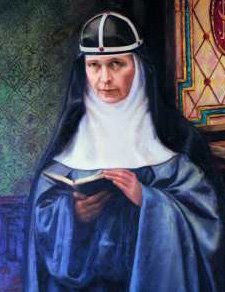
Saint Gianna Berretta Molla: wife and doctor with a passion for life


St Gianna Molla.jpg

Holy Spirit,
Source of every perfection, give us wisdom, intelligence, and courage so that,
following the example of Saint Gianna and through her intercession, we may know
how to place ourselves at the service of each person we meet in our personal,
family and professional lives, and thus grow in love and holiness. Amen.

As Saint Gianna said, “Every
vocation is a call to motherhood or fatherhood, earthly, spiritual or moral.
God has placed in us an instinct for life. A priest is a father, nuns are
mothers, mothers of souls.”

Read the Holy See’s biography of Saint Gianna Berretta Molla

On this feast of Saint Gianna we look for
heavenly assistance with the certain hope that our prayers will be answered.
Our prayerful request of Saint Gianna is for her to ask the Lord for abundant
graces to carry on the great work of Catholic Healthcare in New York and beyond
at The Gianna Center –The Catholic
Healthcare Center Women
. It’s Pro-life, Pro-woman, Pro-Marriage,
Pro-family and Pro-God!!!!

Saint Peter Canisius

The Roman calendar of saints lists Saint Peter Canisius’ feast day as December 21; on the Jesuit ordo his feast is observed today. 

St Peter Canisius detail.jpg

Saint Peter
Canisius is well known for his theological expertise, his teaching and preaching and the work of evangelization he did in Germany and other places where the Protestants destroyed the unity of the Church. His approach to theological engagement is noteworthy for his judgment based on prudence and charity. Saint Peter neither wanted to heighten division nor to embitter relations with the
Magisterial Reformers with intellectual engagement on the “hot button issues” because in his mind, theological
disputation only succeeded in fueling deeper resentment and hysteria toward the
Catholics and did not advance the argument and knowledge of the Truth. In a letter to his Jesuit superior, Saint Peter Canisius said:

It is
plainly wrong to meet non-Catholics with bitterness or to treat them with
discourtesy. For this is nothing else than the reverse of Christ’s example
because it breaks the bruised reed and quenches the smoking flax. We ought to
instruct with meekness those whom heresy has made bitter and suspicious, and
has estranged from orthodox Catholics, especially from our fellow Jesuits.


Thus, by whole-hearted charity and good will we may win them over to us in the
Lord. Again, it is a mistaken policy to behave in a contentious fashion and to
start disputes about matters of belief with argumentative people who are
disposed by their very natures to wrangling. Indeed, the fact of their being so
constituted is a reason the more why such people should be attracted and won to
the simplicity of the faith as much by example as by argument.


With Saint Peter Canisius, let us pray:

Let my eyes take
their sleep, but may my heart always keep watch for you.

May your right hand
bless your servants who love you. May I be united with the praise that flows
from you, Lord Jesus, to all your saints; united with the gratitude drawn from
your heart, good Jesus, that causes your saints to thank you; united with your
passion, good Jesus, by which you took away our guilt; united with the divine
longing that you had on earth for our salvation; united with every prayer that
welled from your divine heart, good Jesus, and flowed into the hearts of your
saints. Amen.

A new Vatican office: Pontifical Council for the New Evangelization?

Writing for il Giornale.it today, veteran vaticanista Andrea Tornielli, speaks of a new pontifical council to be created specifically for the work of the new evangelization, a term coined by Pope John Paul II in 1979 while visiting the Poland’s Nowa Huta. Pope Benedict is expected to release an Apostolic Letter soon. The idea comes to fruition because of the diligence of Venice’s cardinal-archbishop, Angelo Scola, and Josef Cordes and the inspiration of Monsignor Luigi Giussani, founder of the Fraternity of Communion and Liberation. A new council with this work is seen as keenly central to the work of Benedict’s papacy. The first head of the new council is expected to be according to Tornielli, Archbishop Rino Fisichella, the current head of the Pontifical Academy of Life and the rector of the Lateran University.

Andrea Tornielli’s article is here.

Blessed Osanna of Kotor

Thumbnail image for Bl Osanna of Kotor.jpgGod of compassion, enkindle anew in our hearts the
love of your cross. By the life and prayers of Blessed Osanna, who suffered for
the unity of the Church, may we become sharers in both your passion and your
glory.


Blessed Osanna (baptized Catherine Kosic) comes from the country of Montenegro, born in the 15th century of Orthodox parents. Her great-grandfather, grandfather, and father were priests, her brother was a monk and later a bishop. Traveling to the coast she encountered a Catholic family and through their witness and others, she converted to Catholicism. As a shepherdess and wishing to follow Christ more closely she found grace in the solitary life; Osanna took the habit of the Third Order Dominican laity and a new name. She was well known for her wisdom, mystical visions and following the promptings of the Holy Spirit. Her body is incorrupt. Pius XI beatified Osanna in 1934. The Church remembers Blessed Osanna for her desire for unity among Christians and peace among peoples. Therefore asks her to intercede for the Church for these intentions of unity and peace in families.

Anti-Catholicism, Again: a deeper look into clergy sex abuse

Joseph (Jody) Bottum, Editor of First Things and a contributing editor at the Weekly Standard, wrote what may go down as THE best essay on the sex abuse crisis facing the Catholic Church in the current issue of the Weekly Standard, “Anti-Catholicism: The permanent scandal of the Vatican” (May 3, 2010). Bottum’s piece is long but it’s worth a thorough read. For those looking for the print edition, the article hit the news stands on Saturday in most places but the link is noted above.

World Day of Vocations 2010

In his 2010 message for World Day of Vocations, celebrated
today on Good Shepherd Sunday, Pope Benedict names three elements for someone
willing to follow a call to priesthood and/or religious life:
friendship with
Jesus, total self-gift to God and a life of communion with all people
. All of this situated in the sacrifice of Christ on the Cross and our relationship to that very cross. Read the
three essential paragraphs from the Pope’s message below.

CFR Sisters First Vows.jpg

A fundamental
element, one which can be seen in every vocation to the priesthood and the
consecrated life, is friendship with Christ. Jesus lived in constant union with
the Father and this is what made the disciples eager to have the same
experience; from him they learned to live in communion and unceasing dialogue
with God. If the priest is a “man of God”, one who belongs to God and helps others
to know and love him, he cannot fail to cultivate a deep intimacy with God,
abiding in his love and making space to hear his Word. Prayer is the first form
of witness which awakens vocations. Like the Apostle Andrew, who tells his
brother that he has come to know the Master, so too anyone who wants to be a
disciple and witness of Christ must have “seen” him personally, come to know
him, and learned to love him and to abide with him.

Another aspect of the
consecration belonging to the priesthood and the religious life is the complete
gift of oneself to God
. The Apostle John writes: “By this we know love, that he
laid down his life for us; and therefore we ought to lay down our lives for the
brethren” (1 Jn 3:16). With these words, he invites the disciples to enter into
the very mind of Jesus who in his entire life did the will of the Father, even
to the ultimate gift of himself on the Cross. Here, the mercy of God is shown
in all its 

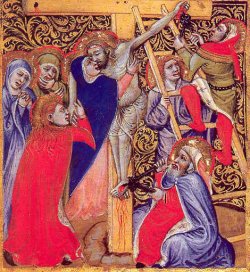
Way of the Cross.jpg

fullness; a merciful love that has overcome the darkness of evil,
sin and death. The figure of Jesus who at the Last Supper, rises from the
table, lays aside his garments, takes a towel, girds himself with it and stoops
to wash the feet of the Apostles, expresses the sense of service and gift
manifested in his entire existence, in obedience to the will of the Father (cf.
Jn 13:3-15). In following Jesus, everyone called to a life of special
consecration must do his utmost to testify that he has given himself completely
to God. This is the source of his ability to give himself in turn to those whom
Providence entrusts to him in his pastoral ministry with complete, constant and
faithful devotion, and with the joy of becoming a companion on the journey to
so many brothers and sisters, enabling them too to become open to meeting Christ,
so that his Word may become a light to their footsteps
. The story of every
vocation is almost always intertwined with the testimony of a priest who
joyfully lives the gift of himself to his brothers and sisters for the sake of
the Kingdom of God. This is because the presence and words of a priest have the
ability to raise questions and to lead even to definitive decisions (cf. John
Paul II, Post-Synodal Apostolic Exhortation Pastores Dabo
Vobis
, 39).

ordination.jpg

A third aspect which necessarily characterizes the
priest and the consecrated person is a life of communion. Jesus showed that the
mark of those who wish to be his disciples is profound communion in love
: “By
this all men will know that you are my disciples, if you have love for one
another” (Jn 13:35). In a particular way the priest must be a man of communion,
open to all, capable of gathering into one the pilgrim flock which the goodness
of the Lord has entrusted to him
, helping to overcome divisions, to heal rifts,
to settle conflicts and misunderstandings, and to forgive offences. In July 2005,
speaking to the clergy of Aosta
, I noted that if young people see
priests who appear distant and sad, they will hardly feel encouraged to follow
their example. They will remain hesitant if they are led to think that this is
the life of a priest. Instead, they need to see the example of a communion of
life which can reveal to them the beauty of being a priest. Only then will a
young man say, “Yes, this could be my future; I can live like this” (Insegnamenti
I, [2005], 354). The Second
Vatican Council
, in speaking of the witness that awakens vocations,
emphasizes the example of charity and of fraternal cooperation which priests
must offer (cf. Decree Optatam
Totius
, 2).

Blessed Mother Maria Elizabeth Hesselblad: 10th anniversary

Bl Mary Elizabeth Hasselblad.jpgToday is the 10th anniversary of the beatification of Mother Maria Elizabeth Hesselblad, the woman who re-established the Swedish branch of the Order of the Most Holy Savior of Saint Bridget —Bridgettine Order after centuries of the charism’s absence, in 1911. This is the order of nuns founded by Saint Bridget (Birgitta) of Sweden (1303-1373).

Saint Bridget of Sweden, not to be confused with the Irish saint, was named co-paroness of Europe on October 1, 1999.

Today the order numbers some 700 sisters in 50 houses around the world. In the USA, there is one house of Bridgettine nuns, in Darien, Connecticut, in the Diocese of Bridgeport. The order has about a 4% growth per annum with about 30 novices entering yearly. Info on Wiki can be read here.

There is a group of Bridgetine monks in Oregon, themselves re-founded in 1976.

Blessed Maria Elizabeth Hesselblad’s liturgical memorial is June 4.

95th Anniversary of the Armenian Genocide

Today is the 95th anniversary of the Armenian genocide, beginning in present day Istanbul. This Great Crime lasted until 1923. This genocide is widely recognized as the first of the 20th century genocides from which humanity learned little from. No surprise that the Turkish government denies the genocide. It is estimated that about 1.5 million people were killed at the time of the First World War.


May our Lord, Who promised to wipe away every tear, console His Armenian children: her Vehapar, hierarchy, clergy, monastics, seminarians and faithful as they sing with Jeremiah: ‘How lonely sits the desolate city!’ and ‘Great as the sea is my sadness!’

Saint Vartan’s Cathedral, 630 Second Avenue, NYC, has a list of events to remember the failure of man.

Various Armenian Churches have organized events, see the list here.

May the memories of the Armenians victims be eternal.

Saint Fidelis of Sigmaringen

St Fidelis Sigmaringen.jpgI thank Christ Jesus our Lord, who has strengthened me, that he has made me his servant and judged me faithful, alleluia.

God, our Father, You were pleased to adorn Saint Fidelis with the palm of martyrdom. He burned with love for You in propagating the faith. Through his prayers grant that we may be firmly rooted in love and merit to experience with him the power of Christ’s resurrection.
An academician by training (philosophy and law) he knew the difficulties of being faithful in passing on the truth to eager students. It seems that university life was not particularly Christian in Saint Fidelis’ time as we would claim for our own. Even before his time as a Capuchin friar, Fidelis (in history he was Mark Roy) had a habit of frequent attendance at Mass, adoration of the Blessed Sacrament and  works of charity among the sick and the poor.
At the age of 35 (a late vocation) Fidelis entered religious life having always wanted to be a Capuchin friar. He’s known to have lived a life of penance and prayer. As a newly ordained priest he celebrated his first Mass on the feast of Saint Francis making a strong personal connection with the man who changed civilization. 
Early in his religious and priestly life the Capuchin superiors thought of Fidelis as a key figure in the counter-reformation. Designated a guardian of a friary in Switzerland, Fidelis set out to use his learning to lead the Calvinists and Zwinglians back to the Church. In fact, the Holy See missioned Fidelis to establish a preaching band to teach the true faith and to contradict the errors of Magisterial reformers in Switzerland. Angered by his faithfulness to Christ and to the Church, the radical, heretical Protestants ambushed Fidelis, hacking him to death. Prior to death, Fidelis witnessed to the mercy of Christ by asking God to forgive his killers. It is reported that Fidelis’ body, though in pieces, was incorrupt for a long period; at the request of the ecclesial authorities Fidelis’ remains were placed in two reliquaries for the faithful to venerate. Among the Capuchin saints, Saint Fidelis has the distinction of having the fewest years of Capuchin vows (he was only 9 years a friar) than the others at the time of his canonization.