Dolan writes to Members of the 112th Congress

Archbishop Timothy M. Dolan’s letter to Members of the 112th Congress speaks for itself. As he notes, US Catholics are the largest religious body in the USA. 68 million, 22% of the US population. There are 195 archdioceses and dioceses with one apostolic exarchate. Other interesting statistics can be found here.

Dear Member of
Congress,
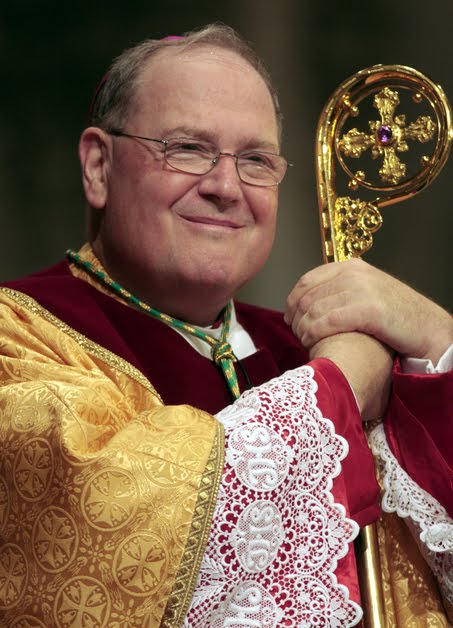
Abp Timothy M.Dolan NY & USCCB Pres.jpg

As a new Congress begins, I write to congratulate you and to outline
principles and priorities that guide the public policy efforts of the United
States Conference of Catholic Bishops (USCCB). As President of the Bishops’
Conference, I assure you of our prayers and hopes that this newly elected
Congress will advance the common good and defend the life and dignity of all,
especially vulnerable and poor persons whose needs are critical in this time of
difficult economic and policy choices. We continue to seek ways to work
constructively with the Administration and the new Congress and others of good
will to pursue policies which respect the dignity of all human life and bring
greater justice to our nation and peace to our world.

As bishops, of course we
approach public policy not as politicians but as pastors and teachers
. Our
moral principles have always guided our everyday experience in caring for the
hungry and homeless, offering health care and housing, educating children and
reaching out to those in need. We lead the largest community of faith in the
United States
, one that serves every part of our nation and is present in
almost every place on earth. From our experience and our tradition, we offer a
distinctive, constructive and principled contribution to the national dialogue
on how to defend human life and dignity, promote and protect marriage and
family life, lift up those who experience economic turmoil and suffering, and
promote peace in a world troubled by war and violence
.

Continue reading Dolan writes to Members of the 112th Congress
Praying the Christian Unity

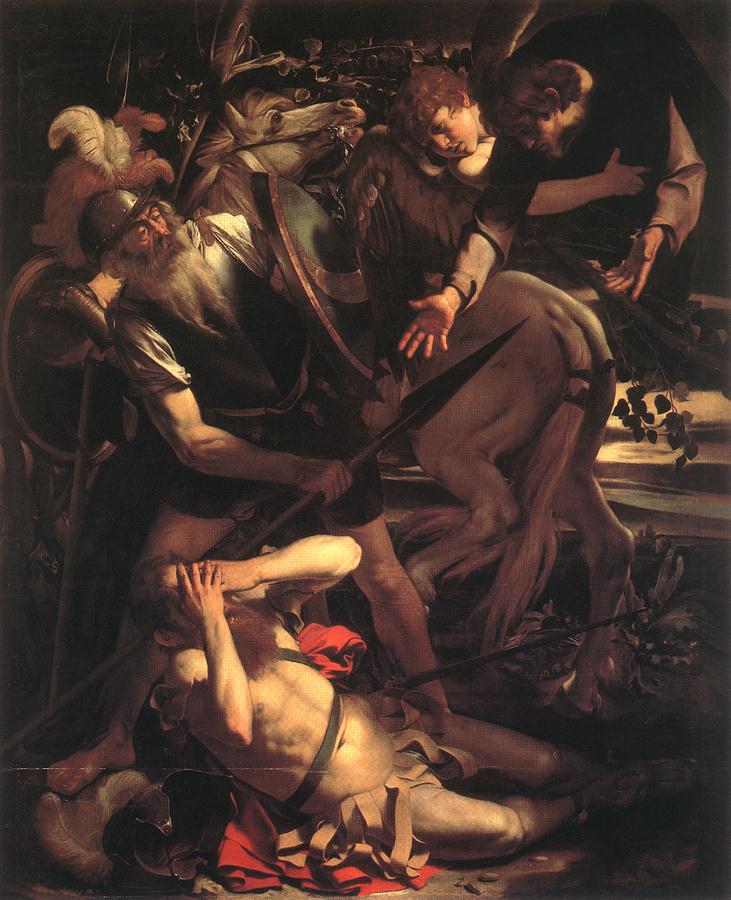
Conversion of St Paul Caravaggio.jpgThe theme chosen for 2011s Week of Prayer for Christian
Unity
is: “One in the apostles’ teaching, fellowship, breaking of bread
and prayer
” (cf. Acts 2:42). The week of prayer was collaboratively
prepared by members of the Pontifical Council for Promoting Christian Unity and
the Commission on Faith and Order of the World Council of Churches.


In the US, the Franciscan Friars and Sisters of the Atonement spear-head many significant ecumenical initiatives.


Daily themes:

18 January: The Church in Jerusalem
19 January: Many Members in One Body
20
January: Devotion to the Apostles’ Teaching Unites Us
21 January: Sharing, an
Expression of Our Unity
22 January: Breaking the Bread in Hope
23 January:
Empowered to Action in Prayer
24 January: Living in Resurrection Faith
25
January: Called for the Service of Reconciliation.

The closing Vespers service led
by Benedict XVI held at the Basilica of Saint Paul’s outside-the-Walls at 5.30
pm (Rome time) on Tuesday, 25 January, Feast of the Conversion of the Apostle
Paul. Various delegations of ecumenical guests will be present for Vespers.
Enhanced by Zemanta

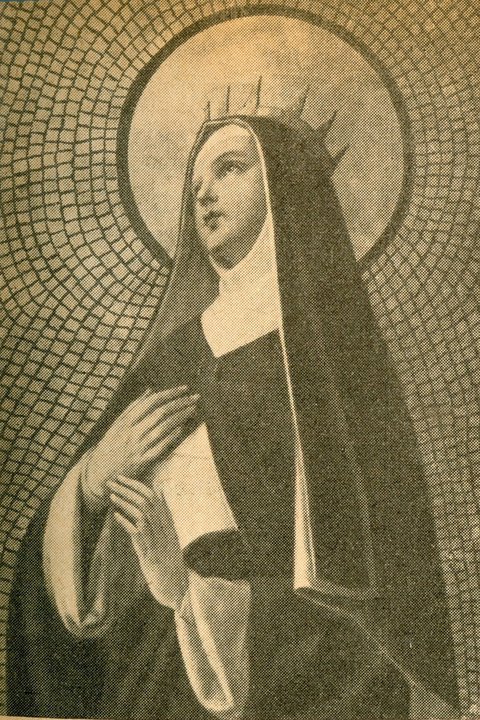
Saint Margaret of Hungary


St Margaret of Hungary2.jpg


Saint Margaret of Hungary’s “… friends and acquaintances petitioned for her to be acclaimed a saint almost immediately after her death. Among them was her own servant, Agnes, who rightly observed that this daughter of a monarch showed far more humility than any of the monastery’s maids. Although their testimony expressed Margaret’s overpowering desire to allow nothing to stand between her and God, the process of canonization was not complete until 1943.

The island where her convent stood, called first the ‘Blessed Virgin’s Isle,’ was called ‘Isle of Margaret’ after the saint.”

(Attwater, Benedictines, Bentley, Coulson, Dorcy, Farmer)


Fr Keith Newton introduced as new head of Ordinariate

Keith Newton presser.jpg

Saturday, January 15th not only saw the ordination of three former Anglican bishops as Roman Catholic Priests, but also one of them, Father Keith Newton, was appointed by the Holy See as the first Ordinary of the Personal Ordinariate of Our Lady of Walsingham.

Father Keith Newton’s press conference is heard here.

Decree of erection of the Personal Ordinariate of Our Lady of Walsingham

Decree of
erection of the Personal Ordinariate of Our Lady of Walsingham

The supreme law
of the Church is the salvation of souls. As such, throughout its history, the
Church has always found the pastoral and juridical means to care for the good
of the faithful.

With the Apostolic Constitution Anglicanorum coetibus,
promulgated on 4 November 2009, the Holy Father, Pope Benedict XVI, provided
for the establishment of Personal ordinariates through which Anglican faithful
may enter, even in a corporate manner, into full communion with the Catholic
Church. On the same date, the Congregation for the Doctrine of the Faith
published Complementary Norms relating to such Ordinariates.

Continue reading Decree of erection of the Personal Ordinariate of Our Lady of Walsingham

The Maronites: The Origins of an Antiochene Church

For nearly 25 years I have had a significant attraction to the Eastern Churches with regard to their sacred Liturgy, ecclesiology, culture, food, and friendship shared as it is, and historically lived, in the Maronite Church. My introduction to the Maronite tribe of the universal Catholic Church is found in the good friends I have had through the years who first introduced me to their Maronite Church. I was happy to see that Cistercian Publications is publishing in February a book on one of the Churches that is close to my heart.

From the Website

The Maronites.jpg

The Maronite Church is one of twenty-two Eastern Catholic Churches in communion with the Pope of Rome. Her patriarch is in Lebanon. Forty-three bishops and approximately five million faithful make up her presence throughout the world.
The story of Maron, a fifth-century hermit-priest, and the community gathered around him, later called the Maronites, tells another fascinating story of the monastic and missionary movements of the Church. Maron’s story takes place in the context of Syrian monasticism, which was a combination of both solitary and communal life, and is a narrative of Christians of the Middle East as they navigated the rough seas of political divisions and ecclesiastical controversies from the fourth to the ninth centuries.

Abbot Paul Naaman, a Maronite scholar and former Superior General of the Order of Lebanese Maronite Monks, wisely places the study of the origins of the Maronite Church squarely in the midst of the history of the Church. His book, The Maronites: The Origins of an Antiochene Church, published during the sixteenth centenary of Maron’s death, offers plausible insights into her formation and early development, grounding the Maronite Church in her Catholic, Antiochian, Syriac, and monastic roots.

Abbot Paul Naaman is a Maronite scholar and former Superior General of the Order of Lebanese Maronite Monks.

Maronite Patriarch said ready to resign

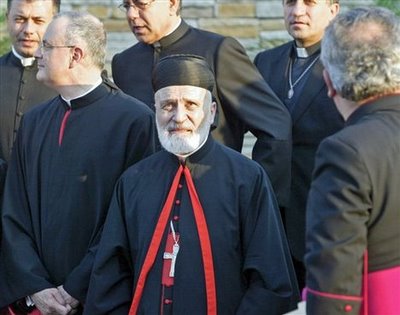
Patriarch Nasrallah Peter Sfeir.jpgPatriarch Nasrallah Peter Sfeir, 90, the 76th head of the Maronite Church is said to have submitted a resignation a few months ago to His Holiness, Pope Benedict XVI. The Daily Star has stated this move of Sfeir’s, but the paper has several facts wrong, so the reliability of specifics is questionable.

His Beatitude will be 91 on May 15 and has led the Maronite Church since 1986: he’s been a priest for 60.5 years, a bishop for 49.5 years and patriarch for 25 years. Sfeir is also a cardinal of the Church since 1994.

Deacons are to be sexually continent, too!

The lay –and married– canon lawyer Ed Peters wrote a piece indicating the permanent deacons are to be sexually abstinent (continent) permanently. This is the teaching and law of the Church. Men in studies seeking ordination to the Diaconate, that is, to be a permanent deacon, should have been taught this by the formators but lets concede the fact that those in charge of the diaconate program skipped or mis-represented the Church’s teaching in this matter. It is widely seen, however, to an unenforceable church law. Ed Peters quotes the phrase, “perfect and perpetual” from Canon 277 §1 of the 1983 Code of Canon Law to explain the behavior of the permanent deacon. The first premise is paragraph 1, even with the presence of a possible dispensation seen in paragraph 3. The expectation is that all clerics are sexually continent. Conclusion: all men called to holy orders are expected to refrain from sex! The Catholic Church doesn’t have a double standard, one for priests and one for deacons. For the 15K deacons in the USA: amend your life.

The academic article in Studia Canonica of 2005, “Canonical Considerations of Diaconal Continence,” in which Peters’ argues that married permanent deacons are by Church law to refrain from sexual intercourse with their wife, that is, the deacon remains sexually continent. The article can be read at this link: Ed Peters Studia c. 277 Diaconal Sexual Continence.pdf

Thomas Peters, Ed Peters’ son and blogger, posted this piece on his blog.

John Paul II moves Blessed Pope Innocent XI to another resting place

Innocent XI.jpgWorkers at Saint Peter’s Basilica have begun their work to move the body of the soon to be beatified Pope John Paul II from the grottoes to the main basilica. He’ll be moved to the Chapel of Saint Sebastian where currently Blessed Pope Innocent XI (seen left) is resting (he was beatified by Pope Pius XII on 7 Oct 1956). I guess we’re tired of the silver faced Innocent of the 17th century in favor of John Paul II, Pontiff.

John Paul will, in fact, be among a number of other holy people to take up residence in this spot. Apparently in this area, Pope Saint Boniface IV was there as well as the relics of the martyrs: Saints Victor, Candidus and Laureatus, but they have since moved on.

The Chapel of Saint Sebastian, on the right side of the basilica as you walk in, and right before the Blessed Sacrament Chapel, is dedicated to the 3rd century martyr. Sebastian was murdered at the time of the Diocletian for confessing faith in Jesus Christ as  Savior. Sebastian was first shot through with arrows, nursed to health and then later beaten to death. The chapel was completed by Pier Paolo Cristofari based on a design of Domenico Zampieri.
Enhanced by Zemanta