From Swiss Guard to Benedictine monk

Brother Mauritius Honegger.jpgPilgrims to the Vatican notice a few things: the pope, the architecture and the Swiss Guard. The Guard, in their colorful uniform, are quite identifiable because of the closeness to the Pope. These young men in the service of protecting the Holy Father are Swiss, Catholic, unmarried and fulfilling their military requirement.

Occasionally, a vocation to protect temporalities leads to a vocation to protect and to proclaim the divine as a priest or vowed religious. Not long ago Marco Rudolf Honegger entered the Einsiedeln Abbey becoming Brother Mauritius; Brother professed solemn vows in 2010. As part of his formation to be a priest Brother Mauritius went to Saint Meinrad Archabbey and Seminary to further his education.

The Criterion, the Indianapolis Archdioceses’s newspaper, records the story.
Thanks to Dom Francis de Sales of Saint Meinrad Archabbey for the story. He writes The Yoke of Christ blog.

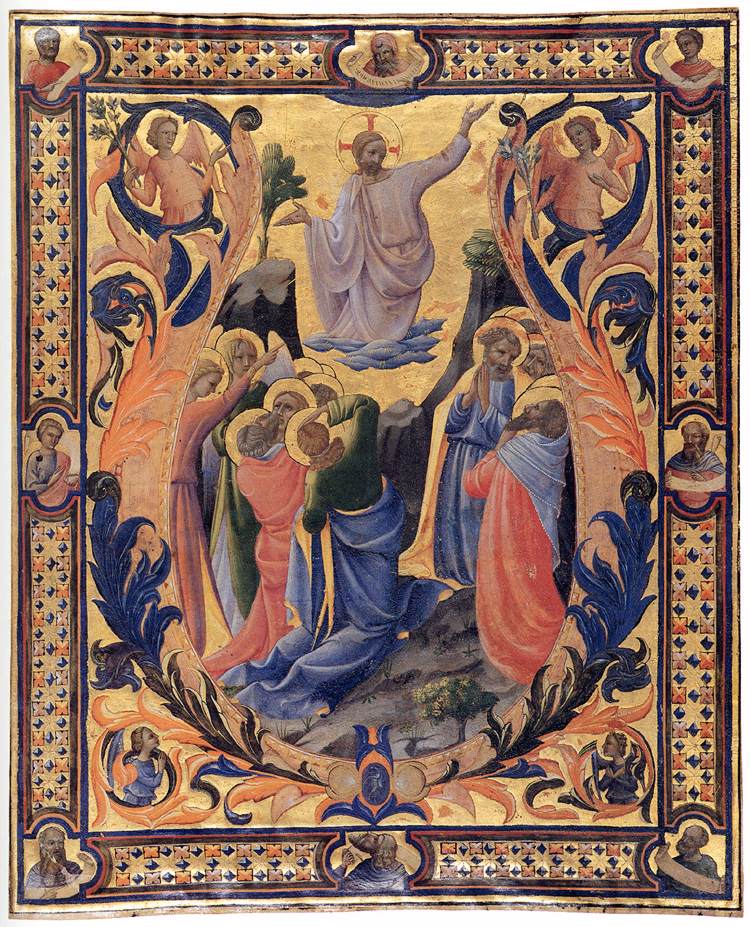
Ascension Sequence: Postquam hostem et inferna

Ascension LMonaco Antiphonary.jpgOne of my missions in life is to help restore the use of liturgical sequences and the observance of octaves. The Liturgy of the Church is not only and primarily the worship of the Triune God but it also passes down to us what we believe and teaches us how to live. Well, I am not unique in wanting the restoration of sequences and octaves as others have similar ambitions. Care to join the “restore the sequence” effort? My friend Friar Charles at A Minor Friar reminded me of this work and he gives needed encouragement

Many of the sequences were excised, really abolished, from the Missal in the years following the Council of Trent and they were further reduced in number with the Missal of Paul VI. The 16th century redaction of the sequences seems to be based on Protestant criticism of medieval exegesis of Scripture and poetry in the Liturgy (sound familiar?). The Missal of Pope Paul made too many things optional and gave too many options; as you know, when human beings make things optional they become proscribed. Sadly, sequences are not in the liturgical framework of priests, liturgists or liturgical musicians; they’re barely on the agenda of seminary courses in sacred Liturgy. Even the patrimony of the religious orders have no interest in liturgical poems of their venerable founders.

The Solemnity of the Ascension had a sequence –a liturgical poem set to music– but it was jettisoned in the revision of the missal written by Adam of St Victor in the 12th century (d. c. 1177). Some have said that Adam of St Victor was the greatest poet of the Middle Ages (Gueranger) and the greatest Latin poet ever (John M. Neale). This is quite a claim  of Digby S. Wrangham to make, but I’ll leave it to others to parse the distinctions. Wrangham’s collection of Adam’s texts is noteworthy.

Adam of St Victor’s text was translated into English by Digby S. Wrangham (which follows):

Postquam hostem et inferna                    Satan and the realms
infernal 

Spoliavit, ad superna                               Having spoiled, to joys supernal

Christus redit
gaudia;                              Christ returneth back once more:
Angelorum ascendenti                            As His upward way
he wendeth,
Sicut olim descendenti                            As before, when he descendeth,
Parantur
obsequia.                                  Angels set them to adore.

Continue reading Ascension Sequence: Postquam hostem et inferna

Society is built upon gift of self and a well-formed conscience tells Croats, us

Thumbnail image for students sing for Pope in Zagreb June 4 2011.jpg

I am very glad that the first engagement of my visit should
be with you, representing as you do key sectors of Croatian society and the
Diplomatic Corps. My cordial greetings go to each of you personally and
also to the important communities to which you belong: religious, political,
academic and cultural, the world of the arts, finance and sport. I thank
Archbishop Puljic and Professor Zurak for the kind words they have addressed to
me, and I thank the musicians who have welcomed me in the universal language of
music. This dimension of universality, characteristic of art and culture,
is particularly appropriate for Christianity and the Catholic Church. Christ is fully human, and whatever is human finds in him and in his word the
fullness of life and meaning.

Enhanced by Zemanta

Continue reading Society is built upon gift of self and a well-formed conscience tells Croats, us

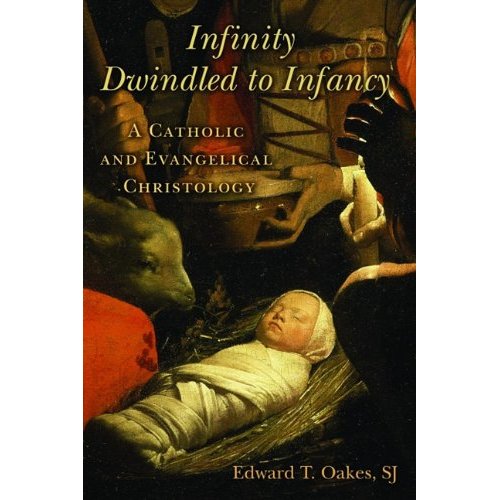
Infinity Dwindled to Infancy: A Catholic and Evangelical Christology, NEW book by Father Edward Oakes

Infiniity Dwindled to Infancy cover.jpg

Infinity Dwindled to Infancy: A Catholic and Evangelical Christology (Eerdmans, 2011) is due to be released in July. If you pre-order now, there is a discount on Amazon.
Father Oakes utilizes a wide range of works taken from Scripture, theology and literature to explore the questions on the lordship of Jesus Christ. He’s attentive to the Magisterium. The concern is to know what the we, as Christians, believe and teach about who Jesus Christ is, and why. In this book the author is wants to answer this question: what does it mean for an infinite God to become man?
The title of this book is taken from a poem of Jesuit Father Gerard Manley Hopkins, “The Blessed Virgin compared to the Air we Breathe.” There the poet says:
“This air, by life’s law,
My lung must draw and draw
Now but to breathe its praise,
Minds me in many ways
Of her who not only
Gave God’s infinity
Dwindled to infancy
Welcome in womb and breast,
Birth, milk, and all the rest
But mothers each new grace
That does now reach our race.”
Infinity Dwindled to Infancy has three parts: the data, the history and the teaching on the identity and work of Christ. The work carries an Imprimatur from Francis Cardinal George, Archbishop of Chicago and the Nihil obstat from Capuchin Father Thomas Weinandy, theologian for the US Conference of Bishops.

Father Edward T. Oakes, SJ, is a professor of systematic theologian teaching at Mundelein Seminary. He is a member of the some time meeting of the Dulles Colloquium (a theological discussion group that was organized by Father Richard J. Neuhaus and Cardinal Avery Dulles) and he is a member of the ecumenical theological discussion group Evangelicals and Catholics Together. Oakes is a frequent writer for First Things and several other periodicals. Oakes is the author of Pattern of Redemption and a co-editor of The Cambridge Companion to Hans Urs Von Balthasar. There are several translations done by Father Oakes of Balthasar to note.

Hugh Gilbert: Benedictine abbot elected bishop of Aberdeen

Hugh Gilbert.jpgPope Benedict XVI nominated as the new bishop of Aberdeen (Scotland) the Right Reverend Dom Hugh Gilbert, OSB, 59. This appointment was made public today.

Until now, Dom Hugh has been the abbot of the Pluscarden Abbey, a position he’s held since 1992. He’s been a Benedictine for 37 years. In the monastery he’s held several positions of service as well as serving as a member of the Union of Monastic Superiors and on the Abbot Visitor’s Council for the Subiaco Congregation of monasteries.
Pluscarden Abbey is the under the patronage of Our Lady and Saints John the Baptist and Andrew. It was founded in 1230 by King Alexander II; the monks were under Carthusian rule of life at the time of the colonization and later adopted the Rule of St Benedict while following Cistercian customs. By 1599, the abbey closed due to the Reformation. Providence saw to it that property was purchased for the monks in 1897 and the community formally was re-founded in 1948; it became a conventual priory in 1966 and an abbey in 1974. The community numbers 16 with a couple novices.

The Diocese of Aberdeen dates to the 6th century and was organized in 1063; it has 70 parishes. Due to the Reformation the Catholic diocese ceased until 1878 when it was restored. Today, the overall population of the Diocese of Aberdeen is 718,000 of that 18,600 are Catholics. There are 49 priests, 11 permanent deacons, and 45 religious.

Dom Hugh is the author of Unfolding The Mystery: Monastic Conferences on the Liturgical Year (2007).
The news article from BBC online can be read here.
May the Lord bless Dom Hugh as he assumes his new ministry as bishop.

Art is not merely an option for the Christian

Our Lord ascended to Heaven so that the Holy Spirit
might come at Pentecost and fill the Church with His truth. The greatest art
expresses that truth and is far superior to vain “self-expression.”
John Keats said “Beauty is truth, truth beauty,” but T.S. Eliot
rightly thought that the expression was meaningless sentimentality. The
craftsman ignorant of the Creator becomes a vain aesthete expressing nothing
more than the ego. While truth is beautiful, beauty is not truth itself but
expresses that truth. In the classical tradition, beauty consists in
proportion, integrity and clarity: it is harmonious, suited to its purpose, and
intelligible. This is sublimely seen in Christ Himself, Who incarnated this
beauty as the Way (guiding to a harmony of virtue) and the Truth (revealing
God) and the Life (enlightening with creative love). St. Macarius, an Egyptian
monk of the fourth century said, “The soul which has been fully illumined
by the unspeakable beauty of the glory shining on the countenance of Christ overflows
with the Holy Spirit . . . it is all eye, all light, all countenance.”


Art
is not merely an option for the Christian. Thus, the wisdom of Lorenzo in The
Merchant of Venice: “The man that hath no music in himself, Nor is not
mov’d with concord of sweet sounds, Is fit for treasons, stratagems, and spoils
. . .” The most sublime art is the Eucharist, in which we “take part
in a foretaste of that heavenly liturgy which is celebrated in the holy city of
Jerusalem toward which we journey as pilgrims . . .” (Vatican II, SC 8).

Father George Rutler
Pastor, Church of Our Saviour, NYC
homily excerpt from a recent Mass with Artists

Ascension of the Lord


Ascension HSuess.jpg

“He in fact came
to the world to bring men back to God, not on the level of ideas – like a
philosopher or master of wisdom – but really, as a shepherd who wants to lead
his sheep back to the fold . . . It is for us that he came down from Heaven,
and it is for us that he ascended there after making himself like men in all
things, humiliated to the point of death on the cross, and after touching the
abyss of the greatest separation from God”. 

“And what does man need more in
every age if not this: a solid anchoring for his existence? After the Ascension
the first disciples remained gathered together in the Cenacle around the Mother
of Jesus, in fervent expectation of the gift of the Holy Spirit, promised by
Jesus (cf. Acts 1:14)…. [this divine invitation is offered to us] “to remain
united together in prayer, to invoke the gift of the Holy Spirit. In fact, only
to those who ‘are born again from above,'”, that is, of the born of the Holy
Spirit.

Pope Benedict XVI, Ascension, 2008