 Saint James, the son of Zebedee, and brother of Saint
John the Apostle, was a Galilean. He was one of the first to be called to the
Apostolate, together with his brother, and, leaving his father and his nets, he
followed the Lord. Jesus called them both Boanerges, that is to say, sons of
thunder. He was one of the three Apostles whom our Savior loved the most, and
whom He chose as witnesses of His Transfiguration, and of the miracle by which
He raised to life the daughter of the ruler of the synagogue, and whom he
wished to be present when He retired to the Mount of Olives to pray to His
Father, before being taken captive by the Jews.
Author: Paul Zalonski
Vatican Nuncio to Ireland recalled
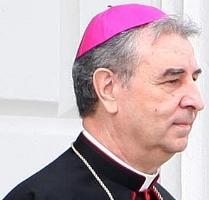 In an extraordinary act, the Holy See has recalled the papal nuncio, Archbishop Giuseppe Leanza, 68, to Rome to understand the implications of the July 13, 2011 Cloyne Report (421 pages worth) that indicated yet more of the clerical sex abuse.
This is a most dramatic and essential step in getting to the bottom of the problem of abuse and the response of the Church. The recall, initiated by the Holy See, is being interpreted by the same as the degree of seriousness it wants for an effective response to the failure to protect children and for greater collaboration with the Irish government. This recall is not a permanent close to diplomatic relations between the Irish Republic and the Holy See; it is a measure for greater clarity on how to respond to the crisis.
Hopefully Archbishop Leanza has the grace and competency to be effective in Ireland. His own experience hints that he can be helpful. He is the former papal nunico to Haiti, Malawi, Zambia, Bosnia, Slovenia, Macedonia, Bulgaria before going to Ireland in 2008.
Saint Patrick and Saint Brigid of Ireland, pray for us.
Monastic Worship Forum launched
Periodically the Benedictine monks, nuns and sisters meet to discuss issues pertaining the sacred Liturgy and sacred music as done in their monasteries. They met two weeks ago at the Archabbey of Saint Meinrad for the meeting and decided to formally merge the liturgical and musicians’ groups into one: The Monastic Worship Forum. This work has been in process since 2009. The purpose of the Forum is to provide support, education, and formation in the sacred Liturgy for monastic contexts in order that God maybe glorified.
Benedictine monk Father Godfrey Mullen chairs the committee that will lead the Forum. Father Godfrey earned his doctorate in Liturgy from the Catholic University of America and serves as the VP for Saint Meinrad Seminary and the Archabbey’s director of Liturgy.
The new website can be found here.
Blessed Ildefonso Schuster, and all Benedictine saints and blesseds, pray for us.
Virgilio Cardinal Noè, RIP, former Archpriest of St Peter’s Basilica

One the well-known faces in the Vatican curia died earlier today. Virgilio Cardinal Noè, 89, died in Rome.
Noè has been a cardinal since 1991. He was the Pope’s vicar general for Vatican City State, the President of the Fabric of St Peter’s Basilica and the Archpriest of St Peter’s Basilica.
Cardinal Noè’s face was recognizable due to his work as the pontifical Master of Ceremonies, a ministry he held since Pope Paul and one that he had under the Pope John Paul II until 1982.
Cadinal Noè is remembered for his faithful service as a priest and adherence to the Gospel.
Emil Kapaun’s cause for beatification moves to Vatican
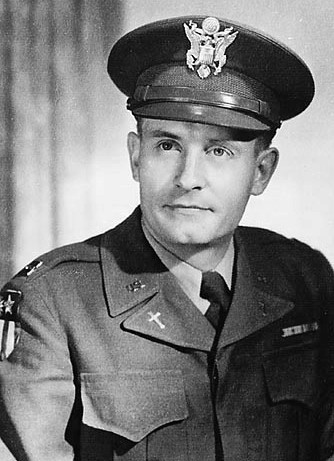
The Church in the US could have another saint if US Army chaplain Father Emil Kapaun‘s cause for beatification is accepted by the Congregation for the Causes of Saints.
The work of getting the relevant materials ready has been under the able hands of Father John Hotze, the bishop’s delegate for the study of Father Kapaun’s beatification and canonization. A priest of the Diocese of Wichta since 1940, Father Kapaun served in the US Army from 1944 until his death in 1951. In fact, he died in a prison camp hospital on May 23, 1951 (he was born on April 20, 1916). The Diocese of Wichita has the competence to present the dossier of his life when it officially opened the cause for his beatification on June 29, 2008.
Father Emil Kapaun, a native of Pilsen, Kansas, served in the Korean War as a US Army chaplain, and was known for his selflessness. Kapaun is on record for courageously rescuing wounded soldiers from the battlefield, risking his own life to prevent their execution at the hands of the Chinese. The care of the priest saved the lives of sick and injured soldiers.
The well-known Dr. Andrea Ambrosi, is going to shepherd the Kapaun case. He’ll be the person who will present Kapaun’s case, all 8,268 documents about the chaplain’s deeds and sacrifices in the Korean War, to the Congregation of Saints at the Vatican said based on what he knows thus far, Father Kapaun has a good chance at being beatified. Ambrosi said: “He showed that there was not just a devil working on the battlefields of the war, but something else.” The face of Christ.
Two miracles are being studied.
- In 2006, Avery Gerleman, then 12 years-old, near death for 87 days. She recovered after her parents prayed to Kapaun.
- In October 2008, Chase Kear, a college track athlete, medically inexplicable, he survived a severe pole vaulting accident. His skull was fractured in several crucial places and caused bleeding on his brain. The prognosis was very grim. Family prayed for Father Emil’s intercession.
Saint Mary Magdalen: a witness to the “healing power of Christ’s tender mercy.”

“Everywhere in our culture, people seem so quick to condemn. It is very hard to find words of mercy or understanding for someone who has done something wrong, many good people out there saying things they know they shouldn’t be saying.
People make mistakes. They sin. Some people do evil that causes scandal and grave harm. We can condemn the offense and work for justice — without trying to destroy the person who committed the sin.
We need to reject every temptation to shame or condemn people. Let us never be the cause of turning someone away from seeking God’s forgiveness and redemption.
Let us pray for one another this week, ask the Virgin Mary to ‘give us a faith like Mary Magdalene and hearts to forgive.'”
José H. Gomez, Archbishop of Los Angeles
The Tidings, July 22, 2011
Somalia is the most severe humanitarian emergency in the world
 In his Sunday prayers Pope Benedict appealed on behalf of the victims of the severe drought in the Horn of Africa, particularly Somalia. He asked Christians to show solidarity for the millions that face death by starvation in the worst conditions there in a century. Rain is not expected until October.
On July 14th, UNICEF called the situation in the Horn of Africa “the most severe humanitarian emergency in the world … with Somalia being the epicenter of the crisis.”
“Innumerable people are fleeing from that tremendous famine in search of food and help,” the Pope told the crowd gathered in the courtyard of his summer residence at Castel Gandolfo. “I hope that international mobilization will increase to send help in time to these brothers and sisters of ours, already sorely tried, among whom are so many children.”
Benedict’s prayer was: “May our solidarity and the concrete support of all people of good will, not be lacking to these suffering populations.” As a first expression of its concern, the Pontifical Council Cor Unum has sent a donation of $70,000.
Prophet Daniel
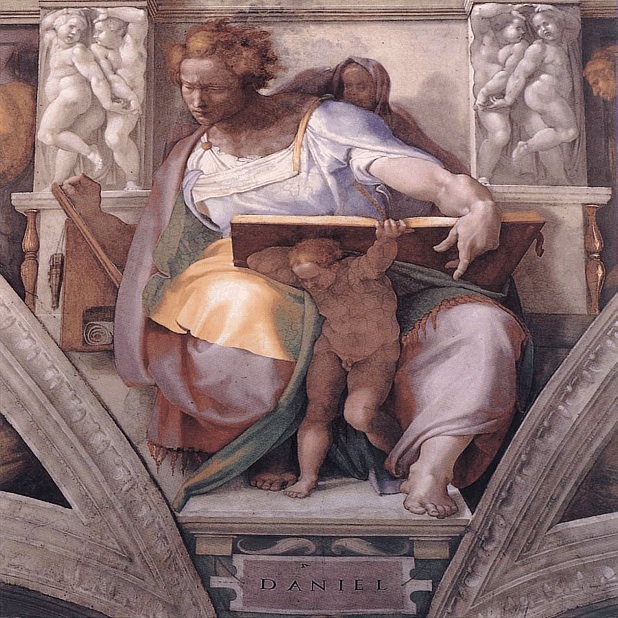
Know therefore and understand, that from the going forth of the commandment to restore and to build Jerusalem unto the Messiah the Prince shall be seven weeks, and three score and two weeks: the street shall be built again, and the wall, even in troublous times (9:25).
Work of Human Hands: A Theological Critique of the Mass of Paul VI: Alcuin Reid reviews
Much has been said about Anthony Cekada’s book Work of Human Hands, some of the critique is lazy, or rigidly steadfast to one’s limp opinion. Nothing is so relevant as information, and nothing so problematic as ignorance (being “untrained”). My hope is that we’d not be too preoccupied by our our thinking; I have confidence that Truth can be revealed in honest thinking and dialogue. The sacred Liturgy, because of its import in our worship of the Triune God, needs to be faithful to Christ and to the Tradition the Church. Cekada’s work is a sizable and it deserves attention. Because of my interest in the sacred Liturgy I am re-posting the book review originally posted on the New Liturgical Movement blog. I am grateful to Dr Alcuin Reid for his tour of the work and the author, and to Shawn Tribe for posting Reid’s review.
Anthony Cekada, Work of Human Hands: A Theological Critique of the Mass of Paul VI, Philothea Press, West Chester, Ohio 2010.

I have long been in Father Cekada’s debt, for it was his booklet The Problems with the Prayers of the Modern Mass that alerted me almost twenty years ago to the significant theological difference between the pre-conciliar and post-conciliar Roman Missals. Work of Human Hands is by no means so succinct a publication. It is a substantial attempt to demonstrate profound theological rupture between the two, and more. It deserves serious attention.
Some will dismiss this study because Father Cekada is canonically irregular and a sede vacantist. Whilst these are more than regrettable, ad hominem realities are not sufficient to dismiss this carefully argued and well researched work. We must attend to his arguments on their merits.
The principal thesis is that “the Mass of Paul VI destroys Catholic doctrine in the minds of the faithful and in particular, Catholic doctrine concerning the Holy Sacrifice of the Mass, the priesthood and the real presence,” and that it “permits or prescribes grave irreverence.” His secondary thesis is that the Mass of Paul VI is invalid. His practical conclusion is that “a Catholic may not merely prefer the old rite to the new; he must also reject the new rite in its entirety. The faith obliges him to do so.” These strong, even extreme, positions may themselves repel readers. But again, they must be examined.
Bishop-elect Gregory J. Hartmayer, OFM Conv.
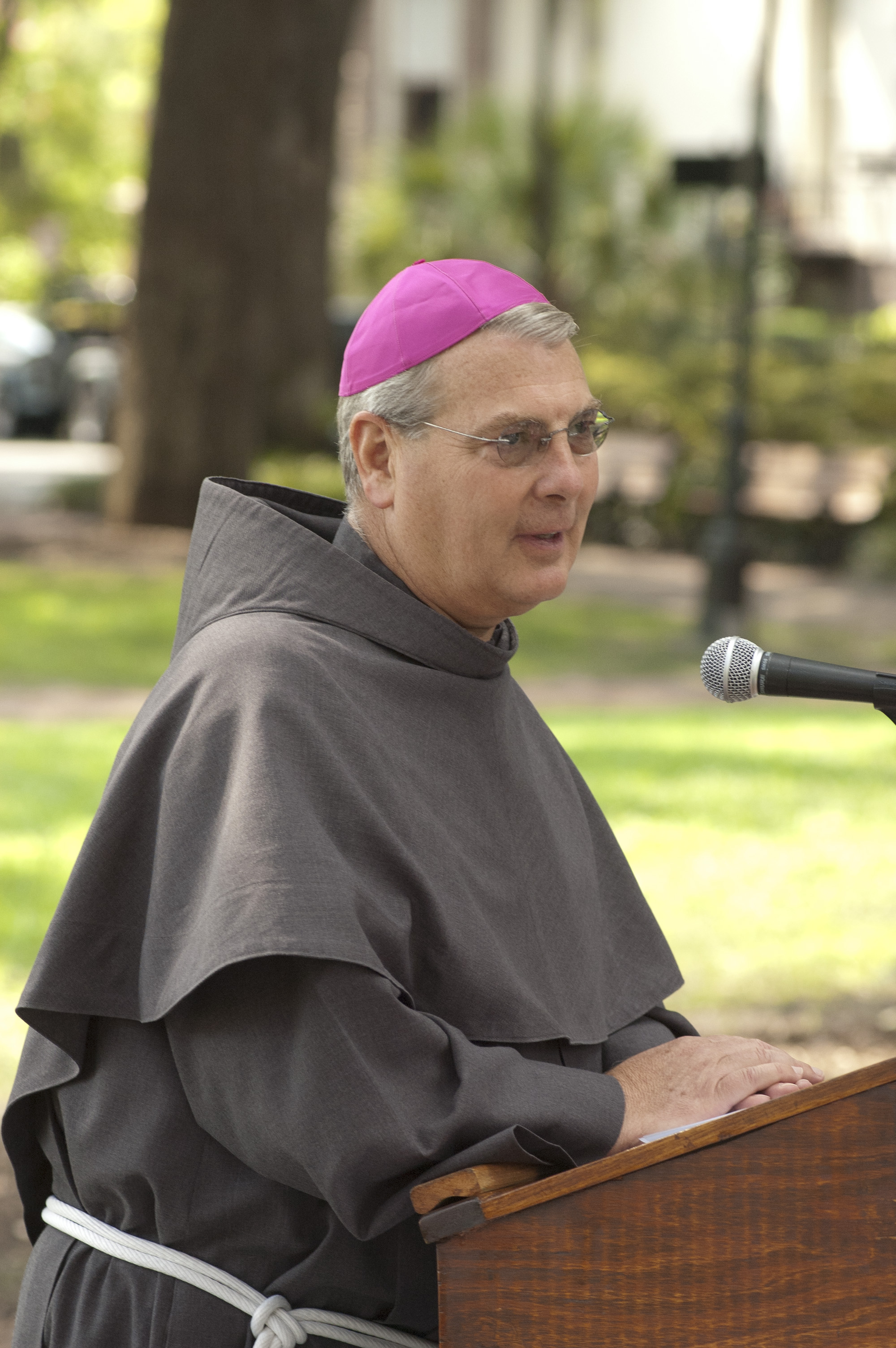
The new Bishop of Savannah‘s appointment of Conventual Franciscan Father Gregory John Hartmayer, 59, should not go without notice. He’s one of two Conventuals called to serve the Church as bishops, the being the Bishop of La Crosse, WI.
Hartmayer is a native of Buffalo, a Friar, and has been a priest for 32 years.
Bishop-elect Gregory John replaces Bishop J. Kevin Boland who has for 16 years as Bishop of Savannah. Boland’s brother was the Bishop of Kansas City-St Joseph, MO. Bishop-elect is the 14th bishop, the leader of 77K Catholics in 90 counties.
Today, the diocese is 160 years old.
Bishop-elect Gregory John is well-respected and acknowledged as a good shepherd, a loyal son of Saint Francis of Assisi.
An interview with the Bishop-elect produced by the Conventuals is here.
Pax et bonum.