Lent: When fallen humanity humbles himself before divine justice

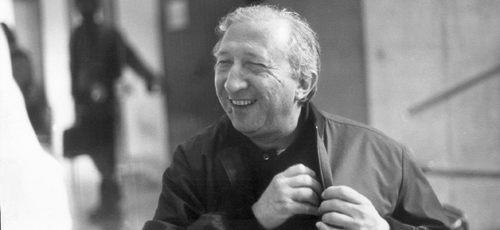
Guéranger.jpg

Lent needs some explanation. The liturgical season is so vast and complex one needs to enter into this period of preparation for Easter with eyes wide open. It is a time for our conversion. The famous 19th century Benedictine monk Dom Prosper Guéranger (founder and Abbot of the Abbey of Solesmes 1837-1875) wrote brilliantly of the our Christian life of prayer in a multi-volume collection that is unfinished, The Liturgical Year. While Guéranger’s images are typical of the 19th century, they remain crucial, I contend


Here is his piece on Lent:


Yesterday, the world was busy in its pleasures, and the very children of God were taking a joyous farewell to mirth: but this morning, all is changed. The solemn announcement, spoken of by the prophet, has been proclaimed in Sion: the solemn fast of Lent, the season of expiation, the approach of the great anniversaries of our Redemption. Let us, then, rouse ourselves, and prepare for the spiritual combat.

Continue reading Lent: When fallen humanity humbles himself before divine justice

Lent’s begun: let’s do spiritual battle against sin

“…is essentially a gesture of humility, which means that I recognise myself for what I am: a fragile creature made of earth and destined to return to the earth, but also made in the image of God and destined to return to him.” (Benedict XVI)


The pope’s teaching is heard here

Prayer

In preparation for today, Ash Wednesday, pray with the readings for the day: Joel 2:12-18; Psalm 51, 12-13, 14 and 17; 2 Corinthians 5:20-6:2; Matthew 6:1-6, 16-18. It is a great lenten practice to review and pray with the daily scripture readings during Lent by visiting the U.S. bishops’ website, www.usccb.org/bible/readings

Asking Lord for forgiveness by receiving the Sacrament of Reconciliation and attending daily Mass.

Spending time with the Lord in the Blessed Sacrament is a superb spiritual practice. 15 minutes in quiet prayer is a true blessing. Time in silence and listening to the Lord and you talking with the Lord from your heart builds a relationship with Him.

Pray the Rosary.

Let’s pray for one another.


Continue reading Lent’s begun: let’s do spiritual battle against sin

Melkite and Maronite Churches begin Lent today


Transfiguration of Christ PPerugino.jpgThe Byzantine Catholic Church, along with the Maronite
Church, begin the Lenten observance. The Byzantines call today Clean Monday,
the first day of the Great Fast. Maronites call today “Ash Monday.” The
Byzantine Orthodox Church will open their Lent on Monday, February 27.


The Latin Church begins her Lent on Wednesday, 22 February.


Among
the Byzantines the traditional liturgical practice is to celebrate Great
Compline, which will include the singing of a portion of the Great Canon of
Saint Andrew of Crete. Find a Melkite parish near you to celebrate
Compline tonight.


Continue reading Melkite and Maronite Churches begin Lent today

Cardinal Dolan’s church in Rome

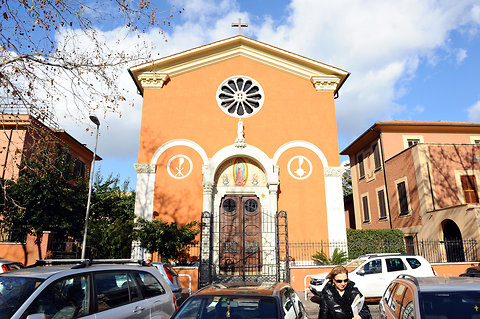
OL Guadalupe Rome.jpgThe other day I mentioned that cardinals receive a church in Rome for them to have pastoral solicitude for and to be a parish priest in the Diocese of Rome. The latter is really a fiction because the cardinal rarely has much to do his parish but this a vestige of a time when all cardinals were resident priests of Rome. Cardinal Mahoney never paid too much attention to his Roman church but Cardinal O’Malley shows up to his when he’s in Rome. 

In time long ago the priests of Rome elected their bishop: this remains true, however, in the sense that a cardinal is inscribed as a priest of Rome and the cardinal enters a papal conclave to elect a bishop of Rome. Cardinal Timothy Michael Dolan is the Cardinal-Archbishop of New York, a Cardinal of the Holy Roman Church and a priest of the Diocese of Rome.

Regarding the Roman church aspect of being a cardinal is written about by Sharon Otterman of the NY Times in an article published today, “Cardinal Dolan Is Assigned a Roman Parish Founded by Mexican Refugees” and photo’s by James Hill.
Cardinal Dolan will now, it is hoped, provide some financial assistance to Our Lady of Guadalupe in Rome as he’s able.

Evangelization Today : Communion and Pastoral Collaboration between Africa and Europe

The Catholic buzz word is the “evangelization.” It’s running the risk of becoming an irrelevant concept if we don’t take the time to really understand the contours of sharing the faith given to us by the Holy Spirit and authentically lived in the communion of the Church. Some bishops from Africa and Europe had a symposium to explore the needs and desires in living Christianity as an event from the 13-17 February. It didn’t get much press in these parts because (A) it is perceived that neither Africa and Europe are so far away from North America that what the symposium had to do didn’t impact us and (B), well Africa and Europe have little to say to us. Wrong. We are a communion of peoples; live our faith in communion with other Christians around the world not in isolation from the another group of people. What the Church in Africa does should, in fact, shed light on our life of faith. We belong to Christ, therefore to the Church and therefore each other; no Christian is alone. 


Listen to what the Pope says here.


Fifty years after the opening of the Second Vatican Council and a few months away from the Synod on New Evangelization, we wanted to look into our hearts about this theme: Evangelization today: Communion and Pastoral Collaboration between Africa and Europe. The human person and God: the Church’s mission to proclaim God’s presence and love. In this Symposium we have found the joy of reunion, and we have assessed the progress made over these eight years. Indeed, the Beatitudes are our common treasure. More and more, they make us discover our complementary nature, but also our co-responsibility and interdependence in the lives of our local Churches. It’s a question of rising to the challenges of an increasingly new Evangelization in our two continents today “For we were all baptized by one Spirit so as to form one body ( …) and we were all given the one Spirit to drink.  Even so the body is not made up of one part but of many” (1 Corinthians 12 :13-14). We have rejoiced for the progress we have made in the last decades in the relations between our two continents – the Synods for Africa and for Europe, as well as our meetings, are a testimony to this very fact.


For the full report, see The Vatican Insider

Testifying the joy of Christ’s love

“God is not isolation, but glorious and joyful love, spreading outwards and radiant with light,” Pope Benedict XVI told the assembled crowd gathered for Mass including the new cardinals. The diakonia (the service rendered) of the cardinals’ task is “to bear witness to the joy of Christ’s love.”

“Faith without love would no longer be an authentic Christian faith.”

~Pope Benedict XVI

19 February 2012

Pope: faith is oriented towards love, reminds us; Mass with new cardinals

The Pope, as you know created 22 new cardinals yesterday. He gave them the symbols of office: the cardinal’s biretta, a new ring and the title of a church of which they are the “pastor of” in the Diocese of Rome. Today, the feast of the Chair of Saint Peter, the faithful gather around the Pope, the Bishop of Rome, to worship God. The Church celebrates the “throne of Truth”, a fitting image of Christ passing onto us a true experience of faith, truth and love. The homily given by Benedict XVI is noted below.


Peter in cope.jpg

On this solemnity of the Chair of Saint Peter, we have the joy of gathering around the altar of the Lord together with the new Cardinals whom yesterday I incorporated into the College of Cardinals. It is to them, first of all, that I offer my cordial greetings and I thank Cardinal Fernando Filoni for the gracious words he has addressed to me in the name of all. I extend my greetings to the other Cardinals and all the Bishops present, as well as to the distinguished authorities, ambassadors, priests, religious and all the faithful who have come from different parts of the world for this happy occasion, which is marked by a particular character of universality.

In the second reading that we have just heard, Saint Peter exhorts the “elders” of the Church to be zealous pastors, attentive to the flock of Christ (cf. 1 Pet 5:1-2). These words are addressed in the first instance to you, my dear venerable brothers, who have already shown great merit among the people of God through your wise and generous pastoral ministry in demanding dioceses, or through presiding over the Dicasteries of the Roman Curia, or in your service to the Church through study and teaching. The new dignity that has been conferred upon you is intended to show appreciation for the faithful labour you have carried out in the Lord’s vineyard, to honour the communities and nations from which you come and which you represent so worthily in the Church, to invest you with new and more important ecclesial responsibilities and finally to ask of you an additional readiness to be of service to Christ and to the entire Christian community. This readiness to serve the Gospel is firmly founded upon the certitude of faith. We know that God is faithful to his promises and we await in hope the fulfilment of these words of Saint Peter: “And when the chief shepherd is manifested you will obtain the unfading crown of glory” (1 Pet 5:4).

New cards at Mass with B16 2012.jpg

Today’s Gospel passage presents Peter, under divine inspiration, expressing his own firm faith in Jesus as the Son of God and the promised Messiah. In response to this transparent profession of faith, which Peter makes in the name of the other Apostles as well, Christ reveals to him the mission he intends to entrust to him, namely that of being the “rock”, the visible foundation on which the entire spiritual edifice of the Church is built (cf. Mt 16:16-19). This new name of “rock” is not a reference to Peter’s personal character, but can be understood only on the basis of a deeper aspect, a mystery: through the office that Jesus confers upon him, Simon Peter will become something that, in terms of “flesh and blood”, he is not. The exegete Joachim Jeremias has shown that in the background, the symbolic language of “holy rock” is present. In this regard, it is helpful to consider a rabbinic text which states: “The Lord said, ‘How can I create the world, when these godless men will rise up in revolt against me?’ But when God saw that Abraham was to be born, he said, ‘Look, I have found a rock on which I can build and establish the world.’ Therefore he called Abraham a rock.” The prophet Isaiah makes reference to this when he calls upon the people to “look to the rock from which you were hewn … look to Abraham your father” (51:1-2). On account of his faith, Abraham, the father of believers, is seen as the rock that supports creation. Simon, the first to profess faith in Jesus as the Christ and the first witness of the resurrection, now, on the basis of his renewed faith, becomes the rock that is to prevail against the destructive forces of evil.

Dear brothers and sisters, this Gospel episode that has been proclaimed to us finds a further and more eloquent explanation in one of the most famous artistic treasures of this Vatican Basilica: the altar of the Chair. After passing through the magnificent central nave, and continuing past the transepts, the pilgrim arrives in the apse and sees before him an enormous bronze throne that seems to hover in mid air, but in reality is supported by the four statues of great Fathers of the Church from East and West. And above the throne, surrounded by triumphant angels suspended in the air, the glory of the Holy Spirit shines through the oval window. What does this sculptural composition say to us, this product of Bernini’s genius? It represents a vision of the essence of the Church and the place within the Church of the Petrine Magisterium.

The window of the apse opens the Church towards the outside, towards the whole of creation, while the image of the Holy Spirit in the form of a dove shows God as the source of light. But there is also another aspect to point out: the Church herself is like a window, the place where God draws near to us, where he comes towards our world. The Church does not exist for her own sake, she is not the point of arrival, but she has to point upwards, beyond herself, to the realms above. The Church is truly herself to the extent that she allows the Other, with a capital “O”, to shine through her – the One from whom she comes and to whom she leads. The Church is the place where God “reaches” us and where we “set off” towards him: she has the task of opening up, beyond itself, a world which tends to become enclosed within itself, the task of bringing to the world the light that comes from above, without which it would be uninhabitable.

The great bronze throne encloses a wooden chair from the ninth century, which was long thought to be Saint Peter’s own chair and was placed above this monumental altar because of its great symbolic value. It expresses the permanent presence of the Apostle in the Magisterium of his successors. Saint Peter’s chair, we could say, is the throne of truth which takes its origin from Christ’s commission after the confession at Caesarea Philippi. The magisterial chair also reminds us of the words spoken to Peter by the Lord during the Last Supper: “I have prayed for you that your faith may not fail; and when you have turned again, strengthen your brethren” (Lk 22:32).

The chair of Peter evokes another memory: the famous expression from Saint Ignatius of Antioch’s letter to the Romans, where he says of the Church of Rome that she “presides in charity” (Salutation, PG 5, 801). In truth, presiding in faith is inseparably linked to presiding in love. Faith without love would no longer be an authentic Christian faith. But the words of Saint Ignatius have another much more concrete implication: the word “charity”, in fact, was also used by the early Church to indicate the Eucharist. The Eucharist is the Sacramentum caritatis Christi [the sacrament of the love of Christ] through which Christ continues to draw us all to himself, as he did when raised up on the Cross (cf. Jn 12:32). Therefore, to “preside in charity” is to draw men and women into a eucharistic embrace – the embrace of Christ – which surpasses every barrier and every division, creating communion from all manner of differences. The Petrine ministry is therefore a primacy of love in the eucharistic sense, that is to say solicitude for the universal communion of the Church in Christ. And the Eucharist is the shape and the measure of this communion, a guarantee that it will remain faithful to the criterion of the tradition of the faith.

The of Chair Peter.jpg

The great Chair is supported by the Fathers of the Church. The two Eastern masters, Saint John Chrysostom and Saint Athanasius, together with the Latins, Saint Ambrose and Saint Augustine, represent the whole of the tradition, and hence the richness of expression of the true faith of the one Church. This aspect of the altar teaches us that love rests upon faith. Love collapses if man no longer trusts in God and disobeys him. Everything in the Church rests upon faith: the sacraments, the liturgy, evangelization, charity. Likewise the law and the Church’s authority rest upon faith. The Church is not self-regulating, she does not determine her own structure but receives it from the word of God, to which she listens in faith as she seeks to understand it and to live it. Within the ecclesial community, the Fathers of the Church fulfil the function of guaranteeing fidelity to sacred Scripture. They ensure that the Church receives reliable and solid exegesis, capable of forming with the Chair of Peter a stable and consistent whole. The sacred Scriptures, authoritatively interpreted by the Magisterium in the light of the Fathers, shed light upon the Church’s journey through time, providing her with a stable foundation amid the vicissitudes of history.

After considering the various elements of the altar of the Chair, let us take a look at it in its entirety. We see that it is characterized by a twofold movement: ascending and descending. This is the reciprocity between faith and love. The Chair is placed in a prominent position in this place, because this is where Saint Peter’s tomb is located, but this too tends towards the love of God. Indeed, faith is oriented towards love. A selfish faith would be an unreal faith. Whoever believes in Jesus Christ and enters into the dynamic of love that finds its source in the Eucharist, discovers true joy and becomes capable in turn of living according to the logic of gift. True faith is illumined by love and leads towards love, leads on high, just as the altar of the Chair points upwards towards the luminous window, the glory of the Holy Spirit, which constitutes the true focus for the pilgrim’s gaze as he crosses the threshold of the Vatican Basilica. That window is given great prominence by the triumphant angels and the great golden rays, with a sense of overflowing fulness that expresses the richness of communion with God. God is not isolation, but glorious and joyful love, spreading outwards and radiant with light.

Dear brothers and sisters, the gift of this love has been entrusted to us, to every Christian. It is a gift to be passed on to others, through the witness of our lives. This is your task in particular, dear brother Cardinals: to bear witness to the joy of Christ’s love. We now entrust your ecclesial service to the Virgin Mary, who was present among the apostolic community as they gathered in prayer, waiting for the Holy Spirit (cf. Acts 1:14). May she, Mother of the Incarnate Word, protect the Church’s path, support the work of the pastors by her intercession and take under her mantle the entire College of Cardinals. Amen!

Getting a title: Pope assigns parish churches to new cardinals

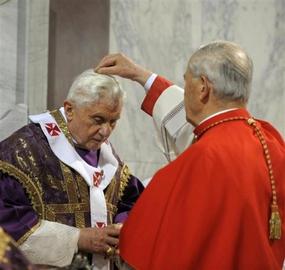
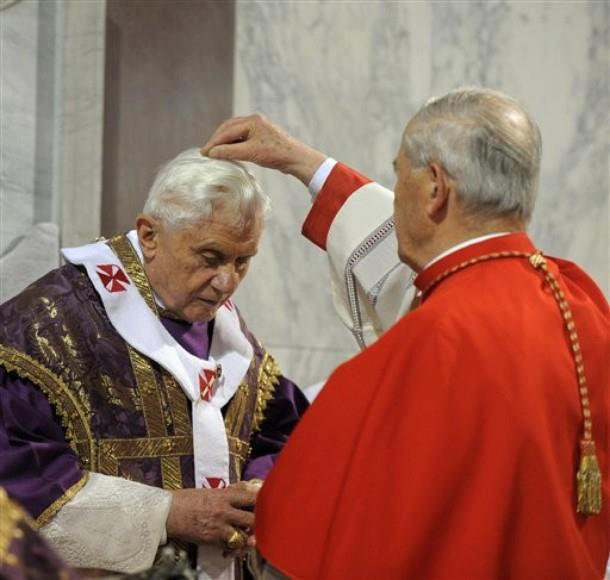
John Tong Hon helps Julien Ries with his mitre.jpg

In a public Consistory the Pope created 22 new Cardinals today, though 4 are over 80 years of age and therefore cannot vote in a papal conclave.

At the ceremony in which the Pope creates a cardinal, each one is assigned a church in Rome, a titular or diaconal church.  He becomes, in way, the pastor of a Roman parish and thus diocesan priests of Rome and therefore capable of electing the Bishop of Rome. This is “ecclesiology 101a.” 

The College of Cardinal is divided into three groups, cardinal bishops, priests and deacons. There is a dean and a vice dean of the College. Only by exception are cardinals not bishops or consecrated before being created cardinal per the Code of Canon Law (Cardinal Karl Becker was not consecrated a bishop prior to today’s bishop and very often Jesuits created a cardinal who are 80 and above are typically dispensed from being consecrated; Avery Dulles was). Cardinal priests who are diocesan bishops of dioceses, while curial officials are made Cardinal Deacons. 

The tradition of the Church is that after a number of years as a cardinal deacon one can be “promoted” to the order of cardinal priests. Some cardinals in key positions, such as the Dean of the College or prefect of an important Vatican congregation, e.g., CDF, are elevated to an open slot among the six Cardinal Bishops. There are seven cardinalatial titular dioceses, but by tradition the Dean always has two, Ostia and one other. There are also a four Cardinal Patriarchs of Eastern Churches, who rank in the College just after the Cardinal Bishops.

If you watched the ceremony each of the cardinals walked away from the Pope with a scroll. The scrolls documents man’s name as a cardinal and gives the name of his Roman church.

New cardinal deacons and their titles:

Cardinal Fernando Filoni, diaconate of Nostra Signora di Coromoto in San Giovanni di Dio.

Cardinal Manuel Monteiro de Castro, diaconate of San Domenico di Guzman.
Cardinal Santos Abril y Castello, diaconate of San Ponziano.
Cardinal Antonio Maria Veglio, diaconate of San Cesareo in Palatio.
Cardinal Giuseppe Bertello, diaconate of Santi Vito, Modesto e Crescenzia.
Cardinal Francesco Coccopalmerio, diaconate of San Giuseppe dei Falegnami.
Cardinal Joao Braz de Aviz, diaconate of Sant’Elena fuori Porta Prenestina.
Cardinal Edwin Frederick O’Brien, diaconate of San Sebastiano al Palatino.
Cardinal Domenico Calcagno, diaconate of Annunciazione della Beata Vergine Maria a Via Ardeatina.

Cardinal Giuseppe Versaldi, diaconate of Sacro Cuore di Gesu a Castro Pretorio.


New cardinal priests and their titles

Cardinal George Alencherry, title of San Bernardo alle Terme.
Cardinal Thomas Christopher Collins, title of San Patrizio.
Cardinal Dominik Jaroslav Duka, O.P., title of Santi Marcellino e Pietro.
Cardinal Willem Jacobus Eijk, title of San Callisto.
Cardinal Giuseppe Betori, title of San Marcello.
Cardinal Timothy Michael Dolan, title of Nostra Signora di Guadalupe a Monte Mario.
Cardinal Rainer Maria Woelki, title of San Giovanni Maria Vianney.
Cardinal John Tong Hon, title of Regina Apostolorum.

The over 80 cardinal:


Cardinal Lucian Muresan, title of Sant’Atanasio (still head of the Romanian Byzantine Church)
Cardinal Julien Ries, diaconate of Sant’Antonio di Padova a Circonvallazione Appia.
Cardinal Prosper Stanley Grech, O.S.A., diaconate of Santa Maria Goretti.
Cardinal Karl Josef Becker, S.J., diaconate of San Giuliano Martire.

At the moment, the ranking Cardinal Bishop is the Dean, Angelo Cardinal Sodano who has both Diocese of Albano and the Diocese of Ostia. The Salesian Tarcisio Cardinal Bertone, the Secretary of State, is a cardinal bishop of Frascati.  He is the Camerlengo.

The ranking Cardinal Deacon is Jean-Louis Pierre Cardinal Tauran of the diaconal church S. Apollinare alle Terme Neroniane-Alessandrine. He is still an elector. That makes him the Protodeacon. He gets to announce the name of the newly elected Pope.

Blessed John of Fiesole –Fra Angelico

Blessed John of Fiesole.JPG

Too many in the world know today’s Dominican blessed for a nickname given to him more than his religious name. The Dominicans celebrate Blessed John of Fiesole, the post modern world would know him as Fra Angelico (1387-1455), people in his time also knew him as Guido. His talent and grace was indeed rare among people. Only in 1982 did the Church with Pope John Paul II recognize John’s holiness.

A prior post gives a very brief history and the liturgical prayer for Blessed John’s feast day here and a 2009 post is here.

Recently, a Dominican friar of the English Province spoke to Vatican Radio saying this of his friar:

“…is to give to others the fruit of our contemplation and painting…first to be communicated and then to be precisely the fruit of contemplation…. because vision is one of the elements of contemplation…traditionally for us heaven will mean the beatific vision…”

Blessed John, Fra Angelico as he’s known, was the angelic friar: “… because of the purity, the holiness of his own life…the subject matter…the extraordinary beauty, purity reflected…”

Father Robert Ombres, OP

Raymond of Penyafort Fellow in Canon Law at Blackfriars Hall, University of Oxford

30th anniversary of Communion and Liberation

“On the 30th Anniversary of the Pope’s recognition of the Fraternity of Communion and Liberation, we ask the Lord for the gratitude for the meeting with Father Giussani’s charisma to become a renewed responsibility every day for our Destiny and that of all our human brothers, in our indomitable faithfulness to the Church in history’s joyous and tragic events. So let us say a special prayer for the Holy Father, invoking upon him the comfort of the Holy Spirit in this moment of great chaos.”

Mass intention for the Fraternity of Communion and Liberation, 2012