That many young people may hear the call of Christ and
follow him in the priesthood and religious life.
sign of certain hope for the men and women of the African continent.
Before Your own death, O Christ, You raised from death
Lazarus, who was four days dead, and You have shaken the dominion of death. Through
the one man whom You loved, You have foretold the deliverance of all from
corruption. We therefore worship You and cry: Blessed are You, O Savior!
Have mercy on us!
In 1882, Father Michael J. McGivney, a priest of the Diocese of Hartford, founded the Knights of Columbus. On this day, the Knights observe “Founder’s Day”, the on which the Connecticut Legislature recognizes the KofC as a fraternal benefit Society.
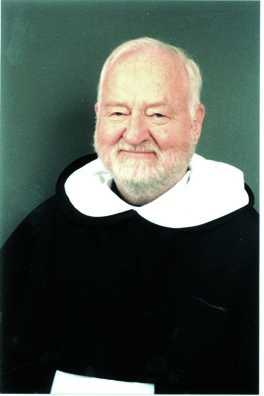
Earlier today Dominican Father Kevin O’Rourke, 84, died following being stricken by a stroke.
A rose among thorns. Well, almost. Man and woman
always want to give an expression of love and affection to another. In the
course of history you will notice the gifts of love’s sentiment and reality
given to God, the Blessed Virgin Mary and the saints. Visit a shrine where
healings are reported and you’ll notice tokens of gratitude: lockets, flowers, chalices, artwork, and the like. One beautiful gift of
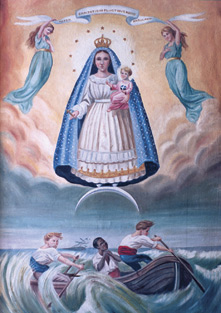
love was given by Pope Benedict Monday evening to the Virgen de la Caridad de
Cobre in Cuba: a golden rose. The papal gift of a golden rose dates back to the
middle ages when a pope held a golden rose in a procession on Laetare Sunday,
the fourth Sunday of Lent. It was Pope Eugene III who called the rose a sign of
Christ’s passion: the gold symbolizing the resurrection and the thorns the
suffering.
God did not create us for suffering and renunciation,
but for happiness, for life; not for an ephemeral happiness during life in this
world, but for an eternal and unfailing life, which can be found in God alone.
However, God passes by unnoticed by our senses, whereas the things of this
world press upon us and entice us from all sides, leading us to seek our
happiness in them.
Pope Benedict
speaking at the Welcome Ceremony in Cuba said, he comes as a pilgrim of charity
to strengthen the people in faith. 14 years ago Blessed John Paul II was in
Cuba.
The pontiff acknowledges that Cuba is looking to the future to broaden
its horizons based on the spiritual and moral values which stand out in
the many the notable people of Cuban history which serve all peoples.
Benedict
takes on selfish government practices and intellectual, spiritual and cultural
demise, by looking to the deep need for reconciliation by hope and bringing
people together.
The Pope comes to kneel down in front of Our Lady of Charity
on the 400th anniversary of her appearance in Cuban. For the Pope, and
therefore for us, he notes truth that the Holy Virgin formed our Christian
identity (our roots) were and continue to shape the soul. It is the Virgin Mary
who is the keystone of the true identity of the Cuban people pointing to her
Son, Our Lord Jesus Christ.
This is the beginning of yet another revolution in Cuba, actually, it is the Papal Revolution, Part II.
The Pope’s text follows:
Thank you, Mr President, for your welcome and your
kind words, with which you also conveyed the sentiments of respect of the Cuban
government and people for the Successor of Peter. I greet the civil authorities
here present, as well as the members of the diplomatic corps. I cordially greet
the President of the Episcopal Conference, Archbishop Dionisio Guillermo García
Ibáñez of Santiago de Cuba; the Archbishop of Havana, Cardinal Jaime Ortega y
Alamino, and my other Brother Bishops of Cuba, and I assure them of my deep
spiritual closeness. Finally, I greet with heartfelt affection all the faithful
of the Catholic Church in Cuba, the beloved people of this beautiful island,
and all Cubans wherever they may be. You are always present in my heart and
prayers, especially in the days preceding the much anticipated moment of my
visit to you, which the grace and goodness of God has made possible.
Today is the 45th anniversary of Populorum Progression (On the Development of Peoples) the 5th encyclical of the Servant of God Pope Paul VI. The 18,000 word letter deals with the socioeconomic issues of world sick building upon Blessed John XXIII’s Mater et Magistra.
Continue reading Populorum Progressio, 45 years later Pope Paul’s admonition remains true
This is old news by now, and yet it bears keeping in mind that one of the world’s longest serving abbot, Benedictine Father Abbot Matthew Leavy, OSB, PhD, will retire as the 4th abbot of Saint Anselm’s Abbey in Manchester New Hampshire after 26 years of service to his monastic community, Saint Anselm’s College, and the Church in the Diocese of Manchester.