Disciples Called to Witness: The New Evangelization

The group deputed to work with questions and programs on the teachings of the Catholic faith and the sharing of that faith with others, USCCB Committee on Evangelization and Catechesis published “Disciples Called to Witness: The New Evangelization.” There are a lot of great resources herein.  The opening paragraphs are here:
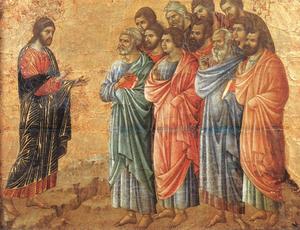
Jesus on Mt Galilee Duccio.jpg

Christ commands us to be his witnesses to the ends of
the earth. We are to proclaim his Good News to all people, everywhere and at all times. After Christ promises the disciples that the Holy Spirit will come upon them, he ascends into heaven. The disciples, rather than heeding Christ’s command to be his witnesses, stare “intently at the sky.” It takes “two men dressed in white garments” asking, “Men of Galilee, why are you . . . looking at the sky?” for the disciples to begin to realize the meaning of Christ’s command (Acts 1:10-11).

How often do we fail to realize that we are called to be Christ’s witnesses to the world? Do we realize that our Baptism, Confirmation, and reception of the Eucharist bestow on us the grace we need to be disciples? Are we like the disciples staring at the sky rather than inviting those around us to experience Christ’s love and mercy through the Church? How often do we reach out to our missing brothers and sisters by inviting them to join us at Mass or by asking why they no longer feel welcomed at the Lord’s Table? The answers to these questions underlie the evangelizing mission of the Church, especially in the call of the New Evangelization

The New Evangelization seeks to invite modern man and culture into a relationship with Jesus Christ and his Church. The New Evangelization strives to engage our culture and to help us draw our inspiration from the Gospel. The New Evangelization calls all Catholics first to be evangelized and then in turn to evangelize. While it is directed to all people, the New Evangelization focuses specifically on those Christian communities that have Catholic roots but have “lost the living sense of the faith, or even no longer consider themselves members of the Church…”

The Fortnight for freedom – a proposal of prayer for matters of freedom


Our Catholic bishops in American published “Our
First, Most Cherished Liberty
,” a12-page statement by the Ad Hoc Committee
on Religious Liberty that sets out to explain what religious freedom means to a
Catholic and it also calls for “a fortnight for freedom” from June 21,
the vigil of the feasts of Saint John Fisher and Saint Thomas More, to July 4,
US Independence Day. 


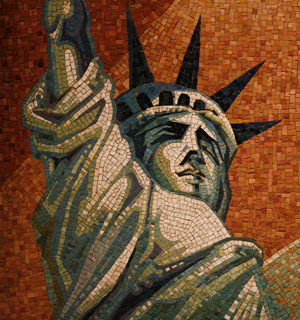
The matter of our freedom is not merely an activist mentality, but it is centrally located in our prayer life. AND that’s what we should do– pray. This is what the bishops propose:


Lady Liberty.jpg

We suggest that the
fourteen days from June 21–the vigil of the Feasts of St. John Fisher and St.
Thomas More–to July 4, Independence Day, be dedicated to this “fortnight for
freedom”–a great hymn of prayer for our country. Our liturgical calendar celebrates
a series of great martyrs who remained faithful in the face of persecution by
political power–St. John Fisher and St. Thomas More, St. John the Baptist, SS.
Peter and Paul, and the First Martyrs of the Church of Rome. Culminating on
Independence Day, this special period of prayer, study, catechesis, and public
action would emphasize both our Christian and American heritage of liberty.
Dioceses and parishes around the country could choose a date in that period for
special events that would constitute a great national campaign of teaching and
witness for religious liberty.

In addition to this summer’s observance, we also
urge that the Solemnity of Christ the King–a feast born out of resistance to
totalitarian incursions against religious liberty–be a day specifically
employed by bishops and priests to preach about religious liberty, both here
and abroad.

And we pray….


Almighty God, Father of all nations,
For freedom you have set us
free in Christ Jesus (Gal 5:1).
We praise and bless you for the gift of
religious liberty,
the foundation of human rights, justice, and the common
good. 
Grant to our leaders the wisdom to protect and promote our liberties; 
By
your grace may we have the courage to defend them, 
for ourselves and for all
those who live in this blessed land. 
We ask this through the intercession of Mary
Immaculate, our patroness, and in the name of your Son, our Lord Jesus Christ,
in the unity of the Holy Spirit, with whom you live and reign, one God, for
ever and ever. Amen.

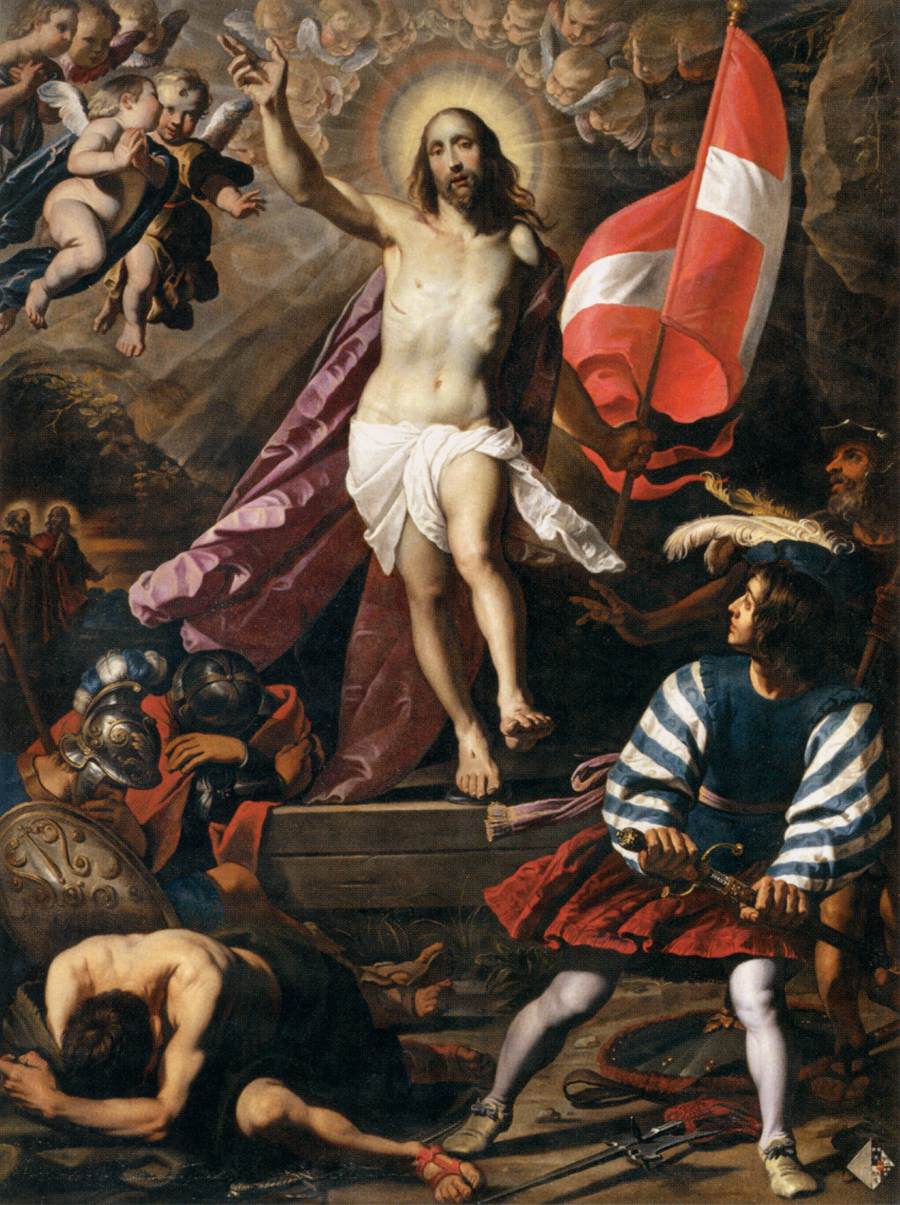
O day of resurrection!


Resurrection Seghers.jpg


O day of resurrection!

Let us beam with God’s own
pride!
Let everyone embrace in joy!
Let us warmly greet those we meet and treat
them all like brothers,
even those who hate us, for in His rising from the dead
is all grace and pardon! 
Let all the earth resound with this song:
Christ is
risen from the dead, conquering death by death,
and on those in the grave
bestowing life!!!

What we hold most dear — the Communion and Liberation response to the HSS mandate


The US leadership of the Catholic lay ecclesial movement Communion and Liberation issued a flyer on the recent events concerning the HSS mandate to curb religious freedom. The flyer is written in light of recent US bishops’ statement on religious liberty. As you might expect, what’s at the center of the controversy is our witness that Christ is the way, the truth and the life.

What is at stake in this moment of our history is not
just the possibility for religious groups to continue to give their own
original contribution to American society, but also the possibility for any man
or woman to gain access to the truth of life. For this reason, we will not give
up the right to publicly witness to the world, through our lives and our work,
what we hold most dear. With the words of the Russian writer Vladimir Soloviev,
we repeat today what Christians have been repeating for 2,000 years.


“In the
grieved voice the Emperor addressed them: ‘Tell me yourselves, you strange
people…you Christians, deserted by the majority of your brothers and leaders:
what do you hold most dear in Christianity?’ At this Elder John rose up and
said in a quiet voice: ‘Great sovereign! What we hold the most dear in
Christianity is Christ Himself – He in His person. All the rest comes from Him,
for we know that in Him dwells bodily the whole fullness of Divinity.'”

The entire statement can be read here: What we hold most dear – a CL flyer 2012.pdf

Pope Benedict turns 85


B16 bday celebration.jpgToday is the 85th anniversary of the birth and the
Baptism of Hi Holiness, Pope Benedict XVI. Let’s  pray for the Pope and his intentions today. 


V. Let us pray for our
Pontiff, Pope Benedict.

R. May the Lord preserve him, and give him life, and
bless him upon earth, and deliver him not to the will of his enemies. 

Our
Father. Hail Mary. 

Let us pray. O God, Shepherd and Ruler of all Thy faithful
people, look mercifully upon Thy servant Benedict, whom Thou hast chosen as
shepherd to preside over Thy Church. Grant him, we beseech Thee, that by his
word and example, he may edify those over whom he hath charge, so that together
with the flock committed to him, may he attain everlasting life. Through Christ
our Lord. Amen.

Saint Benedict Joseph Labre

Antonio Cavallucci St Benedict Joseph Labre.jpg

Today’s feast of Saint Benedict Joseph Labre is a beautiful reminder of the humility with which we face God, our own humanity, and the world.
The Missal speaks of Benedict Joseph as a “Fool for Christ”: he met Christ with his whole self, the physical and psychological weaknesses and the desire to be in communion with his Savior. Benedict Joseph has much to teach.
The story of Saint Benedict Joseph is nicely painted by a friend, Father Mark here.

Let’s pray for all those who face life with difficulties, especially the mentally unstable and the homeless. That for the Grace of God, there we go through life.
On his birthday, let’s remember Pope Benedict.

The Christian … like the Easter Candle

paschal candle St Catherine of Siena Church NYC.jpeg

Last week, during his Easter vigil homily, Pope Benedict XVI said: …the Church presents the mystery of light using a unique and very humble symbol: the Paschal candle. This is a light that lives from sacrifice. The candle shines inasmuch as it is burnt up. It gives light, inasmuch as it gives itself. Thus the Church presents most beautifully the paschal mystery of Christ, who gives himself and so bestows the great light. Secondly, we should remember that the light of the candle is a fire. Fire is the power that shapes the world, the force of transformation. And fire gives warmth. Here too the mystery of Christ is made newly visible. Christ, the light, is fire, flame, burning up evil and so reshaping both the world and ourselves.” St. Catherine of Siena once said: “If you are what you should be, you will set the whole world on fire.” Bishop Roman’s last hours were spent in the same way he spent his entire life: evangelizing, preaching the gospel. He was what he should have been: a friend of the poor, the sick, the imprisoned, the exile and the immigrant. He was a friend to us all – because he was first of all and above all a friend of Jesus. He was light; he was fire. His passion for evangelization, for catechesis, was never about making people follow him but rather it was about leading them to Jesus.

Archbishop Thomas Wenski

from the Funeral homily for Bishop Agustín Román

April 14, 2012

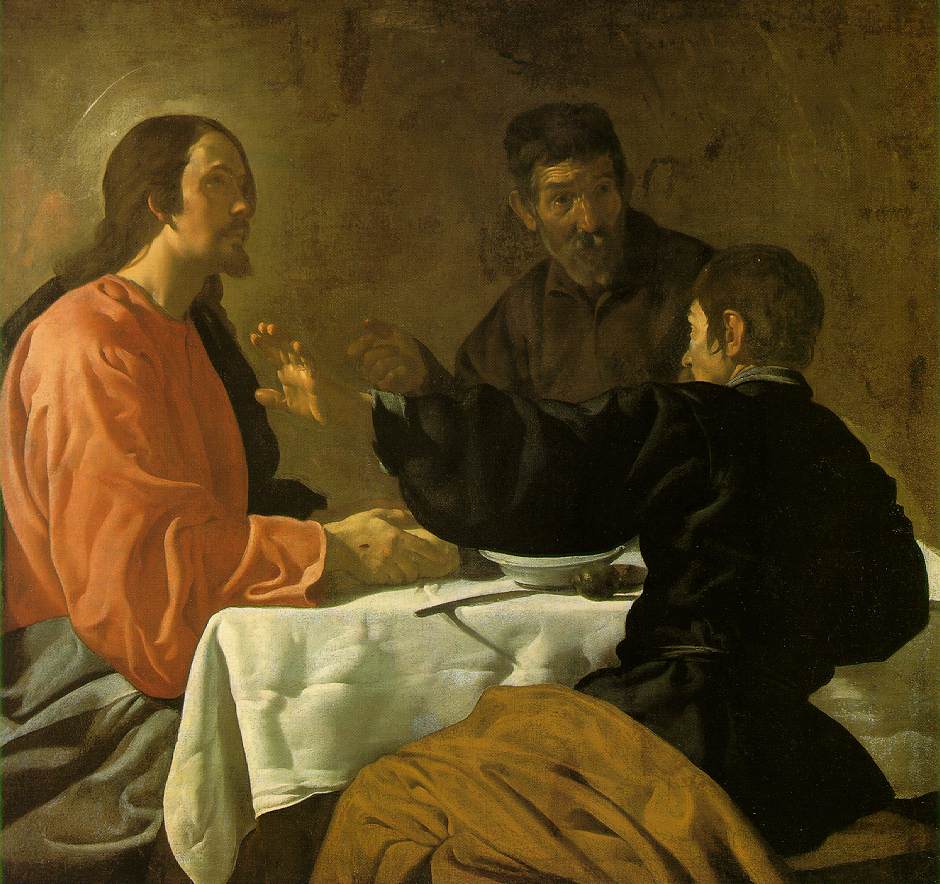
Christ risen is constantly present


Supper at Emmaus DVelaquez.jpg

Today
Eucharist means the Risen Lord is constantly present, Christ who continues to
give Himself to us, calling us to participate in the Banquet of His Body and
Blood. From the full communion with Him comes every other element of the life
of the Church, in the first place the communion among the Faithful, the
commitment to proclaim and give witness to the Gospel, the ardor of charity
towards all, especially toward the poor and the smallest.

Pope Benedict XVI


The Pope hits on something significant in the life of the Christian: keeping in front of oneself that God has not abandoned humanity AND that He thirsts for us, He desires to be in relationship with us. In our daily living the baptized seek the face of God (as it is spoken of in the Scriptures) and to recognize Christ in the faces of the people around us and in creation.

This week we’ve heard some beautiful readings of the resurrected Lord thus giving perspective on His previous preaching about the Cross. The resurrection makes things clearer, hopeful. The resurrected Christ laughs in the face of death. Now, He is present to us not merely in one location but now in all places and constantly through the Eucharist. The Incarnation is now a recognizable Divine Fact that walking and talking could not manage. By action of the Holy Spirit Christ is present to all who call on his Name. And we ought to give witness to this fact.

Can God still surprise me?

Emmaus detail Caravaggio.jpgEarlier this evening at the School of Community we were talking about our problem recognizing Christ in daily living. In what ways am I moved by Christ? A (vigorous) prayer life keeps us focussed on the meaning of our life in Christ.

Taking some clues from Father Julián Carrón may be helpful to those who want to make sense of the spiritual life.  Father Carrón encourages a few things:
1. to understand that we need an awareness of ourself;
2. to be mindful that we never fully possess Christ in this life because Christ is a Mystery; that to possess we’d be alone and that is not what the Holy Trinity has promised;
3. yes, it is easy to complain about not being “connected” to Christ in a meaningful manner but we need to consider that to really engage in the Fact and Event of the Incarnation of the Word Made Flesh is to accept that Christ is not reducible to an idea or an opinion;
4. to recall that to have real confidence that God loves me unconditionally; that is not say that God doesn’t care about the sinful things we do, He does and he desires true Charity and justice, but His Mercy for our being is stronger than anything we could imagine.

Continue reading Can God still surprise me?

Our First, Most Cherished Freedom — the US Bishops speak up for religious liberty


We the People.jpg

Today, the US
bishops issued a call to action to defend religious liberty and urged laity to
protect the First Freedom of the Bill of Rights. No doubt there is 
considerable consternation surrounding
the proposed usurpation of our legal freedom of religion: clearly the US
President has forgotten the first clause of the Bill of Rights: “Congress shall
make no law respecting an establishment of religion, or prohibiting the free
exercise thereof….”

The statement,
“Our First, Most Cherished Freedom,” aims to inform and to encourage the entire
Christian Church in North America –and beyond–in understanding what the Church teaches on religious liberty. Moreover, the US bishops want to encourage a rightful role in
defending the first of our American liberties. Being Catholic 
or a person of faith does not mean that we give up a sense of reasonableness and citizenship. The bishops published this work in order
to reassert their voice in the public square, thus bridging the gap of faith and reason
for a coherent national debate on matters of concern. Religion cannot be
relegated to the closet. Like most documents of the Church, this one also hopes
not only to impart information but also to form Catholics (indeed, all
Christians) as faithful citizens. It is our Christian belief that religious liberty is God-given and is not
imparted by our elected officials. “Our First, Most Cherished Freedom” is a
document of the Bishops’ Ad Hoc Committee on Religious Liberty.

Continue reading Our First, Most Cherished Freedom — the US Bishops speak up for religious liberty