Christ risen is constantly present


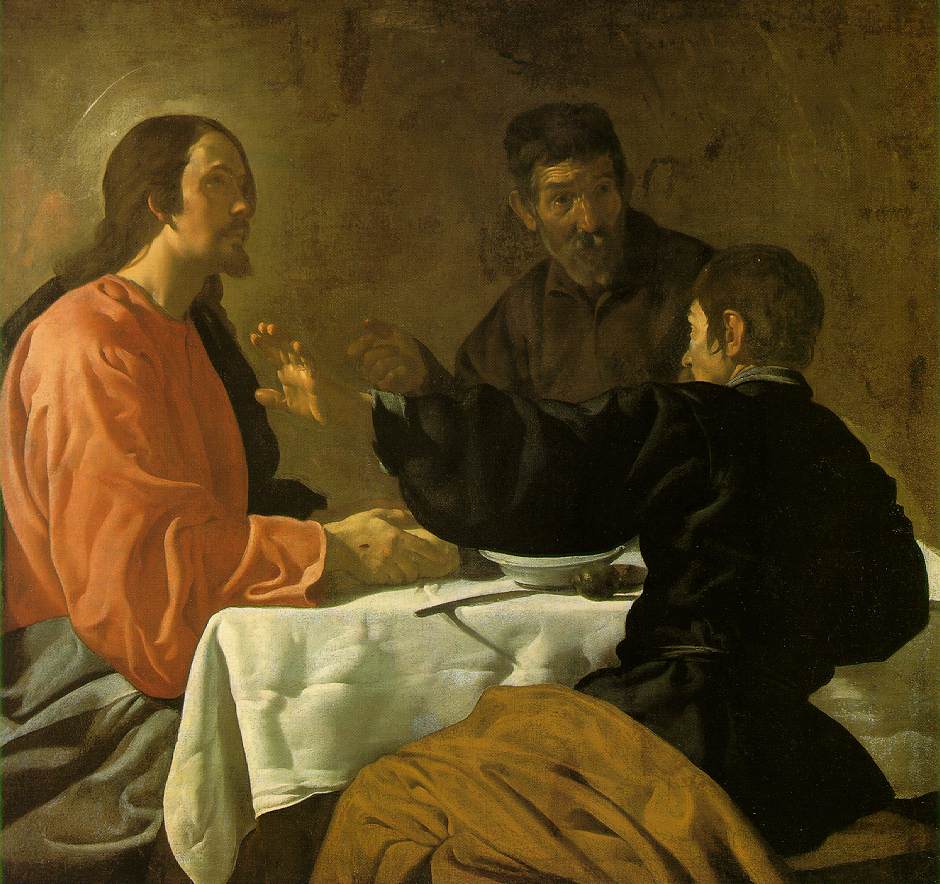
Supper at Emmaus DVelaquez.jpg

Today
Eucharist means the Risen Lord is constantly present, Christ who continues to
give Himself to us, calling us to participate in the Banquet of His Body and
Blood. From the full communion with Him comes every other element of the life
of the Church, in the first place the communion among the Faithful, the
commitment to proclaim and give witness to the Gospel, the ardor of charity
towards all, especially toward the poor and the smallest.

Pope Benedict XVI


The Pope hits on something significant in the life of the Christian: keeping in front of oneself that God has not abandoned humanity AND that He thirsts for us, He desires to be in relationship with us. In our daily living the baptized seek the face of God (as it is spoken of in the Scriptures) and to recognize Christ in the faces of the people around us and in creation.

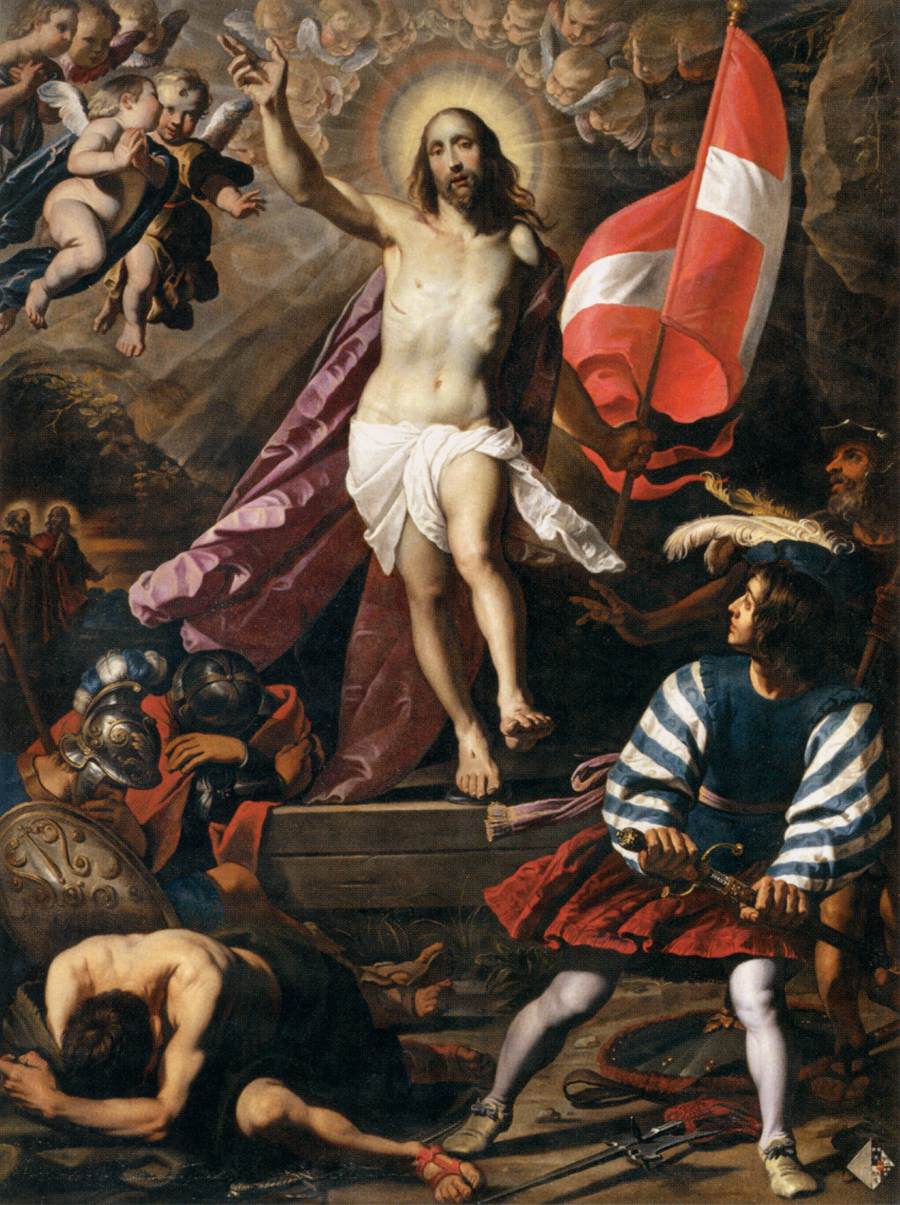
This week we’ve heard some beautiful readings of the resurrected Lord thus giving perspective on His previous preaching about the Cross. The resurrection makes things clearer, hopeful. The resurrected Christ laughs in the face of death. Now, He is present to us not merely in one location but now in all places and constantly through the Eucharist. The Incarnation is now a recognizable Divine Fact that walking and talking could not manage. By action of the Holy Spirit Christ is present to all who call on his Name. And we ought to give witness to this fact.

Can God still surprise me?

Emmaus detail Caravaggio.jpgEarlier this evening at the School of Community we were talking about our problem recognizing Christ in daily living. In what ways am I moved by Christ? A (vigorous) prayer life keeps us focussed on the meaning of our life in Christ.

Taking some clues from Father Julián Carrón may be helpful to those who want to make sense of the spiritual life.  Father Carrón encourages a few things:
1. to understand that we need an awareness of ourself;
2. to be mindful that we never fully possess Christ in this life because Christ is a Mystery; that to possess we’d be alone and that is not what the Holy Trinity has promised;
3. yes, it is easy to complain about not being “connected” to Christ in a meaningful manner but we need to consider that to really engage in the Fact and Event of the Incarnation of the Word Made Flesh is to accept that Christ is not reducible to an idea or an opinion;
4. to recall that to have real confidence that God loves me unconditionally; that is not say that God doesn’t care about the sinful things we do, He does and he desires true Charity and justice, but His Mercy for our being is stronger than anything we could imagine.

Continue reading Can God still surprise me?

Our First, Most Cherished Freedom — the US Bishops speak up for religious liberty


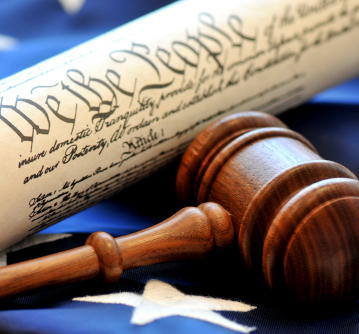
We the People.jpg

Today, the US
bishops issued a call to action to defend religious liberty and urged laity to
protect the First Freedom of the Bill of Rights. No doubt there is 
considerable consternation surrounding
the proposed usurpation of our legal freedom of religion: clearly the US
President has forgotten the first clause of the Bill of Rights: “Congress shall
make no law respecting an establishment of religion, or prohibiting the free
exercise thereof….”

The statement,
“Our First, Most Cherished Freedom,” aims to inform and to encourage the entire
Christian Church in North America –and beyond–in understanding what the Church teaches on religious liberty. Moreover, the US bishops want to encourage a rightful role in
defending the first of our American liberties. Being Catholic 
or a person of faith does not mean that we give up a sense of reasonableness and citizenship. The bishops published this work in order
to reassert their voice in the public square, thus bridging the gap of faith and reason
for a coherent national debate on matters of concern. Religion cannot be
relegated to the closet. Like most documents of the Church, this one also hopes
not only to impart information but also to form Catholics (indeed, all
Christians) as faithful citizens. It is our Christian belief that religious liberty is God-given and is not
imparted by our elected officials. “Our First, Most Cherished Freedom” is a
document of the Bishops’ Ad Hoc Committee on Religious Liberty.

Continue reading Our First, Most Cherished Freedom — the US Bishops speak up for religious liberty

Fra’ Andrew Bertie’s study in the cause for beatification opened


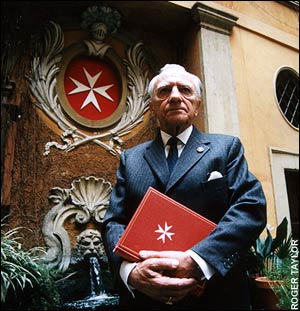
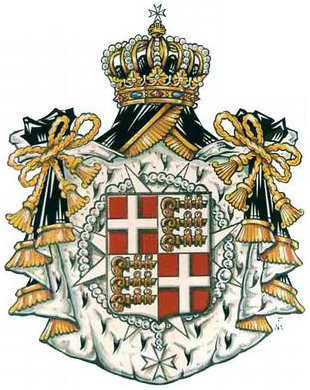
Andrew Bertie.jpgThe Grand Magistry of the Order of Malta has informed its members that the process to study toward the beatification of the former Grand Master and Prince, Fra’ Andrew Willoughby Ninian Bertie.

 
His Most Eminent Highness, Fra’ Andrew died in Rome on February 7, 2008 at 78 years (he was born May 15, 1929). Berite was admitted to the Order in 1956 and was the 78th head of the Sovereign Military Order of Malta, the successor of Blessed Gerard. Fra’ Andrew was the youngest son of the 7th Earl of Abigngdon; both sides of his family has royal ties through the centuries. Bertie was educated at Ampleforth Abbey School, Christ Church, Oxford and at the School of Oriental and African Studies at the University of London. He taught French and Spanish for 23 years at the Worth Abbey School, run by the Benedictine monks.


Bertie arms.jpg

In April 1988, Andrew Bertie was elected the Grand Master of the Order of Malta, Fra’ Angelo de Mojana di Cologna. It is long known that Fra’Andrew was followed closely the official
motto of the order is Tuitio Fidei et Obsequium Pauperum, “Defense of the Faith and Service of the Poor.” 
 
Several years ago the Order of Malta was credited to
having about 13, 000 Knights and Dames, 80,000 volunteers (15,000 trained as doctors and nurses), and a presence in 200 hospitals. The Order has an official presence in 120 countries. I am sure the data could be updated.

 
Fra’ James-Michael von Strobel has been charged to compile a list of persons in the United States who knew Fra’ Andrew and would support favorably this cause.

 
Please contact Fra’ James-Michael if you care to give support in this endeavor. jmvonstroebel@hotmail.com 
 
Pope Benedict XVI spoke of Fra’ Andrew and praised “the work of this man of culture and of his generous commitment in the fulfillment of his high office, especially in favor of those most in need, and for his love for the Church and for his luminous testimony of the principles of the Gospel.”
 
Fra’ Andrew was succeeded by Fra’ Matthew Festing.
Enhanced by Zemanta

Saint Stanislaus, bishop and martyr

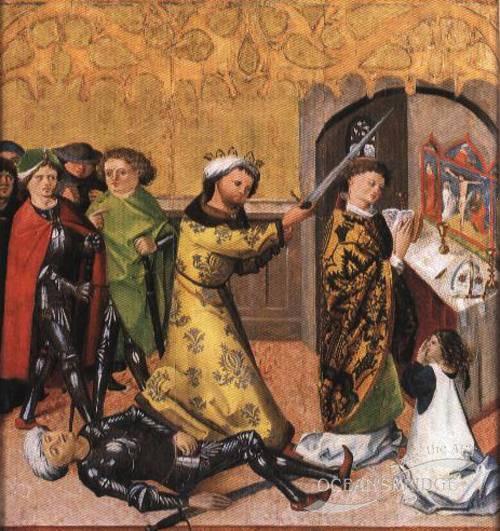
1490 Martyrdom of St Stanislaus of Krakow.jpg

O God, for whose honor the Bishop Saint Stanislaus fell beneath the swords of his persecutors, grant, we pray, that we may persevere strong in faith even until death.

I’ve been devoted to Saint Stanislaus for many, many years. He was the patron of my grammar school. In fact, his story mirrors Saint Thomas Becket. Like Becket, Stanislaus spoke truth to power and it cost him his head for the sake of the Kingdom of God.

Saint Stanislaus, pray for Poland.


Christ’s resurrection means that now our humanity is elevated to the divine

Addressing all Christians through the mouth of Saint Paul, the Spirit cries out: “If you have risen with Christ, seek the things that are above, where Christ is seated at the right hand of God” (Colossians 3:1).

Resurrection, Giotto.jpg

For all its brevity, that sentence contains the most amazing assertion. In effect, it signifies not only that Christ has risen and that we ourselves shall one day rise with him, but that we have already risen with Christ through our baptism. The whole mystery of what it is to be a Christian subsists in that statement. Apparently, our human condition remains unchanged; yet Christ’s resurrection has already accomplished its transforming work in the hidden world of our souls. Christians are now only waiting for the outward manifestation of what has already been achieved in Christ. Saint Paul, in fact, goes on to say: “Your life is hidden with Christ in God. When Christ who is your life is revealed, then you too will be revealed with him in glory” (Colossians 3:3-4).

The resurrection, therefore, means that here and now our humanity is elevated to the inaccessible realm of the divine. The resurrection is the Good News par excellence, the glorious destiny, far above its own nature, to which the Father’s love has called the human race in his only Son through the gift of the Spirit.

All this only possible through the action of God. In Christ, God comes down to us, takes our carnal nature, and raises it above itself in order to carry it into the intimate presence of the Father, where Christ is seated at the right hand of God.

Thus the resurrection of Christ constitutes the first-fruits of our own resurrection. With Christ, part of our humanity is already taken up into the abyss of the Godhead. According to the metaphor employed by the writer to the Hebrews, Christ is like an anchor, which instead of being let down in the depths of the sea, is cast up into the heights of heaven (cf. Hebrews 6:19). He is the guarantee of our hope, because that hope has already been fulfilled in him.

Jean Cardinal Danielou, S.J. (1905-1974)

Felix Varela’s cause for canonization moves ahead

Felix Varela.jpegThe Congregation for Saints has told Bishop Octavio Cisneros, an auxiliary bishop of Brooklyn that the Servant of God Felix Varela’s cause has been accepted by the Pope as a man of heroic and cardinal virtue. He will be given the title “Venerable Servant of God.” Cisneros is the vice-postulator of Varela’s cause.

Father Varela (1788-1853) was ordained a priest in Havana and came to the USA to serve as a priest. In 1837 he was appointed the Vicar General of New York diocese, the number two in responsibility for a diocese. He founded the first Spanish language newspaper in the USA, the founder of the New York Churches of the Transfiguration and Saint James and was a delegate to Council of Balltimore with Bishop DuBois.
The Cuban American priest worked for the needs of the immigrants, especially the Irish immigrants at time when the Irish were maltreated. Father Varela was an ardent fighter for freedom here in the USA and abroad;  he spoke for the freedom for the Colonies, from slavery and for the religious freedom of the Church.
Let’s pray that God will soon glorify Father Felix to the Altars.

The 13th Station: a mother and son united by an unfathomable bond both human and divine

Thumbnail image for Mother with Son detail.jpg

After this Joseph of Arimathea, who was a disciple of Jesus, but secretly, for fear of the Jews, asked Pilate that he might take away the body of Jesus, and Pilate gave him leave. So he came and took away his body.

Mary sees her son die, the Son of God and her son too. She knows that he is innocent, but took upon himself the burden of our misery. The mother offers her son, the son offers his mother. To John and to us.

Jesus and Mary: here we see a family that on Calvary suffers as it experiences the ultimate separation. Death parts them, or at least it seems to part them: a mother and son united by an unfathomable bond both human and divine. Out of love they surrender it. Both abandon themselves to the will of God.

Into the chasm opened in Mary’s heart comes another son, one who represents the whole human race. Mary’s love for each of us is the prolongation of her love for Jesus. In Jesus’ disciples she will see his face. And she will live for them, to sustain them, to help them, to encourage them and to help them to acknowledge the love of God, so that they may turn in freedom to the Father.


What do they say to me, to us, to our families, this mother and son on Calvary? Each of us can only halt in amazement before this scene. We know instinctively that this mother and this son are giving an utterly unique gift. In them we find the ability to open our hearts and to expand our horizons to embrace the universe.

There, on Calvary,
at your side, Jesus, who died for us,
our families welcome the gift of God:
the gift of a love 
which can open our arms to the infinite.

The 13th Station Meditation of the Way of the Cross, Rome

Danilo and Anna Maria Zanzucchi

In that crucified Man, … the Son of God, even death itself takes on new meaning and purpose: it is redeemed

the Cross of Christ.jpg

Once more in meditation, prayer and song, we have recalled Jesus’s journey along the way of the cross: a journey seemingly hopeless, yet one that changed human life and history, and opened the way to “new heavens and a new earth” (cf. Rev 21:1).  Especially today, Good Friday, the Church commemorates with deep spiritual union the death of the Son of God on the cross; in his cross she sees the tree of life, which blossoms in new hope.

The experience of suffering and of the cross touches all mankind; it touches the family too.  How often does the journey become wearisome and difficult!  Misunderstandings, conflicts, worry for the future of our children, sickness and problems of every kind.  These days too, the situation of many families is made worse by the threat of unemployment and other negative effects of the economic crisis.  The Way of the Cross which we have spiritually retraced this evening invites all of us, and families in particular, to contemplate Christ crucified in order to have the force to overcome difficulties.  The cross of Christ is the supreme sign of God’s love for every man and woman, the superabundant response to every person’s need for love.  At times of trouble, when our families have to face pain and adversity, let us look to Christ’s cross.  There we can find the courage and strength to press on; there we can repeat with firm hope the words of Saint Paul: “Who will separate us from the love of Christ?  Will hardship, or distress, or persecution, or famine, or nakedness, or peril, or sword? … No, in all these things we are more than conquerors through him who loved us” (Rom 8:35, 37).

In times of trial and tribulation, we are not alone; the family is not alone.  Jesus is present with his love, he sustains them by his grace and grants the strength needed to carry on, to make sacrifices and to overcome every obstacle.  And it is to this love of Christ that we must turn when human turmoil and difficulties threaten the unity of our lives and our families.  The mystery of Christ’s suffering, death and resurrection inspires us to go on in hope: times of trouble and testing, when endured with Christ, with faith in him, already contain the light of the resurrection, the new life of a world reborn, the passover of all those who believe in his word.

In that crucified Man who is the Son of God, even death itself takes on new meaning and purpose: it is redeemed and overcome, it becomes a passage to new life.  “Unless a grain of wheat falls into the earth and dies, it remains just a single grain; but if it dies, it produces much fruit” (Jn 12:24).  Let us entrust ourselves to the Mother of Christ.  May Mary, who accompanied her Son along his way of sorrows, who stood beneath the cross at the hour of his death, and who inspired the Church at its birth to live in God’s presence, lead our hearts and the hearts of every family through the vast mysterium passionis towards the mysterium paschale, towards that light which breaks forth from Christ’s resurrection and reveals the definitive victory of love, joy and life over evil, suffering and death.  Amen.


Pope Benedict XVI

Address following the Via Crucis

Good Friday

6 April 2012

Christ on the silver screen –Momentum Studios

The laity are stepping up to the plate to evangelize because it is part of the baptismal call to make disciples of all nations. We are now seeing more and more talented young people coming forward to share with the world the Truth of the faith proposed by Christ for our salvation. Two men from Saint Mary’s Church (Greenville, SC) pastored by Father Jay Scott Newman, have formed The Momentum Studios as a Catholic company that aims to ignite our enthusiasm, adherence and love for Christ and His Church.

A recent Momentum Studios piece is on the Stations of the Cross. See it here
We look forward to more.