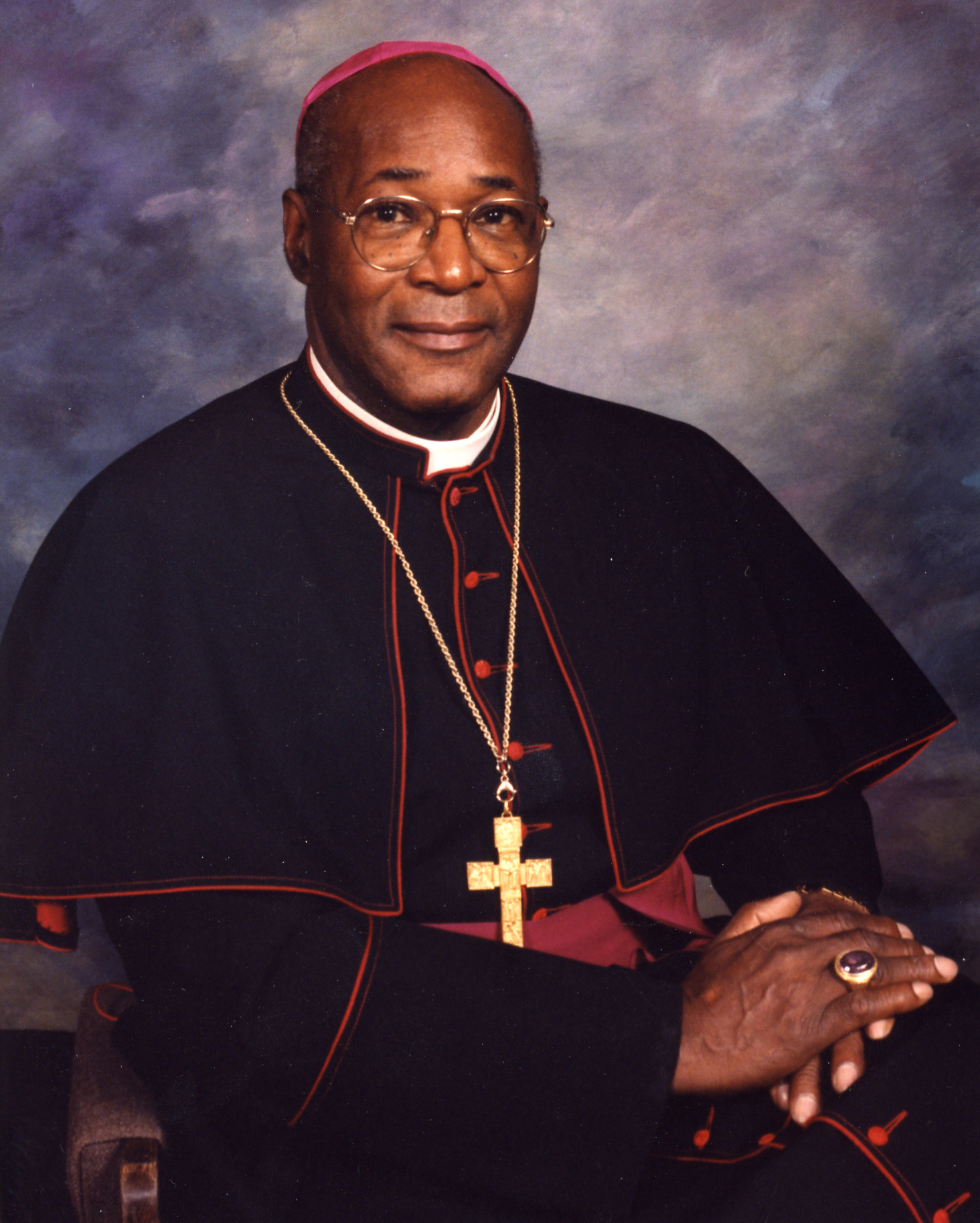
The Most Reverend Moses Bosco Anderson, SSE, 84, died on January 1, 2013, in Detroit.
Author: Paul Zalonski
Holy Name of Jesus
At the name of Jesus, every knee should bend, of those in heaven and on earth and under the earth, and every tongue confess that Jesus Christ is Lord, to the glory of God the Father.
(Phil 2:10-11, entr. ant.)
We honor the Holy Name of Jesus today. In the middle of Christmastide, we take time to recall the saving power of the holy name of Jesus: He who saves, He who is the eternal Word of the Father.
The Church prays,
O God, who founded the salvation of the human race on the Incarnation of your Word, give your peoples the mercy they implore, so that all may know there is no other name to be invoked but the Name of your Only Begotten Son.
You may want to seek out your Bible to discover, or re-discover some passages. Look at the first three Commandments, plus Psalm 99:3, Mark 16:17-18, Luke 1:31, Acts 3:6; 9:34; 9:40, John 16:23, and Philippians 2:9-11.
It seems to me that with all this good teaching as an invitation to my own conversion, I need to watch what I say with regard to the Lord’s Name. Instead of using the name of Jesus in a vulgar manner, I ought to have the habit of making the aspiration, “Jesus” slowly and deliberately.
Pray the Litany of the Holy Name today.
In the Pope’s teaching on January 2 where he picks up Pilate’s question of the origin of Jesus. A question that all of us ought to ask. It is more than an intellectual exercise, it is a matter of truth, it is a matter of our following the One sent by our Creator. If you can’t answer this question immediately, keep on reading. Pope Benedict says,
We can answer that “…from the beginning of the Gospels, what Jesus’ true origin is: He is the only begotten Son of the Father. He comes from God. We are facing the great and disconcerting mystery that we celebrate in this time of Christmas: the Son of God, by the power of the Holy Spirit, became man in the womb of the Virgin Mary. This is an announcement that resounds every new and which carries with it hope and joy to our hearts because each time it gives us the certainty that, even if we often feel weak, poor, incapable of facing the difficulties and the evil of the world, the power of God is always acting and works wonders precisely in our weakness. His Grace is our strength.”
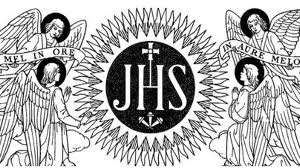
Saints such as Bernard, Bernardine of Siena, Ignatius of Loyola among others have promoted the devotion to the Holy Name of Jesus. The image of IHS comes from the first 3 letter of Jesus’ name written IHESUS.
AND, His name is our glory.

Can working for the Church be a good thing?
Ideas bounce around my head about working for the Church if one is not a member of the clergy or a religious order. Some of my friends would say, “Why bother?” There’s some truth in this attitude. There’s a lot of problems with working in the Church these days and not all of it regarding pay. Let’s just say, working for the Church can be a great place to use your talent for Someone greater and for eternal consequences. Experience tells me that church-working need not be a sad, hostile, dysfunctional place to spend one’s life. BTW, what I say is not only for the laity because the clergy have the same issues.
- a great place to work at; a fun place to work, a welcoming, loving & fulfilling culture
- a place where a good use of technology possible for the Gospel (tech is hot these days)
- a place to network with Catholics (Christians and “seekers”) to propose a new lens of life
- time available to see how your work affects lots of people
- a place that will teach you something new
- pay and perks that strive to be competitive
- a place where the employees are happy
- have opportunities for spiritual development.
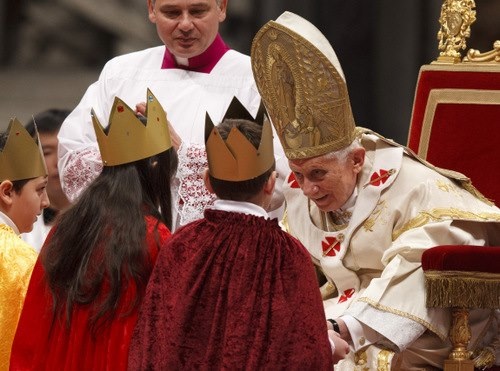
Pope meets the Kings
The saint and his bear: Saint Seraphim of Sarov
Several years ago I was introduced to the figure of Saint Seraphim of Sarov ((1759-1833). He was a monk, priest, hermit and ascetic. He was known for his wisdom and humanity. In the Orthodox church he held the title of “startsy,” that is, a charismatic elder (in the strict sense of the word) “anointed” by the Holy Spirit with the gifts of prophesy, healing, discernment of God’s will. Saint Seraphim, you might say, was a spiritual father.
There is a story about Saint Seraphim that gives an interesting side to the man. It reads something to this effect,
“Two nuns from a
certain convent once came to visit Saint Seraphim. Suddenly a bear lumbered
unexpectedly out of the woods and frightened the visitors with his appearance.
“Misha,” – said the saint, – “why do you frighten the poor orphans! Go back and
bring us a treat, otherwise I have nothing to offer to my guests.” Hearing
these words, the bear went back into the woods, and two hours later he tumbled
into the holy elder’s cell and gave him something covered with leaves. It was a
fresh honeycomb of purest honey. Father Seraphim took a piece of bread from his
bag, gave it to the bear, pointed to the door – and the bear left immediately.”
I wonder if Saint Seraphim is invoked by those who have troubled bears? I am sure his guidance would be helpful.
Peace with God firmly linked with faith, Pope preaches on Jan. 1
Do you ever ask what peace really is? What are the horizons of peace? Why is the name of Jesus held holy, revered, not to be easily used in common speech? What brings every man, woman and child peace? Who is Mary, and why is she important? Pope Benedict answers these questions in a homily at a Mass he celebrated today to mark the New Year, the World Day of Peace, the solemnity of Mary, the Holy Mother of God.
“May God bless
us and make his face to shine upon us.” We proclaimed these words from Psalm 66
after hearing in the first reading the ancient priestly blessing upon the
people of the covenant. It is especially significant that at the start of every
new year God sheds upon us, his people, the light of his Holy Name, the Name
pronounced three times in the solemn form of biblical blessing. Nor is it less
significant that to the Word of God – who “became flesh and dwelt among us” (Jn
1:14) as “the true light that enlightens every man” (1:9) – is given, as
today’s Gospel tells us, the Name of Jesus eight days after his birth (cf. Lk
2:21).
It is in this Name that we are gathered here today. I cordially greet
all present, beginning with the Ambassadors of the Diplomatic Corps accredited
to the Holy See. I greet with affection Cardinal Bertone, my Secretary of
State, and Cardinal Turkson, with all the officials of the Pontifical Council
for Justice and Peace; I am particularly grateful to them for their effort to spread
the Message for the World Day of Peace, which this year has as its theme
“Blessed are the Peacemakers”.
Continue reading Peace with God firmly linked with faith, Pope preaches on Jan. 1
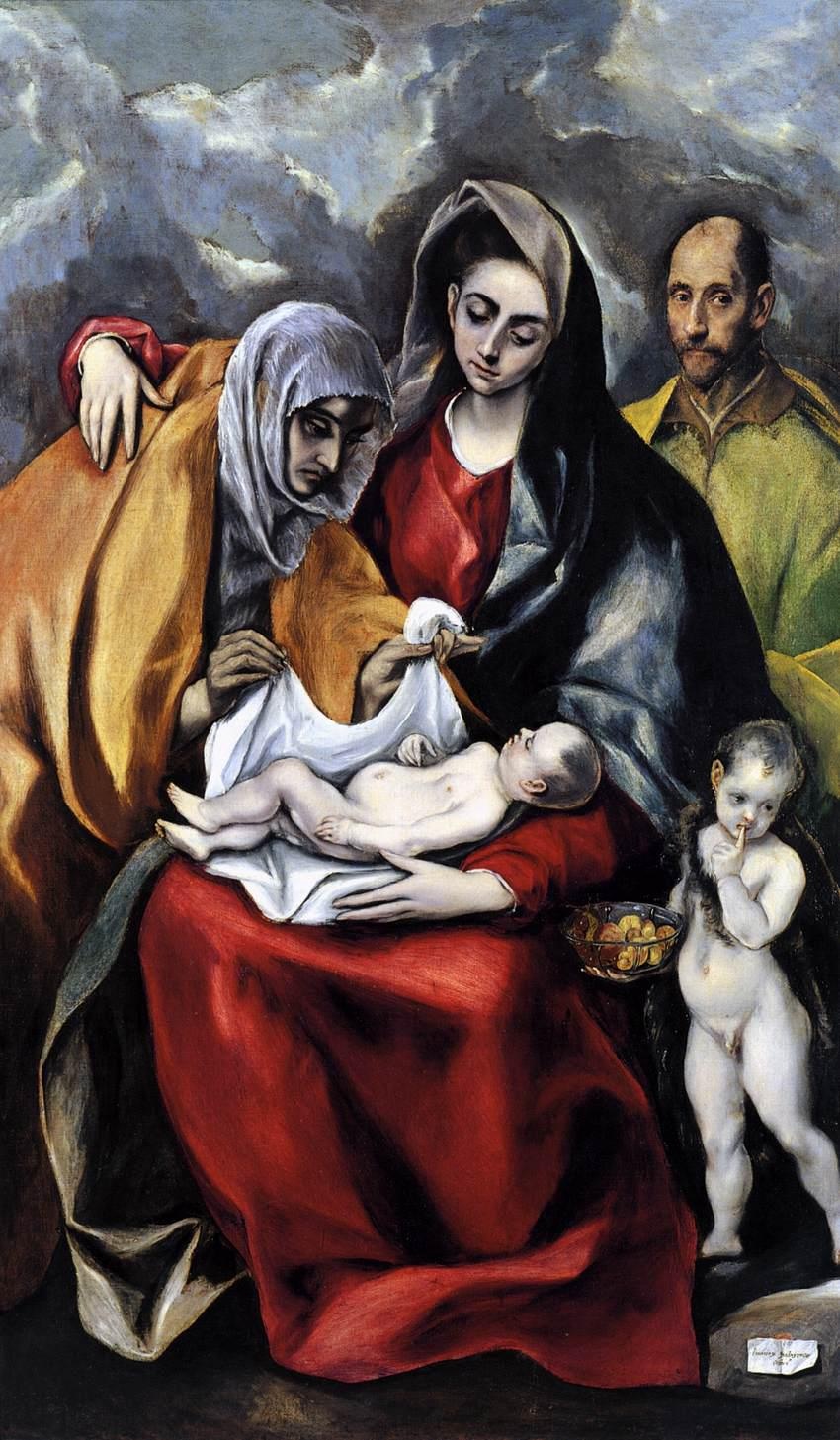
Mary, the Holy Mother of God
St Benedict’s Prologue to the Holy Rule: orienting 2013
The new year needs a proper orientation: may I propose that we need to listen, that is, to be silent (once in a while) and to attend to what the Lord, the Church, friends and family are saying. Here I think we would do well to hear what a master has to say about our work. A few years ago Pope Benedict spoke about an ancient form of the spiritual life, Benedictinism, that is often misunderstood, and yet it corresponds to the heart. Known as the Patriarch of Western monasticism, Benedict of Nursia, is the father of compassion, a man of blessing, a forthright teacher. The Pope said that,
St. Benedict’s spirituality was not an interiority removed from reality. In the anxiety and confusion of his day, he lived under God’s gaze and in this very way never lost sight of the duties of daily life and of man with his practical needs. Seeing God, he understood the reality of man and his mission” (April 9, 2008).
Saint Benedict of Nursia writing his Rule ~a 1929 portrait at Heiligenkreuz Abbey, Austria by Herman Nieg.
L I S T E N carefully, my child, to your master’s
precepts, and incline the ear of your heart (Prov. 4:20). Receive willingly and
carry out effectively your loving father’s advice, that by the labor of
obedience you may return to Him from whom you had departed by the sloth of
disobedience.
be, who are renouncing your own will to do battle under the Lord Christ, the
true King, and are taking up the strong, bright weapons of obedience.
of all, whatever good work you begin to do, beg of Him with most earnest prayer
to perfect it, that He who has now deigned to count us among His children may
not at any time be grieved by our evil deeds. For we must always so serve Him with
the good things He has given us, that He will never as an angry Father
disinherit His children, nor ever as a dread Lord, provoked by our evil actions,
deliver us to everlasting punishment as wicked servants who would not follow
Him to glory.
Pope Benedict’s prayer intentions for January 2013
The first day of each month I will publish Pope
Benedict XVI’s prayer intentions for the year 2013. You will notice that the
2013 intentions include prayers for praying for the Year of Faith, World
Youth Day, global respect for human life and the environment and a prayer
request for the protection of families.
Sacred Heart of Jesus.
on a daily basis.
Christians may deepen their knowledge of the mystery of Christ and joyfully
bear witness to the gift of faith in Him.
Christian communities of the Middle East, which frequently suffer
discrimination, may receive the strength of fidelity and perseverance of the
Holy Spirit.