The Litany Run

Jenn Garza training for the OC Marathon_in_preparation of her litany run.jpgThose recent college graduates with educational debt need to pay off their debts prior to following their vocation as a priest, brother, nun or sister. No one is allowed to carry debt into religious life. Morally and economically religious orders can’t assume the educational debt of new recruits. They can help, but it is unfair for them shoulder the entire financial burden given finances today. Some orders, depending on the size of the loan will pay the student loans off over time as the new recruit progresses in the order. But there are ways to work through the financial burden without getting despondent.

Here is Jenn Garza’s story. Jenn wants to be a Norbertine nun of the Bethlehem Priory of Saint Joseph but needs help in paying off $53,000.
Read this website about the Litany Run: 26.2 to the Monastery, and how to help as part of your lenten almsgiving.
Living in debt to a bank, government or a family member is not a good thing at all, even if you are not entering religious life or priesthood. But it is unavoidable today. Modest income people can’t afford huge tuition bills but at the same time our students deserve the best education. So the tensions for Christians is that they ought not to carry large amounts debt, educational or personal for very long. If anything, Christians ought to save a percentage of money for a “rainy day” (like unemployment) and make a sensible donations to worthy causes.

Extra omnes

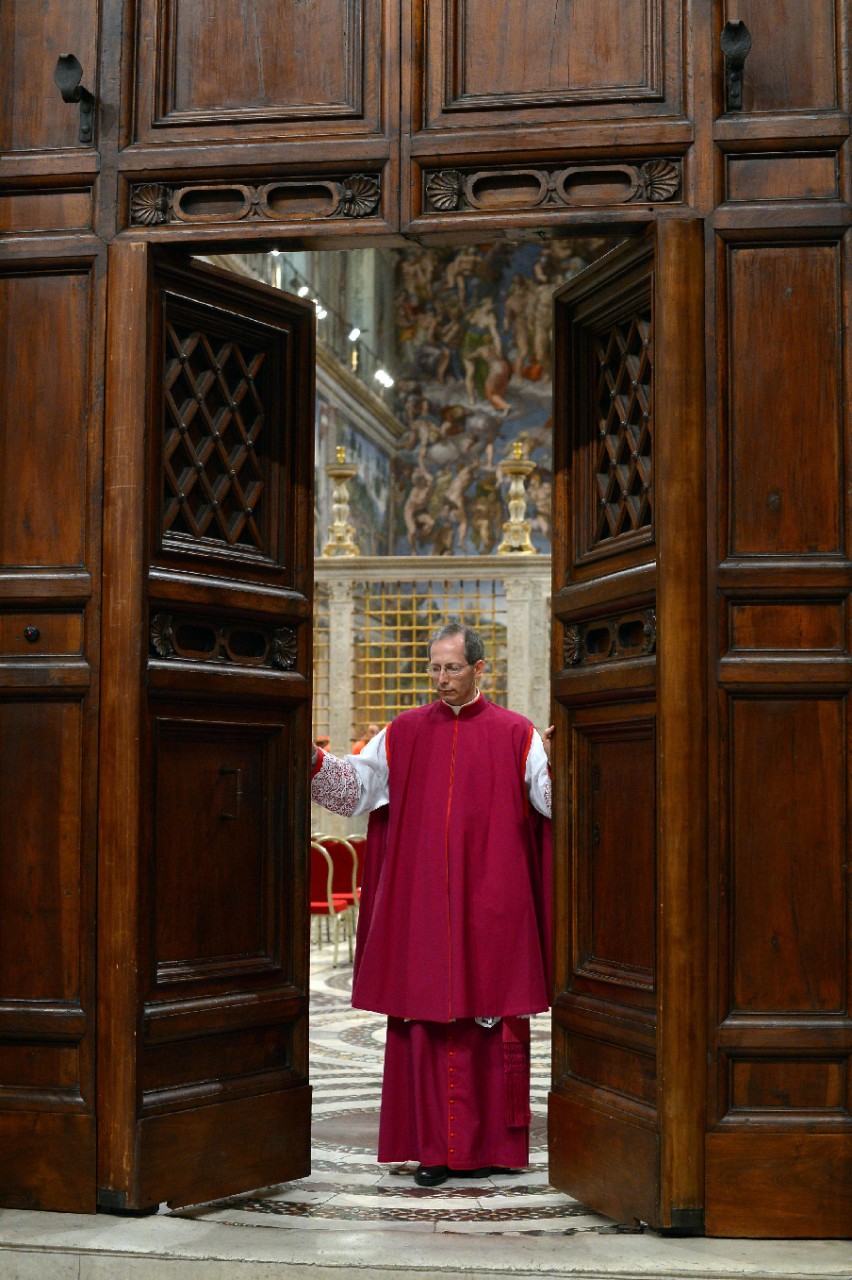
Guido Marini closes conclave doors.jpeg

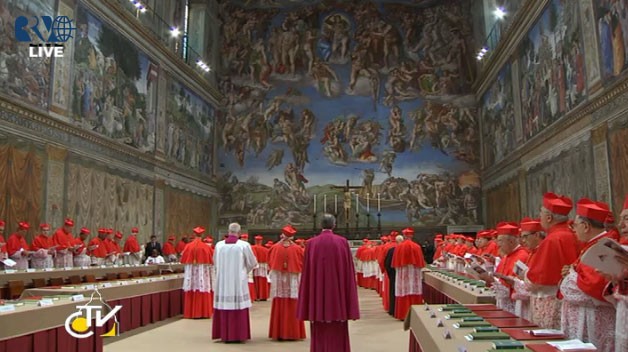
At certain point the Papal Master of Ceremonies, Monsignor Guido Marini, a priest of the Archdiocese of Genova, announces “Extra omnes,” a polite way of saying that all those not belonging in the conclave with the cardinals are to leave now. Monsignor Marini then walks through the center of the Sistine Chapel to the doors and closes them.

Cardinals take oath

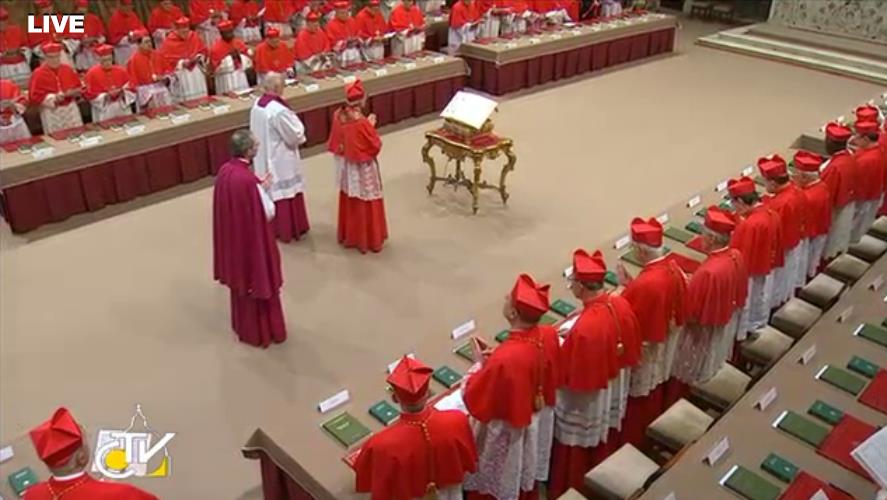
Re leading.jpg

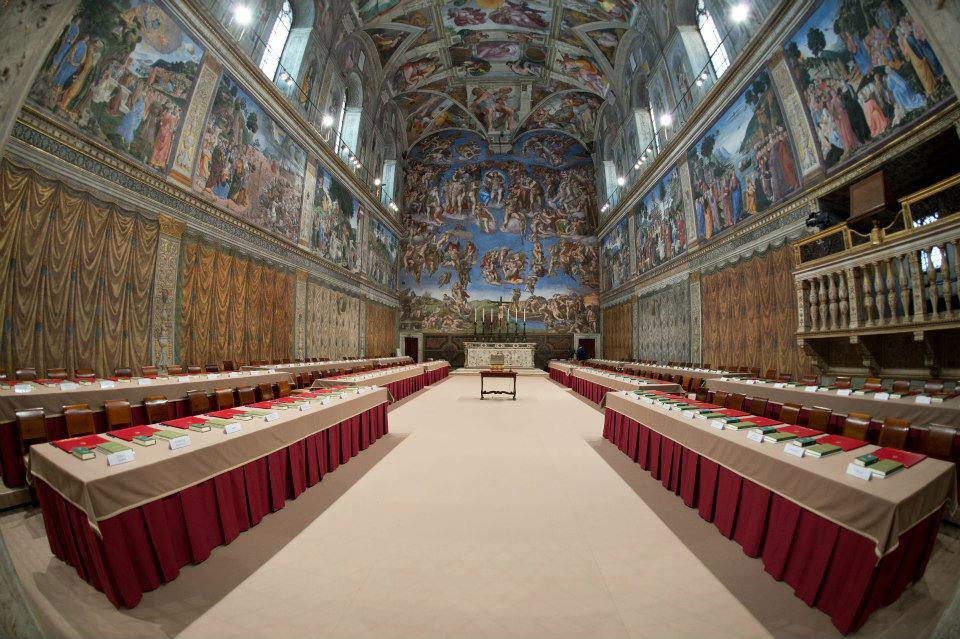
After a brief introduction and prayer in the Pauline Chapel, the cardinals walking in order of seniority beginning from the junior cardinal deacon to the cardinal bishops, walked to the Sistine Chapel. Once in their assigned places in the Sistine Chapel, the senior Cardinal, Giovanni Battista Re, read aloud the following formula of the oath prescribed by the apostolic constitution Universi Dominici Gregis:

In conformity with the provisions of No. 52 of the Apostolic constitution Univesi Dominici Gregis, We, the Cardinal electors present in this election of the Supreme Pontiff promise, pledge and swear, as individuals and as a group, to observe faithfully and scrupulously the prescriptions contained in the Apostolic Constitution of the Supreme Pontiff John Paul II, Universi Dominici Gregis, published on 22 February 1996. We likewise promise, pledge and swear that whichever of us by divine disposition is elected Roman Pontiff will commit himself faithfully to carrying out the munus Petrinum of Pastor of the Universal Church and will not fail to affirm and defend strenuously the spiritual and temporal rights and the liberty of the Holy See. In a particular way, we promise and swear to observe with the greatest fidelity and with all persons, clerical or lay, secrecy regarding everything that in any way relates to the election of the Roman Pontiff and regarding what occurs in the place of the election, directly or indirectly related to the results of the voting; we promise and swear not to break this secret in any way, either during or after the election of the new Pontiff, unless explicit authorization is granted by the same Pontiff; and never to lend support or favor to any interference, opposition or any other form of intervention, whereby secular authorities of whatever order and degree or any group of people or individuals might wish to intervene in the election of the Roman Pontiff.”

cardinal takes oath.JPG

Then, one-by-one, each of the Cardinal electors, according to seniority, then personally took the oath according to the following formula:

“And I, N. Cardinal N., do so promise, pledge and swear. So help me God and these Holy Gospels which I touch with my hand.”


After all not required to be in the Conclave are asked to depart, Prospero Cardinal Grech, OSA, (a non-electing cardinal) will give a meditation.


Enhanced by Zemanta

Fulton Sheen: The Art of Preaching

FJSheen at desk.jpeg

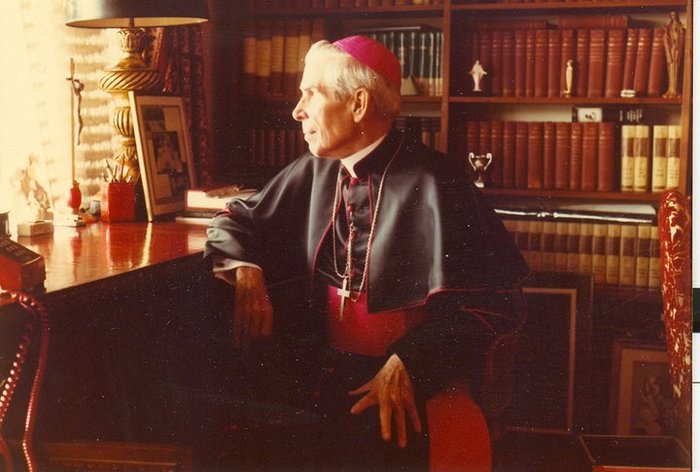
The Dominican Friars of the Province of St Joseph have a new initiative on preaching using as their model the Venerable Servant of God Fulton J. Sheen, the famed preacher on TV and in Church. Kindly Light media will produce “Fulton Sheen: The Art of Preaching.” It is a worthy project to support.


“Fulton J. Sheen: The Art of Preaching” Examines effective preaching via the words of Fulton J. Sheen, with commentary from experts, including Cardinal Christoph Schönborn, Fr. Peter John Cameron, OP.


Be sure to watch the trailer and read up on the project.

Laetare Sunday

Rejoice, Jerusalem, and all who love her. Be joyful, all who were in mourning; exult and be satisfied at her consoling breast.

Laetare Jerusalem: et conventum facite omnes qui diligitis eam: gaudete cum laetitia, qui in tristitia fuistis: ut exsultetis,et satiemini ab uberibus consolationis vestrae.

With the Church we pray

O God, who through your Word reconcile the human race to yourself in a wonderful way, grant, we pray, that with prompt devotion and eager faith the Christian people may hasten toward the solemn celebrations to come.
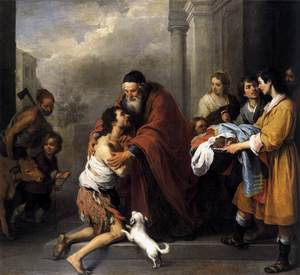
BE Murillo.jpg

In the Mass of Paul VI today’s gospel, if you don’t have catechumens at Mass, is the parable of the Prodigal Son. We know both sons have no clue of who they are persons without the father indicating their moral and human reality. The sons clearly miss the point of their familial sonship. This biblical narrative is heard in the Church as one of the many examples of nature of the Church, especially considering the role of the father. Here we understand the father not only be to biological father of children who need teaching but he stands for the Church who teaches but also reconciles, corrects error but rejoices in a return.


 Saint John Chrysostom teaches, 


There were two brothers (Luke 15:1-3, 11-32): they divided their father’s goods between them and one stayed at home, while the other went away to a foreign country, wasted all he’d been given, and then could not bear the shame of his poverty…The reason the father let him go and did not prevent his departure for a foreign land was that he might learn well by experience what good things are enjoyed by the one who stays at home. For when words would not convince us God often leaves us to learn from the things that happen to us. When the profligate returned…,the father did not remember past injuries but welcomed him with open arms…Are you asking: ‘Is this what he gets for his wickedness?’ Not for his wickedness, but for his return home; not for sin, but for repentance; not for evil, but for being converted.

Continue reading Laetare Sunday
Saint Frances of Rome

S Francesca Romana Clothed by the Virgin.jpg

O God, Who in Saint Frances of Rome, has given us a model of holiness in married life and of monastic conversion, make us serve You perseveringly, so that in all circumstances we may set our gaze upon You and follow You.

This painting given here for today’s lectio is attributed to Antonio del Massaro da Viterbo, depicts Saint Frances of Rome (1384-1440) being clothed by the Mary in the white veil of her Benedictine movement that, even today, characterizes the Olivetan Benedictine Oblates of Mary she founded in 1425.

Mary, Mother of God wears a mantle of gold, which Saint Paul at the left wraps around Frances Romana. The presence of certain saints is instructive: the great evangelizer, Saint Paul, Saint Mary Magdalene (the Apostle to the Apostles and dressed in red) and Saint Benedict,  the Father of Western Monastic Life, with the various ranks of angels, including Francesca’s Guardian Angel.  Magdalene and Benedict wrap/invest the mantle on the gathered Oblates.

The angel below the Gothic windows is busy carding golden threads with a warp and loom. Nearby are two frisky dogs and two cats, a frequent sight in Rome. The Oblate Congregation, commonly thought to be woven together by heavenly graces and harassed by evil spirits. The evil one is given flesh in the form of cats and dogs. As a testimony of grace the Oblates flourish today at Tor de’Specchi. Several years ago I had the privilege with many others to pray in this monastery opened to the public only Saint Frances’ feast day.

I have longed hoped that the Oblates of Saint Frances of Rome would found a house in the USA. We are ready for this witness.

Enhanced by Zemanta