Author: Paul Zalonski
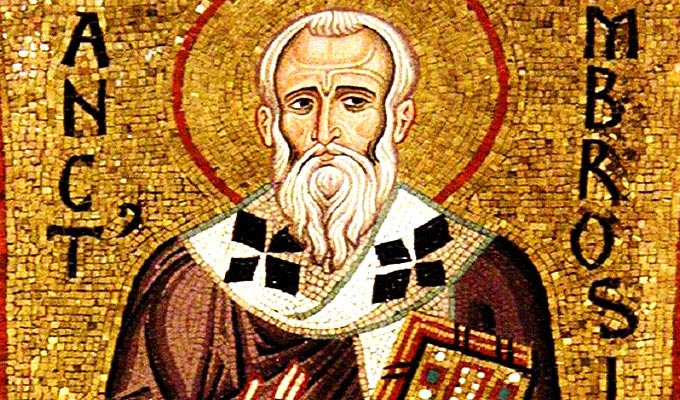
Mary, the Mother of God is united with the Church, St Ambrose teaches
By reason of the gift and role of divine maternity, by which she is united with her Son, the Redeemer, and with His singular graces and functions, the Blessed Virgin is also intimately united with the Church. As St. Ambrose taught, the Mother of God is a type of the Church in the order of faith, charity and perfect union with Christ. For in the mystery of the Church, which is itself rightly called mother and virgin, the Blessed Virgin stands out in eminent and singular fashion as exemplar both of virgin and mother. By her belief and obedience, not knowing man but overshadowed by the Holy Spirit, as the new Eve she brought forth on earth the very Son of the Father, showing an undefiled faith, not in the word of the ancient serpent, but in that of God’s messenger. The Son whom she brought forth is He whom God placed as the first-born among many brethren, namely the faithful, in whose birth and education she cooperates with a maternal love.
Second Vatican Council
Lumen gentium
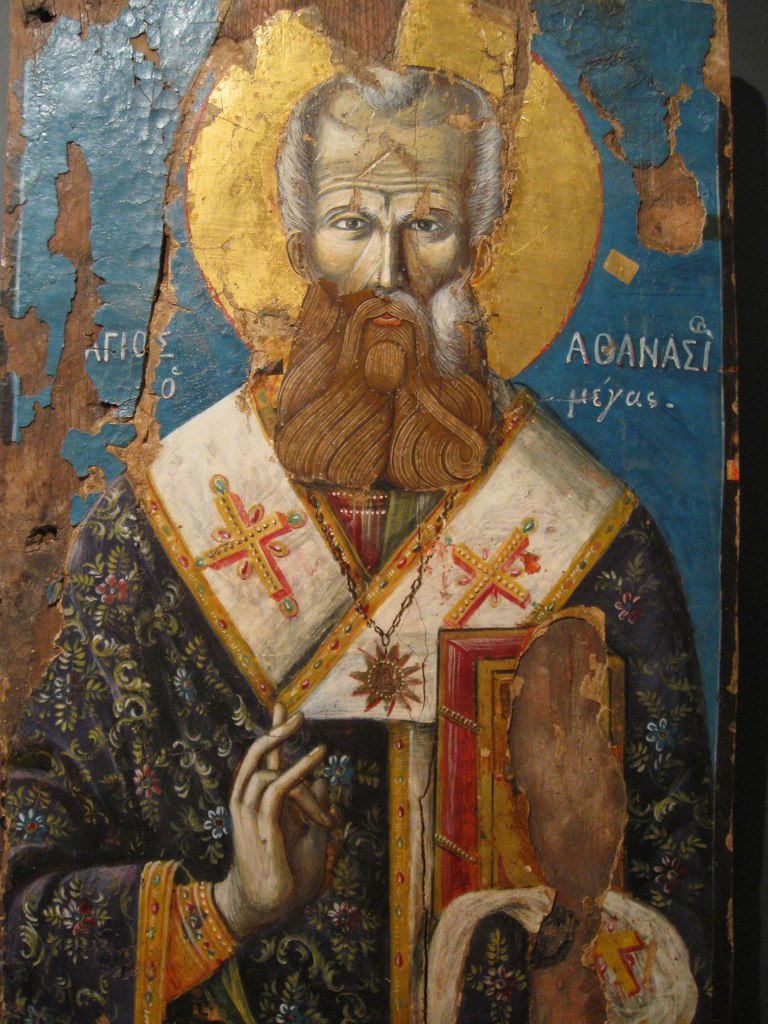
Saint Athanasius
The Church liturgically honors Saint Athanasius, a bishop, Confessor, and Doctor of the Church. He was the bishop of Alexandria, having been the 20th Patriarch of the Church, and having died in 373. The exact biography of the saint’s life is lost, we do know this theological and pastoral activity. It is said that he was ordained to the episcopate in 328 not yet attained the canonical age of thirty years. Athanasius is famous, that is, distinguished, for being a great defender of the truth of Jesus’ full divinity as well as being fully human: our belief in the Incarnation. He was at that time, and continues to be, revered as a “Father of Orthodoxy.” Historically, he is remembered for composing two treatises, “Contra Gentes” and “De Incarnatione,” written around 318 which is before Arianism got a foothold in society.
What makes Saint Athanasius important for us in the 21st century is that despite the contentiousness of the debate of who Jesus is, it was his personal witness more than anything that led people to the truth of the Faith. The issues in the 4th century remain with us today: many “faithful” Christians don’t know how to explain what and whom they say they believe in. Saint Athanasius is still able articulate Catholic belief.
Trappistine nuns in Syria
The mostly Italian group of Trappistine nuns forming a monastic colony in Syria are not moving, even in the face of violence.
Since 2005, Mother Marta Luisa Fagnani and the other nuns have committed themselves to prayer and work in a country in crisis. Their witness at the Monastery of Blessed Mary of Font of Peace (in Arabic, Dier al Adrha Yanbu’a-s-Salam), is a foundation of the Valserena Monastery in Guardistallo, Italy.
They write a blog, Ora pro Siria, in Italian and not frequently updated, but you can get a sense of their witness there. BUT, the monastic project of the nuns is explained here, which also asks the reader to help with prayer, friendship and money.
Yesterday, the daily Il Sussidiario published an English translation of an interview with one of the nuns.
Two years ago today, Traces magazine published a story, “The Sisters of Syria,” where the nuns talk about their call to make a monastic foundation in Syria, what freedom, the Encounter with the Lord and others and silence means. Few know, for example, that the Middle East had 11 monasteries of the Order of Cistercians of the Strict Observance (the Trappists) but dissolved due to the Islamic invasion. This is something to think and pray about. Do you have the same commitment to the Lord and to missionary zeal as these nuns?
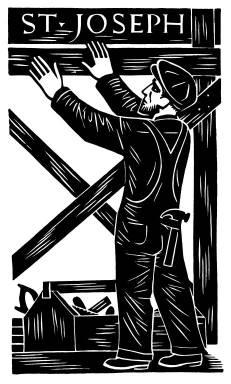
Saint Joseph the Worker
“The Lord God then took the man and settled him in the garden of Eden, to cultivate and care for it” (Genesis 2:15). The God the Father created all things and gave all of humanity to help Him to continue the work of creation by being co-creators, thus giving dignity to work.
Communism was in full force for a long time doing nasty things to people. One example is the Communist ideology propagated on the nature of work and the person was always contentious. But unbridled capitalism also rejects the dignity of work in the way it cheapens peoples’ dignity, the quality of the products made and the reduction of human interaction.
To positively respond to the Communists “May Day” celebrations for the Servant of God Pope Pius XII instituted the feast of Saint Joseph the Worker in 1955. In doing so, he told the world that work is not unimportant and that each person works with God in creating something good. He communicated that working men and women have a Good Shepherd who walks with each person, that in Saint Joseph the Lord is a defender and a father, a man who values his work as a carpenter whom God chose to be the head of the Holy Family. Joseph’s silent but has excellent hearing, and his intercession is very powerful over the Heart of the Savior. Remember he heard the God’s call through the angel in the silence of sleep; the angel used dreams to communicate God’s plan.
Pope Francis said today, “we celebrate the feast of Saint Joseph the Worker. Joseph, the carpenter of Nazareth, reminds us of the dignity and importance of labor. Work is part of God’s plan for the world; by responsibly cultivating the goods of creation, we grow in dignity as men and women made in God’s image. For this reason, the problem of unemployment urgently demands greater social solidarity and wise and just policies. I also encourage the many young people present to look to the future with hope, and to invest themselves fully in their studies, their work and their relationships with others. Saint Joseph, as a model of quiet prayer and closeness to Jesus, also invites us to think about the time we devote to prayer each day.”
Prayer to Saint Joseph, Workman
O glorious Patriarch, Saint Joseph, humble and just artisan of Nazareth, thou hast given to all Christians and particularly to us an example of a perfect life through diligent labor and admirable union with Jesus and Mary.
Assist us in our daily work in order that we, Catholic artisans, may also see in it an effective means of glorifying God, of sanctifying ourselves, and of being a useful member in the society in which we live. These should be the highest ideals for all our actions.
O dearest Protector, obtain for us from the Lord humility and simplicity of heart, love for our work and kindness towards our fellow-laborers; conformity to God’s will in the unavoidable trials of this life together with joy in bearing them; recognition of our specific social mission and a sense of responsibility; the spirit and discipline and prayer; docility and respectfulness towards superiors; the spirit of brotherhood towards our equals; charity and indulgence with our dependents.
Accompany us in times of prosperity when the opportunity is given for an honest enjoyment of the fruits of our labors; sustain us in our hours of sadness, when Heaven seems to be shut in our regard, and even the very tools with which our hands toil appear to rebel against us.
Grant that, in imitation of thee, we may keep our eyes fixed on our Mother, Mary, thy dearest Spouse, who as she spun silently in a corner of thy shop would let the sweetest smile course over her lips. Besides, may we never take our eyes off Jesus, Who was busily occupied with thee at the carpenters bench, in order that we in like manner may lead on earth a peaceful and a holy life, a prelude to the life of eternal happiness that awaits us in Heaven for ever and ever. Amen.
Prayer to be Recited by Workmen
Composed by Pope Pius XII
Pope Francis’ prayer intentions for May 2013
Blessed Teresa of Calcutta once said, “Prayer is not asking. Prayer is putting oneself in the hands of God, at His disposition, and listening to His voice in the depths of our hearts.”
What does it mean to be a priest?
How does the priest address the needs of the faithful today? Can the priest answer the questions being asked by the faithful and those seeking to know God,or at least willing to do the work needed to answer these questions? What type of witness needed today by the priest viz. the culture, media, and politics, so that we are happy, healthy and loving Christians? What are the concrete ways can we focus on God? How do Christians face nihilism with faith, hope and charity? What does it mean to be a person –and not merely an individual– realizing that the person is a part of a whole who glorifies God?
Saint Pius V, pope
Antonio Ghislieri (1504-72) was born near Alexandria, a town in Lombardy on the Adriatic. His vocation was with the Dominicans who educated him, had him ordained and missioned him to teach theology. He was elected bishop having served in several places where and he sought to reform the moral and theological, canonical and liturgical laxity of the clergy and laity alike; his concern was the coherence of the Catholic Faith. Sound familiar? Among his many responsibilities was taking up the work of Inquisitor in the Italian region. He was elected to the See of Rome in 1566. As Pope he strenuously promoted the Catholic Reformation outlined by the Council Fathers of Trent (doing of the same work as pope as he did as bishop), oversaw the excommunication of Queen Elizabeth I of England, encouraged missionary work and reformed the brieviary,the sacred Liturgy and the Catechism.
Saint Pius V, Pope, pray for us.
Saint Catherine of Siena
Set the world on fire by being who are meant to be…
Who else but the glory of Siena than Catherine who is so enkindled with the fire of Christ’s love for humanity to have said, “Be who God meant you to be and you will set the world on fire,” than Saint Catherine of Siena.
Under the patronage of Saint Catherine of Siena we ask her to beseech God for us for: fire prevention, purity, bodily illness, nurses, firefighters, illness, Italy, miscarriages, people ridiculed for their piety, sexual temptation, sick people, sickness, television.