Pope to new bishops: You are spouses of your community

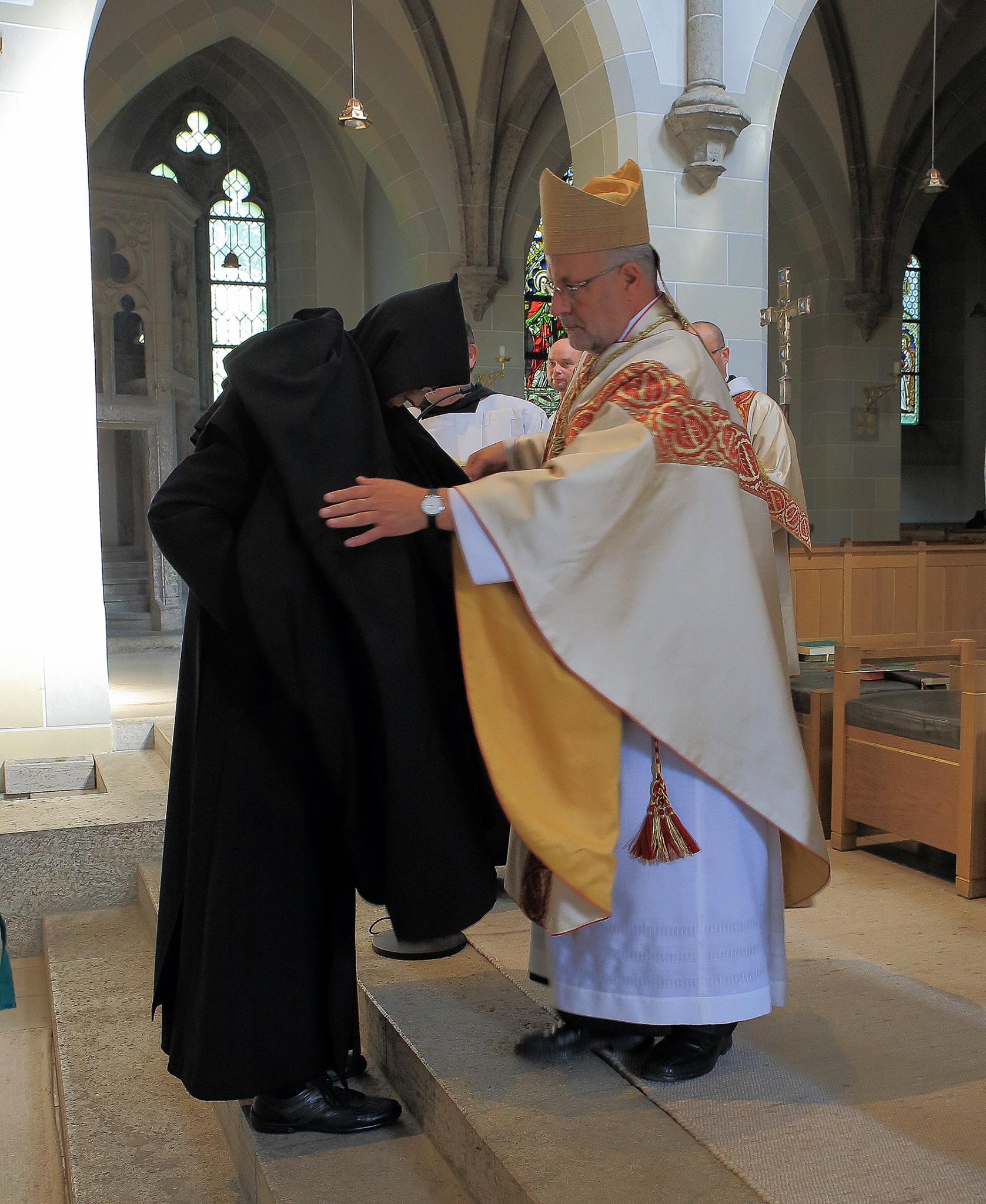
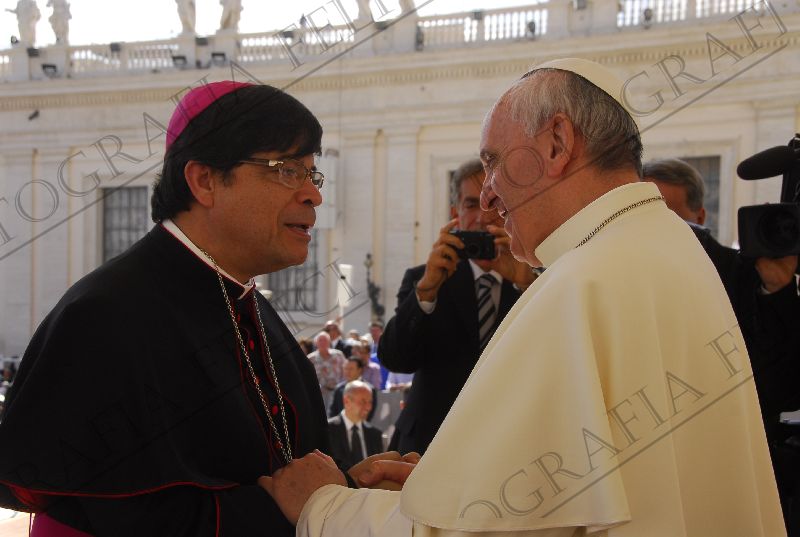
pope with new bishopRemember the three words the Pope had for us in the first Mass he offered following his election? They’re easy to remember: to walk, to build, to confess. You can change them slightly, but you ought to recall them frequently. Pope Francis does and he reminds the Church –even baby bishops– of these words because they are essential in serving God and His Church. The following are a few paragraphs of an address the Pope gave (19 September 2013) when the greeted the group of new bishops at the conclusion of their meeting in Rome this week. He notes many essential things: humility, austerity, unity, communion, paternity, concrete witness, spousal relationship, etc. This is an amazing text to ponder, to live with vigor. Don’t this be a dead letter! Ecclesiology will never be the same.

Francis said in part (the full text is here):

To welcome with magnanimity. May your heart be so large that you are able to welcome all men and women that you meet in the course of your days and that you will go to seek when you begin your journey in your parishes and in every community. Henceforth ask yourselves: how will those who knock on the door of my house find it? If they find it open, through your kindness, your availability, they will experience God’s paternity and they will understand that the Church is a good Mother that always welcomes and loves.

To walk with the flock. Welcome all to walk with all. The Bishop is journeying with his flock. This means to go on the way with your faithful and with all those who turn to you, sharing their joys and hopes, difficulties and sufferings, as brothers and friends, but even more as fathers, who are able to listen, to understand, to help, to guide. To walk together calls for love and ours is a service of love, amoris officium, said Saint Augustine (In Io. Ev. Tract.123,5: PL35, 1967).

And in journeying I would like to mention affection for your priests. They are the first neighbors of a Bishop, indispensable collaborators to whom we look for counsel and help, to take care of as fathers, brothers and friends. Among the first tasks you have is the spiritual care of the presbyter, but do not forget the human need of each priest, above all in the more delicate and important moments of his ministry and life. Time spent with priests is never lost time! Receive them when they request it; do not fail to answer a telephone call; be constantly close, in continuous contact with them.

Then presence in the diocese. In the homily of the Chrism Mass of this year, I said that Pastors must have “the scent of sheep.” Be Pastors with the scent of sheep, present in the midst of your people as Jesus the Good Shepherd. Your presence is not secondary, it’s indispensable. The people themselves ask for it; they want to see their Bishop walk with them, being close to them. They need it to live and to breathe! Don’t close yourselves! Descend in the midst of your faithful, also in the fringes of your dioceses and in all those “existential fringes” where there is suffering, loneliness, human degradation. Pastoral presence means to journey with the People of God: in front, pointing out the way; in their midst, einforcing them in unity; behind, so that no one will remain behind but, above all, to follow the scent that the People of God have to find new ways. A Bishop who lives in the midst of his faithful has his ears open to hear “what the Spirit says to the Churches” (Revelation  2:7) and the “voice of the sheep,” also through those diocesan organizations that have the task of advising the Bishop, promoting a loyal and constructive dialogue. This pastoral presence will also enable you to know in depth the culture, the usages, the customs of the territory, the richness of sanctity that is present there. To be immersed in one’s flock.

Fo me, these words are some of central points of our teaching: “the Bishop is a man of communion and unity, the ‘visible principle and foundation of unity’ (Lumen gentium, 27).”

Messing with the Associated Press???

lede

Is the Associated Press confused now? I’m not. Neither should you be.

Earlier today this post showed up on the AP. No doubt some are confused, others awkwardly changing their underwear after yesterday’s media frenzy about the Pope changing directions.

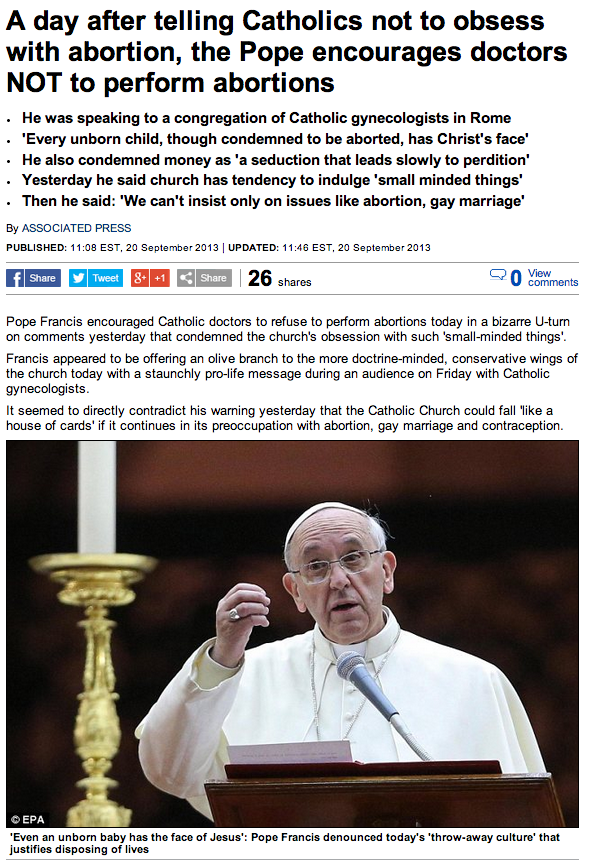
In an address to a group of Catholic gynecologists gathered by the International Federation of Catholic Medical Associations, Pope Francis said in part,

The cultural disorientation has affected an ambit that seemed unassailable: yours, medicine! Although being by their nature at the service of life, the health professions are induced sometimes not to respect life itself. Instead, as the encyclical Caritas in veritate reminds us, “openness to life is at the center of true development. […] If  personal and social sensibility is lost to welcoming a new life, other forms of reception useful to social life are hardened. The reception of life tempers moral energies and makes possible mutual help” (n. 28). The paradoxical situation is seen in the fact that, while new rights are attributed to the person, sometimes even presumed, life is not always protected as primary value and primordial right of every man. The ultimate end of medical action always remains the defense and promotion of life.

The full text is here.

Saints Andrew Kim Taegon, Paul Chong Hasang and companions

The Church remembers the martyrdom of the Korean martyrs, more than 103 of them. The names of Andrew Kim Taegon and Paul Chong Hasang are the hallmarks for this 19th century Christian witness. I can’t fathom the depth of love and hope these martyrs must have had in facing trials.

With the Church we pray,

O God, who have been pleased to increase your adopted children in all the world, and who made the blood of the Martyrs Saint Andrew Tae-gon and his companions a most fruitful seed of Christians, grant that we may be defended by their help and profit always from their example.

My 2011 blog post on today’s feast gives more information.

At Mass today at the Monastery of the Glorious Cross (Branford, CT), Father David Borino remembered the intentions of Sister Maria Kim, OSB, a nun of this monastery. In addition, I’d like to remember in prayer the Benedictine monks of Saints Maurus and Placidus Abbey, (Waegwan, Korea), St Paul’s Abbey (Newton, NJ), Archbishop Andrew Yeom Soo-jung of Seoul, Nicholas Cardinal Cheong Jin-Suk (archbishop emeritus of Seoul) and the Korean community in Queens, especially my friends Claire and Theresa. May the Divine Majesty richly bless these servants of God.

Hagia Sophia to be turned into a mosque?

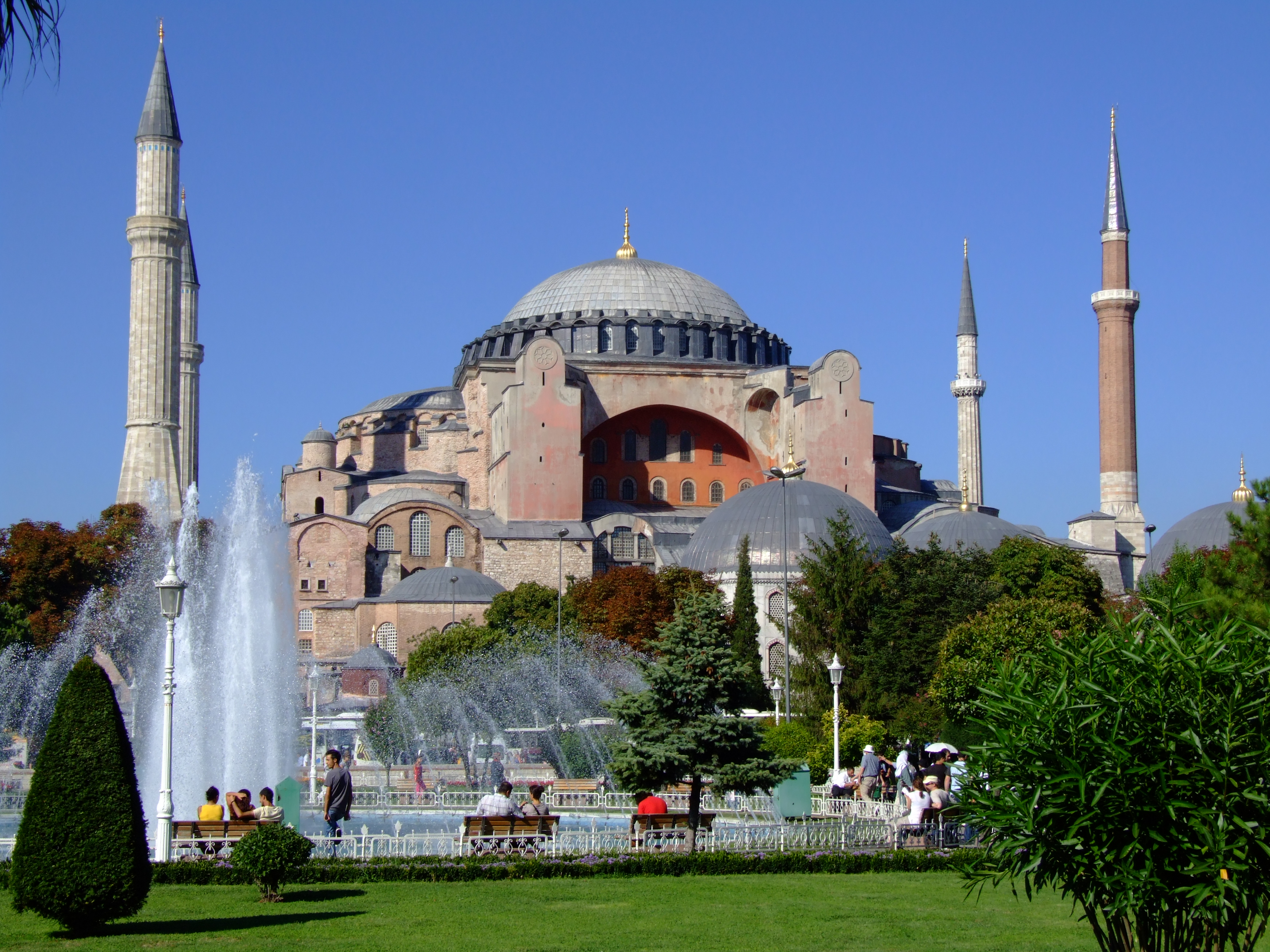
I just came across an article on AsiaNews that’s disturbing to me: “Persistent rumors suggest Hagia Sophia will be turned into a mosque” (Aug 30 2013). It confirmed my worst fears that one of the greatest churches in world –after the 4 central basilicas in Rome, a few others– may be returned to the Muslims for worship.

Hagia Sophia (Holy Wisdom) was built as a Christian church, known as the great church, in 537. And, it was the seat of the Patriarch of Constantinople until the Ottomans oppressed the Christians.

In 1453, Hagia Sophia along with other Christian churches, were confiscated and turned into mosques.  When Mustafa Atatürk, in 1923, founded the secular state of Turkey,Hagia Sophia mosque became a museum.

From the Muslim side, the Hagia Sophia is a symbol of Islamic conquest of Christianity and it’s in their best interest to reassert themselves by taking the museum back as a place of muslim worship. If the rumors are true, this building will be a central symbol of the caliphate that is expected to formed.

Disclaimer: I want the former cathedral returned to the Christians. The church ought to be a Christian temple. I advocate the praying of the Divine Liturgy of Saint John Chrysostom at what would be the central altar. If not, then I will concede Patriarch Bartholomew’s view: Hagia Sophia to remain a museum.

Some people report that in 2006 a small room was made available to the staff of the museum for Christian or Muslin prayer. In 2013, the minarets ring out the call for Islamic prayer. The camel’s nose is creeping.

God help us.

Pope Francis’ exclusive interview

FranEarlier the world was given the text of an exclusive interview by Pope Francis. The interview was conducted by Jesuit Father Antonio Spadaro, editor in chief of La Civiltà Cattolica.

America magazine is one several Jesuit publications honored with the task of getting the word out.

Here is “A Big Heart Open to God.”

Hopefully we’ll read the interview first, let it sink in, and refrain from spin, in any direction. Pope Francis, like his predecessor, is a nuanced thinker.

The orchestra and church: encountering similar problems today

kalda orchestraI found this article by reading the well-situated blogging priest Fr John Zuhlsdorf  (Fr Z) over at What Does the Prayer Really Say? who wrote about Philip Kennicott’s essay “America’s Orchestras are in Crisis” (New Republic online, 25 August 2013). The essay identifies the crisis found in music today as a radical change in Western culture. Music as a necessary component to the health of the soul is being radically altered for the negative. Reading Kennicott is a good examination of conscience, especially if you are trying to honestly ask the essential questions of art, faith, society and Christian living. Mr Kennicott is the Art and Architecture Critic of The Washington Post.

Fr Z writes, “The deadly erosion of the vestiges of decorum continues apace. With the erosion of decorum comes the erosion of beauty and of truth.” And he’s right. In view of adult faith formation, the new evangelization, and the Year of Faith, we have to look at how we propose and re-propose the faith as beautiful, good and true. Many have settled for Christian immaturity, versus being an adult Christian.

More precisely in my mind, what Kennicott says about the crisis in the orchestra (and he speaks about the Church since Vatican II in the article) is rightly said about the Church: secularism (not to be confused with secularity) is infecting the whole life of Catholic faith today: praying the Liturgy, scripture study, pastoral authority, discernment of spirits and conscience, social concerns for those who illiterate, poor, sick the elderly, vocations, etc. In short, everything is affected. We’ve moved more-or-less from the bunker mentality to cultural marxism; in many ways we’ve fulfilled what Friedrich Nietzsche said of God being dead. In my mind God is dead for those whose hearts and minds are closed to grace; for those in open rebellion to Divine Revelation, the sacraments, wisdom of the Church Fathers & Mothers and saints, and the pastoral authority of the Church. And I am thinking about this on the feast of two great saints: Saint Hildegard and Saint Robert Bellarmine.

When I read Mr Kennicott’s essay I found that you can replace the terms for the artistic world with the appropriate ecclesial terms and get a similar conclusion.

Mass with Benedict XVI USAI’ve read George Weigel’s recent book Evangelical Catholicism and I am in the process of reading Rebuilt: Awakening the Faithful, Reaching the Lost, and Making Church Matter (by Fr White and Tom Corcoran).

I have to say, I am impressed by Weigel’s analysis and hope, and the White/ Corcoran approach to what and how the parish ought to educate the heart and mind of the Christian. I think we’ve come to the point in dealing with the problem having a Catholicism be treated as a bureaucracy and as a commercial enterprise and not a community faith walking, building and confessing Jesus Christ.

I would recommend this exercise: closely read what Pope John Paul, Benedict and Francis have said about the nature of the Church and the ministry of priests coupled with Christifidelis laici AND then read the Weigel-White-Corcoran books.

The papal masters of ceremony

Maestro delle Celebrazioni Liturgiche PontificieMonsignors Francesco Camaldo, Pier Enrico Stefanetti, Diego Giovanni Ravelli, Guillermo Javier Karcher, Marco Agostini, Masi Jean-Pierre Kwambamba, John Richard Cihak, Kevin Gillespie, Massimiliano Matteo Boiardi, F.S.C.B., and Vincenzo Peroni.

These priests serve the Church as papal masters of ceremony. Some of them have been part of this office under Benedict XVI and now Pope Francis. The MCs also assist many of the cardinals when needed in Rome. Guided by Monsignor Guido Marini, the Master of Pontifical Ceremonies.

Monsignor Marini has a group of consultors in Fathers Bux Nicola, Mauro Gagliardi, Juan José Silvestre Valór, P. Uwe Michael Lang, C.O., Paul Gunter, O.S.B.

Our Lady of Sorrows

detail of sorrowful motherScripture reveals that Mary, the Mother of Jesus, stood by the cross as her son died. This was foretold by Simeon in the Temple when Jesus was presented there. Hence, this feast acknowledges Mary as a martyr because of the intense pain of the sword piercing her heart. As you would expect, how could a mother not be with her son as he died? Her humanity was closely united to that of his.

Your lectio may lead you to pray with the following: Mark 15:22; John 19:18, 25-27; Mark 15:34; Luke 23:46

Grasping the seriousness of this event gave way to the incredible composition of the sequence of Stabat Mater. Most parishes don’t sing this poetic text any longer but it used to be sung on this feast day and on Good Friday. Sometimes you’d hear it at the Stations of the Cross.

If you are not familiar with the rosary devotion of Seven Sorrows of Mary you will want to visit this site. This devotion has its roots in the 12th century and was made extraordinarily popular in the 13th. People like Saints Anselm and Bernard advocated this form of the rosary; the Benedictines, Cistercians and then the Servite friars took up the devotion to the Seven Sorrows of Mary. The feast of Our Lady of Sorrows was placed on the Roman Calendar by Pope Benedict XIII in 1727 and observed on the Friday prior to Palm Sunday; at the revision of the liturgical calendar the feast moved to this date. But the feast does have a variety of observances in other parts of the Church.

This is yet another truly Benedictine feast as it draws us to the foot of the cross. Given yesterday’s feast of the Exaltation of the Cross, today gives us the perspective of the mother. Mary’s sorrows have become our own sorrows; this is a reasonable feast that recognizes as concrete the place of sorrow in our experience. But sorrow is not the final chapter in this life: sorrow gives way to peace and joy. I am thinking of the mothers who have lost a child to all sorts of circumstances (sudden death, miscarriage, addictions, murder, war, abortion). Saint Benedict and his sons and daughters help to point the way to salvation in Christ through the cross.

The great Cistercian abbot Saint Bernard directs our thoughts and prayer in the following homily.

The martyrdom of the Virgin is set forth both in the prophecy of Simeon and in the actual story of our Lord’s passion. The holy old man said of the infant Jesus: He has been established as a sign which will be contradicted. He went on to say to Mary: And your own heart will be pierced by a sword.

Truly, O blessed Mother, a sword has pierced your heart. For only by passing through your heart could the sword enter the flesh of your Son. Indeed, after your Jesus – who belongs to everyone, but is especially yours – gave up his life, the cruel spear, which was not withheld from his lifeless body, tore open his side. Clearly it did not touch his soul and could not harm him, but it did pierce your heart. For surely his soul was no longer there, but yours could not be torn away. Thus the violence of sorrow has cut through your heart, and we rightly call you more than martyr, since the effect of compassion in you has gone beyond the endurance of physical suffering.

Or were those words, Woman, behold your Son, not more than a word to you, truly piercing your heart, cutting through to the division between soul and spirit? What an exchange! John is given to you in place of Jesus, the servant in place of the Lord, the disciple in place of the master; the son of Zebedee replaces the Son of God, a mere man replaces God himself. How could these words not pierce your most loving heart, when the mere remembrance of them breaks ours, hearts of iron and stone though they are!

Do not be surprised, brothers, that Mary is said to be a martyr in spirit. Let him be surprised who does not remember the words of Paul, that one of the greatest crimes of the Gentiles was that they were without love. That was far from the heart of Mary; let it be far from her servants.

Perhaps someone will say: “Had she not known before that he would not die?” Undoubtedly. “Did she not expect him to rise again at once?” Surely. “And still she grieved over her crucified Son?” Intensely. Who are you and what is the source of your wisdom that you are more surprised at the compassion of Mary than at the passion of Mary’s Son? For if he could die in body, could she not die with him in spirit? He died in body through a love greater than anyone had known. She died in spirit through a love unlike any other since his.