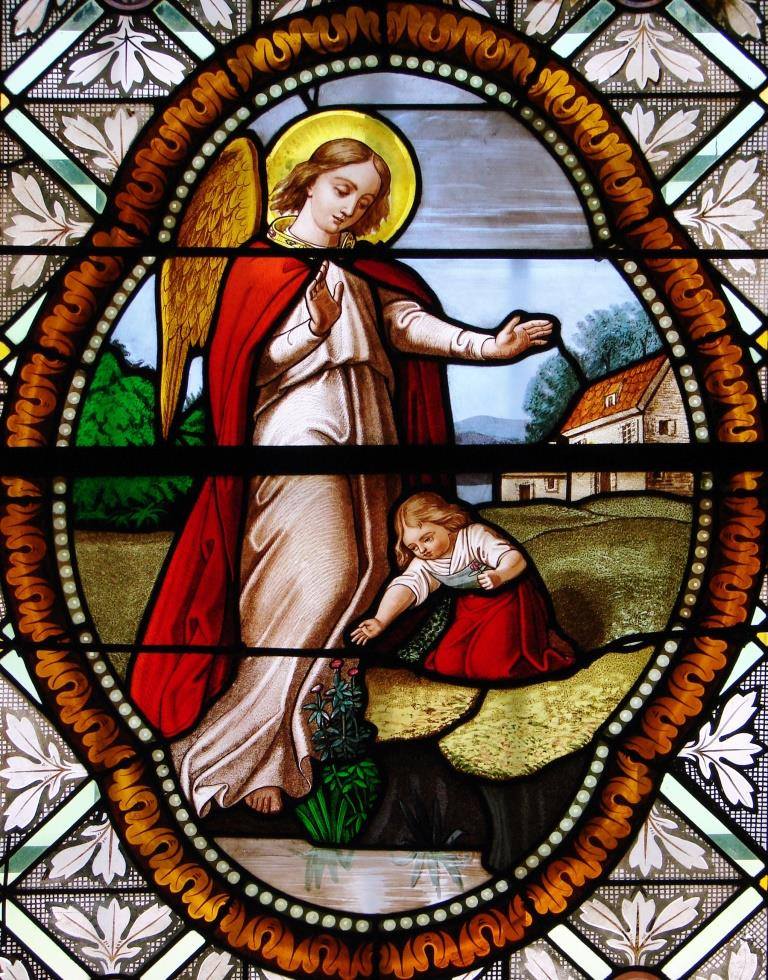
Saint Thérèse, the Little Flower

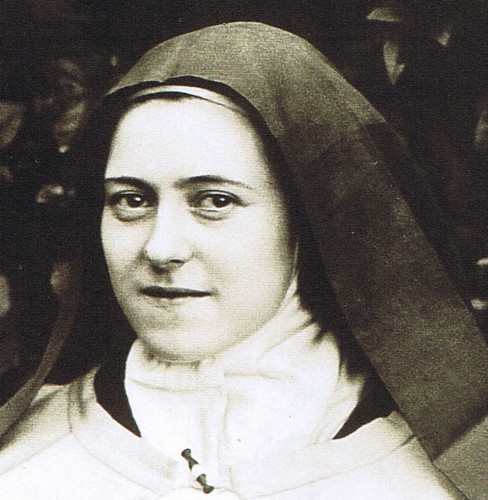
The little Thérèse, that of the Child Jesus (1873-1897), a daughter of the Great Teresa, of Jesus, is honored today by the Church. In the right perspective, both women of the Carmelite order, Thérèse and Teresa, are magnificent witnesses to another way of living the Gospel of Jesus Christ and the teachings of the Church. Liturgically, we have Avila’s feast on October 15. If we understand nothing more today, know that it was the Lord who was Thérèse’s certainty, He alone her guide (cf. the entrance antiphon).

The Mass Collect identifies the central focus of Saint Thérèse: a little way. What is the little way? The little way taught by Saint Thérèse is see one’s life from a perspective of humility, that of a child (cf. Mt 18:3), that the force of love becomes a reality; the language and method of the little way is that of love, of mercy.

The Catholic Information Service (Knights of Columbus) publishes a handy booklet that you can order, or you read it as a .pdf, “The First Steps on the Little Way of Saint Thérèse Lisieux.” I can’t recommend this text enough!

Saint Thérèse, a child of the Martin family which was quite devoted: several sisters entered religious life, her parents are on the road to sainthood. She was educated by the Benedictines before entering the Carmelite.

Saint Thérèse’s autobiography, The Story of a Soul, I find a compelling narrative of going deeper but that’s only after dealing with my prejudice of seeing the autobiography as saccharine; the depth contained therein is remarkable.

Saint Thérèse Lisieux is one of the the patron saints (with Saint Francis of Xavier) of the missions. John Paul declared her a Doctor of the Church.

Let’s pray for missionaries and for a deeper understanding of Thérèse’s little way.

Vatican Bank’s annual report, first ever

The Institute for Works of Religion (aka, the Vatican Bank) has published the first annual report of its 125 year history for the year of 2012 and the first 8 months of 2013.

The goal: to report to the universal Church its holdings giving a window of transparency, it contributes to the mission of the Church; the investors, and the public. The IOR has, in the past months, reached out to the media by engaging in an open dialogue, creating a new managed website, and given the published report on finances.

You’ll find a lengthy report on the IOR’s business activities and detailed financial statements, including one from the external auditing company KPMG and statements from various others.

No new facts; the IOR is a conservative financial institution.

You can read the report here (it’s a 99 page .pdf).

Father Bernd Hagenkord spoke with the President of the IOR, Ernst von Freyberg.

Here is a 6 minute Vatican Radio interview.

Pope Francis’s prayer intentions for October 2013

The honest Christian’s life tells us that prayer is not the end; rather, Christian’s know prayer is a means to an end. The saints teach us this fact.  And what is that end? Jesus Christ! The aim of every serious Christian is not only to be in a relationship with Jesus, but to be shaped into him – to be another Christ. The sacred Scripture reveals this, the sacraments nourish this, daily living demonstrates this. Here are the Holy Father’s prayer intentions for October.

The general intention

That those feeling so crushed by life that they wish to end it may sense the nearness of God’s love.

The mission intention

That the celebration of World Mission Day may help all Christians realize that we are not only receivers but proclaimers of God’s word.

Working with Rod Dreher’s “I’m Still Not Going Back…to the Church”

Rod Dreher’s article in Time, “I’m Still Not Going Back to the Catholic Church,” is a real good piece to reflect upon. Dreher, 46, reflects upon his experience in the Catholic Church and skillfully questions the modus operandi of the Church’s faith formation programs and preaching. I am positively disposed to what he has to say.

You are not likely to agree with all of what Dreher says, you will find other ways for the author to deal with his issues with the Catholic Church, and you very well may object to most of what he says. I would ask that you  give him a fair chance to make his case. He communicates a reality and therefore I actually think we wall owe it to ourselves to take-in what he says about his experience in the Catholic Church and perhaps make some adjustment.

After reading this piece, and if you are a pastor, a faith formation leader, or a serious Catholic: How would you approach the the author’s ideas? Would you take a look at parish’s preaching, music, ars celebrandi of the Mass (Divine Office), RCIA, the adult and child faith formation programs and service programs? Would you leave well-enough alone and ride into the sunset?

Not to take serious a serious Christian’s, is in my opinion, slothful and arrogant. The time of beige and therapeutic Catholicism is over.

Rod Dreher is a senior editor at The American Conservative, and author of The Little Way Of Ruthie Leming. He and his wife Julie have three children and they live in south Louisiana. Follow Rod on his website here.

The new Council of Cardinals

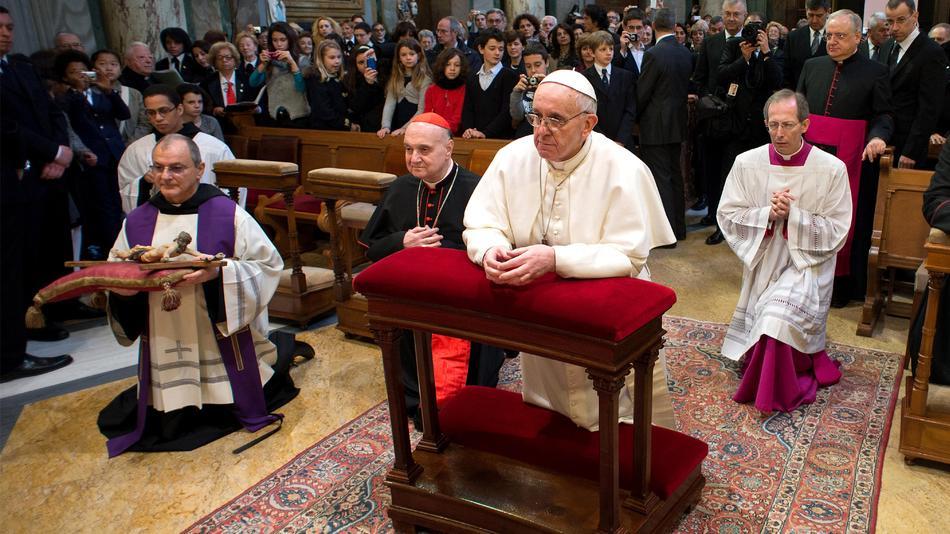
Today, the Holy Father, Pope Francis formally instituted a group of cardinals he chose to forming what is now called the Council of Cardinals to assist him in the governance of the Church. One of the projects is to revise John Paul IIs Apostolic Constitution Pastor bonus (28 June 1988), which gives the operating procedures for the Roman Curia. The Council of Cardinals is an innovation in Church governance, and a good one, I think; its purpose is to give the Pope a wider and clearer perspective on what needs to be done by his Office, the Curia and the local bishop’s office. Today, more than ever, the Church needs a method consultation that is vigorous and truthful.

A cardinal is appointed from each of the continents, one from the Curia; there’s a bishop secretary and it’s expected that another Prelate from one of the Eastern Churches will be appointed. The meetings have begun.

Council of Cardinals 2013“Among the suggestions that emerged from the General Congregations of Cardinals prior to the Conclave, mention was made of the expediency of instituting a limited group of Members of the Episcopate, from various parts of the world, with whom the Holy Father could consult, individually or collectively, on specific matters. Once elected to the See of Rome, I have had the opportunity to reflect on this issue on a number of occasions, and consider that such an initiative would be of significant use in fulfilling the pastoral ministry of Peter’s Successor entrusted to me by my brother cardinals.

“For this reason, on 13 April I announced the constitution of the aforementioned group, at the same time indicating the names of those who had been called to participate. Now, following reflection, I consider it opportune that such a group, by means of the present Chirograph, be instituted as a ‘Council of Cardinals’, with the task of assisting me in the governance of the universal Church and drawing up a project for the revision of the Apostolic Constitution Pastor bonus on the Roman Curia. It will be composed of the same persons previously nominated, who may be called upon, both in Council and singly, on matters that I will from time to time consider worthy of attention. The aforementioned Council which, with regard to the number of members, I will compose in the most appropriate way, will constitute a further expression of Episcopal communion and of the aid to the munus petrinum that the Episcopate, disseminated throughout the world, may offer”.

Francis
28 September 2013, the first year of the Pontificate

Saint Jerome

Today we liturgically remember Saint Jerome (340-420). Because the sacred Liturgy is our first theology, let me quote the opening collect prayed at Mass:

O God, who gave the Priest Saint Jerome a living and tender love for Sacred Scripture, grant that your people may be ever more fruitfully nourished by your Word and find in it the fount of life.

And from the Communion collect:

…stir up the hearts of your faithful so that, attentive to sacred teachings, they may understand the the path they are to follow and, by following it, obtain life everlasting.

The controlling ideas the Church wants us to focus on are namely, that we have a living and tender love for Scripture with the hope that we would be nourished by it and find in Scripture a source of life. Likewise, our understanding this path we may enter into heaven. Christians: we are to walk toward the light of everlasting life. Indeed. Jerome is one of our guides in our study of Scripture.

Jerome was born in Dalmatia (present day Croatia). Having studied in Rome and he was baptized there before being ordained a priest in the Eastern part of the Roman Empire. Recognizing his giftedness, Pope Damasus called Jerome to Rome to serve as his secretary; following the death Damasus, Jerome went East again, that is, Bethlehem, where he was active in building projects: a monastery, a hospice, and a school. His intellectual gifts were set on translating the Bible into the vernacular Latin. We still us Jerome’s biblical translation (with some revisions) today. His letters and commentaries on Holy Scripture still give insight. He is honored with being a Doctor of the Church.

And, likely his most famous line is noted in today’s Office of Readings from Jerome’s prologue of the commentary on Isaiah:

I interpret as I should, following the command of Christ: Search the Scriptures, and Seek and you shall find. Christ will not say to me what he said to [others]: “You erred, not knowing the Scriptures and not knowing the power of God.” For if, as Paul says, Christ is the power of God and the wisdom of God, and if the man who does not know Scripture does not know the power and wisdom of Gods, then ignorance of Scripture is ignorance of Christ.

10 Biblical Verses leading to Catholicity

Lord God, your words were found and I consumed them;

your word became the joy and happiness of my heart. (Jer. 15:16)

10 Biblical Verses that lead to a deeper, more vibrant Catholic faith:

1. Matthew 16:18-19 / Isaiah 22:22 (Authority)

2. 1 Timothy 3:15 (Authority)

3. 2 Thessalonians 2:15 (Tradition)

4. 1 Peter 3:21 (Baptism)

5. John 20:23 (Confession)

6. John 6:53-58, 66-67 (Eucharist)

7. 1 Corinthians 11:27 (Eucharist)

8. James 5:14-15 (Anointing)

9. Colossians 1:24 (Suffering)

10. James 2:17- 26 (Works)

This is what you’ll call evangelical Catholicism: relying on the scripture base your faith. The first question we have to ask ourselves: What does Scripture reveal? These bible verse are ones it is said, that Protestants Cannot Accept (without becoming Catholic). Blessed feast of Saint Jerome, patron saint of biblical scholars.

Venerable Alfred Pampalon: Patron of Alcoholics and Drug Addicts

Recently, a friend, Father Sean, recommended the Venerable Alfred Pampalon is the Patron of Alcoholics and Drug Addicts, on his Facebook page. I am not sure what prompted him to do, but it was a welcomed and helpful piece of information. As you know, there is a Catholic saint and blessed for every need; even those being proposed for sainthood have causes to mind. Today is the anniversary of death of Father Alfred Pampalon.

For me, this is a great “find.” Why? Because for the last year my sister has been possessed by her addiction to alcohol. To date, she’s been brought to the hospital for various reasons: alcohol induced seizures, ulcers, depression and the like. Alcohol is truly an insidious disease. With this so personal experience I am humbled and moved by the fragility of those who carry such a cross as alcoholism and depression. In many ways my sister’s cross is an opening for grace to enter more deeply into my own sinful life. So, I am happy to know of Father Alfred and his patronage. Through his intercession I am hoping for a healing for my sister and my family, but also for others who carry this disease inside them. Alcohol and the related problems are a real cross to bear; Alfred’s was TB as was the residual set of health complications. But it is said that he had a burning desire to help his people know (meet) Jesus and to lighten the burden of those whose cross so very heavy to bear.

Father Alfred Pampalon (24 November 1867 – 30 September 1896), born in French Canada. Father Alfred was a Redemptorist priest who studied in Belgium. Father Alfred is known as a great apostle of the Saint Anne de Beaupré shrine. He died very young at the age of 28 of TB. his cause for canonization was opened and he was recognized has having heroic virtue. Thus he was declared Venerable Servant of God, May 14 1991, by Pope John Paul II.

Dear Father Alfred, listen to my cry and come to my aid. Obtain for me the favors I desire. You are well known as the protector of people who are suffering in body, mind and spirit.

You show special compassion for alcoholics and drug addicts. You have freed so many people from their dependencies. Free NN. (me) also, I beg you, dear Father Alfred, and free those people I recommend to you, especially members of my family.

I come to you with confidence. I pray for myself and for all those who are dear to me. Come also to the assistance of the Church and of the whole world. Amen.

Father Alfred realized clearly that “There is no virtue without prayer.” Here is a novena of prayers.

Dom Antoine Marie, OSB, monk of the French Abbey of Saint-Joseph de Clairval, writes extensive biographies of the saints for his abbey’s newsletter. If you are interested, here is entry for Father Alfred.

A contemporary witness to Christ is Blessed Pier Giorgio Frassati

I sometimes think we lack good contemporary lay models of holiness among the saints and blesseds of our Church. Certainly, there are more contemporary saints taken from the priests and religious than among the laity. Pope John Paul II felt similarly and asked the Congregation for Saints (and local bishops) to find us more lay saints. They did in Pier Giorgio Frassati (1901-1925). He’s known as “explosion of joy,” “a Man of the Beatitudes,” a natural man. The Church honors Frassati with a liturgical memorial on July 4.

Frassati’s Luciana said, “He represented the finest in Christian youth: pure, happy, enthusiastic about everything that is good and beautiful.” And that “He gave his whole self, both in prayer and in action, in service to Christ.” Frassati’s prayer life consisted but not limited to praying the morning offering, the daily rosary, Eucharistic adoration, lectio divina. His prayer life was made visible in his concern with the poorest people of Turin.

In his following Jesus Christ Blessed Pier Giorgio was a member of the lay Third Order Dominican.

Brandon Vogt’s interview with Seattle’s Archbishop Peter Sartain, “Pier Giorgio Frassati, Man of the Beatitudes: An Interview with Archbishop Peter Sartain” sheds some light on getting to know a blessed of the Church who’s gaining influence.

Pray for grace to adhere to Christ and to live in joy from Blessed Pier Giorgio. I am sure he’ll get the Lord to give you what you need.