Saints John XXIII and John Paul II

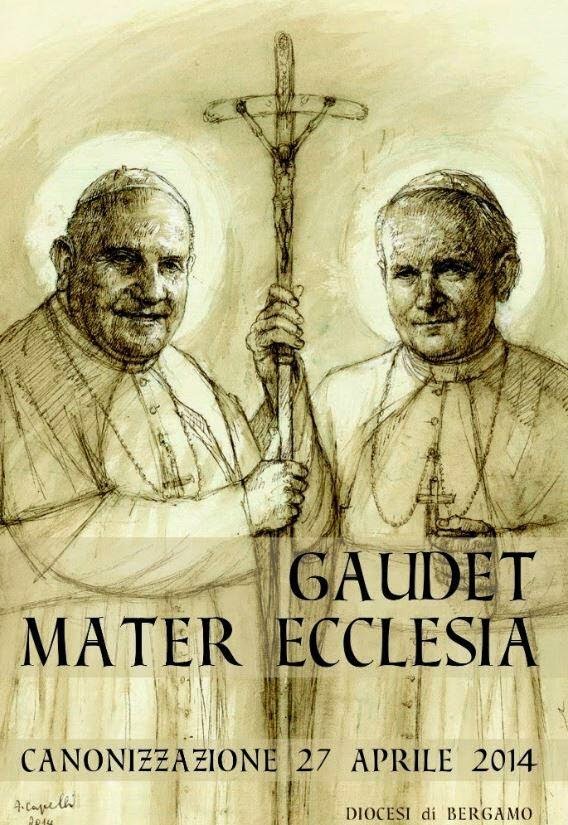
Gaudet Mater EcclesiaToday, Sunday, 27 April 2014, Pope Francis recognized as saints Popes John XXIII and John Paul II. Also present was Benedict XVI, pope emeritus, concelebrating Holy Mass. He say among the cardinals. More than 90 heads of state, other secular leaders among with more than a thousand bishops and 150 cardinals were present with more than a million people.

At the heart of this Sunday, which concludes the Octave of Easter and which John Paul II wished to dedicate to Divine Mercy, are the glorious wounds of the risen Jesus.

He had already shown those wounds when he first appeared to the Apostles on the very evening of that day following the Sabbath, the day of the resurrection. But, as we heard, Thomas was not there that evening, and when the others told him that they had seen the Lord, he replied that unless he himself saw and touched those wounds, he would not believe. A week later, Jesus appeared once more to the disciples gathered in the Upper Room, and Thomas was present; Jesus turned to him and told him to touch his wounds. Whereupon that man, so straightforward and accustomed to testing everything personally, knelt before Jesus with the words: “My Lord and my God!” (Jn 20:28).

The wounds of Jesus are a scandal, a stumbling block for faith, yet they are also the test of faith. That is why on the body of the risen Christ the wounds never pass away: they remain, for those wounds are the enduring sign of God’s love for us. They are essential for believing in God. Not for believing that God exists, but for believing that God is love, mercy and faithfulness. Saint Peter, quoting Isaiah, writes to Christians: “by his wounds you have been healed” (1 Pet 2:24, cf. Is 53:5).

Saint John XXIII and Saint John Paul II were not afraid to look upon the wounds of Jesus, to touch his torn hands and his pierced side. They were not ashamed of the flesh of Christ, they were not scandalized by him, by his cross; they did not despise the flesh of their brother (cf. Is 58:7), because they saw Jesus in every person who suffers and struggles. These were two men of courage, filled with the parrhesia of the Holy Spirit, and they bore witness before the Church and the world to God’s goodness and mercy.

They were priests, bishops and popes of the twentieth century. They lived through the tragic events of that century, but they were not overwhelmed by them. For them, God was more powerful; faith was more powerful – faith in Jesus Christ the Redeemer of man and the Lord of history; the mercy of God, shown by those five wounds, was more powerful; and more powerful too was the closeness of Mary our Mother.

In these two men, who looked upon the wounds of Christ and bore witness to his mercy, there dwelt a living hope and an indescribable and glorious joy (1 Pet 1:3,8). The hope and the joy which the risen Christ bestows on his disciples, the hope and the joy which nothing and no one can take from them. The hope and joy of Easter, forged in the crucible of self-denial, self-emptying, utter identification with sinners, even to the point of disgust at the bitterness of that chalice. Such were the hope and the joy which these two holy popes had received as a gift from the risen Lord and which they in turn bestowed in abundance upon the People of God, meriting our eternal gratitude.
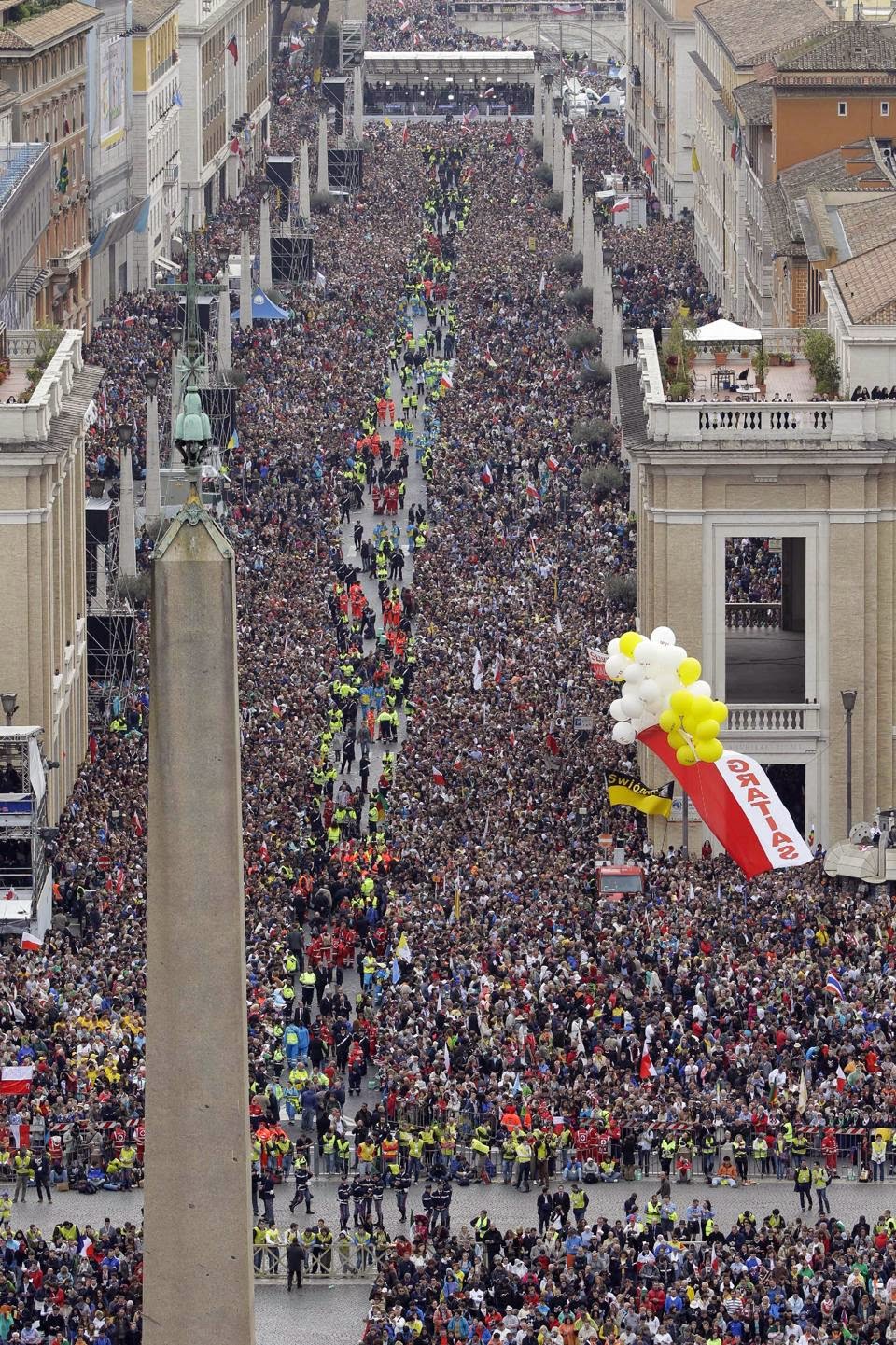
faithful on 27 April 2014This hope and this joy were palpable in the earliest community of believers, in Jerusalem, as we read in the Acts of the Apostles (cf. 2:42-47), as we heard in the second reading. It was a community which lived the heart of the Gospel, love and mercy, in simplicity and fraternity.

This is also the image of the Church which the Second Vatican Council set before us. John XXIII and John Paul II cooperated with the Holy Spirit in renewing and updating the Church in keeping with her pristine features, those features which the saints have given her throughout the centuries. Let us not forget that it is the saints who give direction and growth to the Church. In convening the Council, John XXIII showed an exquisite openness to the Holy Spirit. He let himself be led and he was for the Church a pastor, a servant-leader, led by the Spirit. This was his great service to the Church; he was the pope of openness [NB: from editor docility] to the Spirit.

In his own service to the People of God, John Paul II was the pope of the family. He himself once said that he wanted to be remembered as the pope of the family. I am particularly happy to point this out as we are in the process of journeying with families towards the Synod on the family. It is surely a journey which, from his place in heaven, he guides and sustains.

May these two new saints and shepherds of God’s people intercede for the Church, so that during this two-year journey toward the Synod she may be open to the Holy Spirit in pastoral service to the family. May both of them teach us not to be scandalized by the wounds of Christ and to enter ever more deeply into the mystery of divine mercy, which always hopes and always forgives, because it always loves.
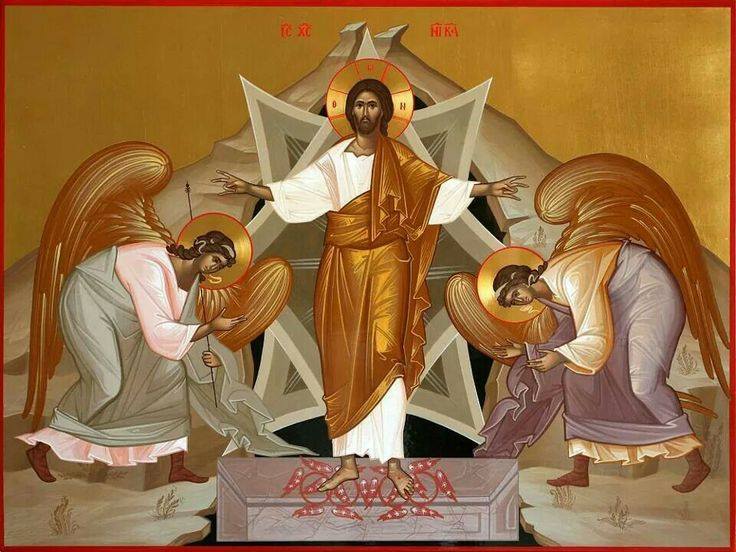
Christ conquered evil

We believe that in assuming the weight of evil, Christ conquered evil. That he conquered sin and death. That he grafted onto the rot of suffering the power of the redemption and the light of hope. That is what he shares with everyone… to all those who suffer, from moral or physical evil, he never ceases to offer this graft of redemption, which comes from his cross and resurrection.

It is difficult to measure the evil which is our lot on this earth. It is a mystery greater than man, deeper than his heart. Gethsemane and Calvary speak of it, and at the same time bear witness that in the history of man, in his heart, another mystery is at work, that of the Redemption, which will work to the end to uproot evil. And in this mystery, a “new heaven and a new earth” are ripening, where… “God himself will wipe away every tear from their eyes and death shall be no more; neither shall there be mourning nor crying nor pain anymore.”

Saint John Paul II

The earth is God’s gift to all of us

Earth Day bears us to recall what Pope Benedict XVI said:

“On this earth there is room for everyone: here the entire human family must find the resources to live with dignity, through the help of nature itself — God’s gift to his children — and through hard work and creativity. At the same time we must recognize our grave duty to hand the earth on to future generations in such a condition that they too can worthily inhabit it and continue to cultivate it… One of the greatest challenges facing the economy is to achieve the most efficient use — not abuse — of natural resources.”

(Caritas in Veritate, 50)

Easter Monday: newness of life

Christ in GloryEaster Monday brings with it a new emphasis changing the old into new: old leaven is out, and new leaven brought in; new gifts recognized and offered to the Lord for the work of building up the Church. “Clear out the old  yeast, so that you may become a fresh batch of dough.” (I Corinthians 5:7) Easter Monday is the second day of a new beginning.

At Easter we sing this verse:  “This is the day The Lord has made; let us be glad and rejoice.”  As people baptized into the Resurrection we can say: “You and I are the people the Lord has made; let us be glad and rejoice.”

Easter manifests God’s love that is more powerful than death. It’s a liberation: Easter means death no longer enslaves us. Our early Christians saw the light of Jesus Christ bursting forth from the tomb, a light that shatters of death’s bond.

The Resurrection from the dead is God’s great gift of salvation given to us. One theologian writes that the “Resurrection, God ratifies, sums up, and valorizes his material creation. Therefore, Jesus’ resurrection from the dead is not just about him. It’s about all those who will participate in his Mystical Body, the Church, and it’s about all of matter. In raising Jesus bodily from the dead, the Father is raising all of matter to new life.”

The Resurrection of Jesus from the dead speaks to us as been given a New Creation radically changing the sin of Adam into a new heaven and a new earth, a new body: we are living creatures living within the life of God. In Christ Jesus we are human beings with an alive, flourishing humanity. Christians believe that heaven is not just a spiritual space that our souls go following death. It’s first a new creation on earth with the doors of heaven opened unto new life with the Holy Trinity.

Holy Saturday, when the earth trembles and is silent

Jesus bringing Adam and Eve outJesus has gone to search for our first parent, as for a lost sheep. “Awake, O sleeper, and rise from the dead, and Christ will give you light!”

An ancient homily for Holy Saturday: “Something strange is happening – there is a great silence on earth today, a great silence and stillness. The whole earth keeps silence because the King is asleep. The earth trembled and is still because God has fallen asleep in the flesh and he has raised up all who have slept ever since the world began. God has died in the flesh and hell trembles with fear…”

Good Friday

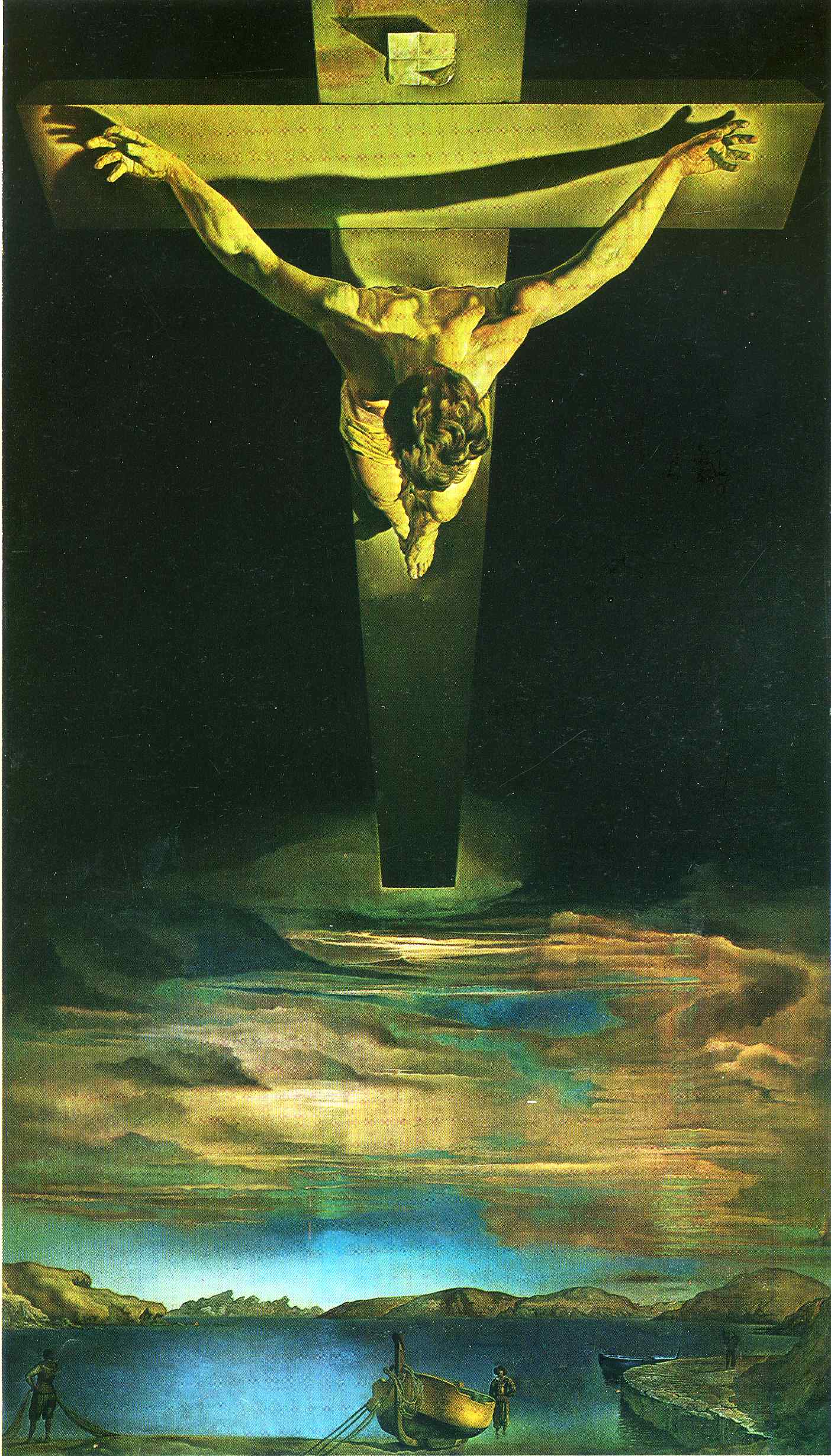
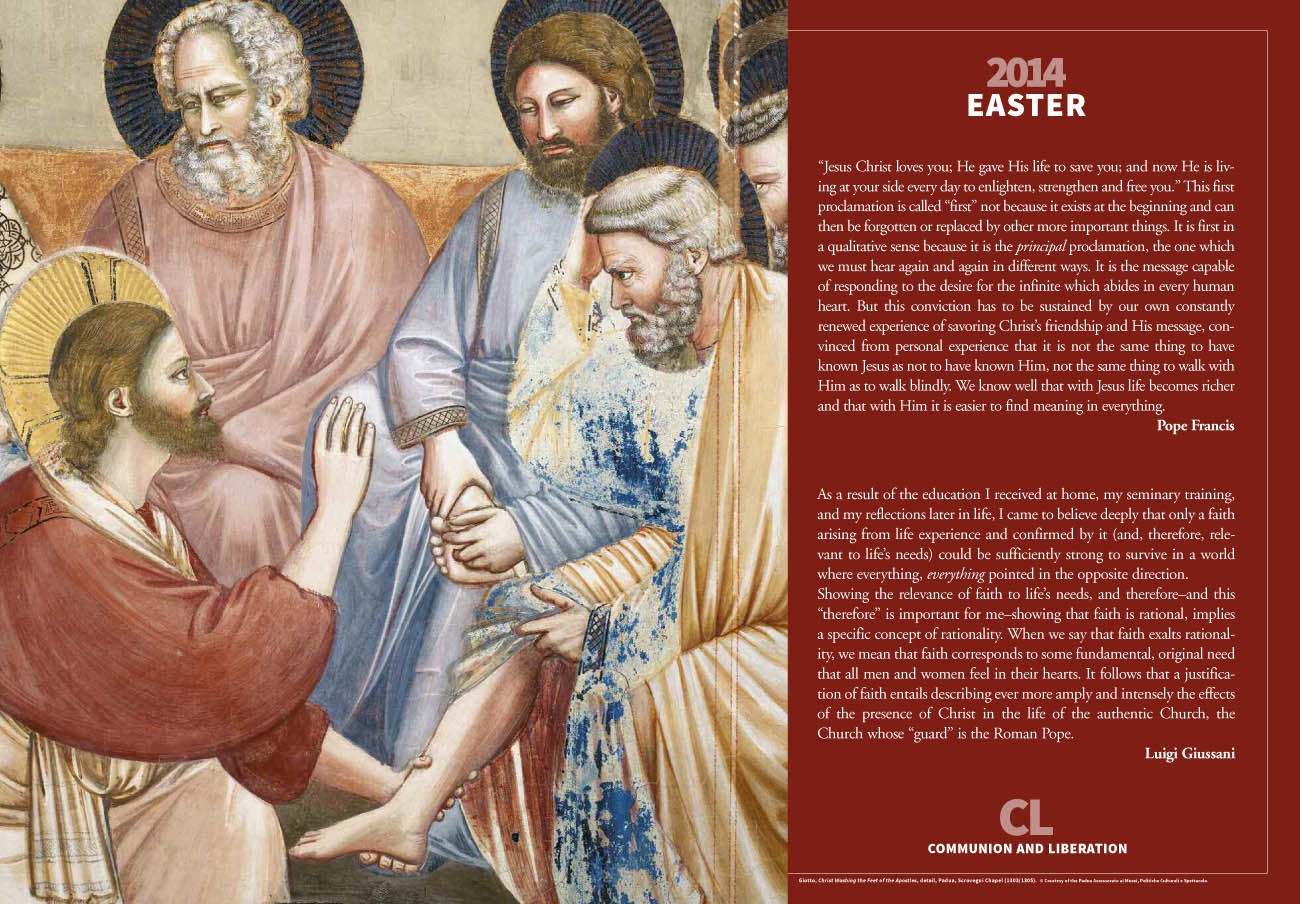
Christ of Saint John of the Cross - Salvador DalìI know a priest who tells me that Good Friday is a day for us who to gaze upon the crucifixion as an attraction to self-consummation. Moreover, it is a day of panic at the threat of annihilation. The Cross of Jesus is a most power reality. It is not a decoration.
“Now it is Holy Week. On Holy Thursday, Good Friday, Holy Saturday, Easter, in these four days if you go inside without simply looking Christ in the face, but rather preoccupied about your sins or about perfection or about things to meditate on, you come out tired and pick up where you left off. Looking Christ in the face, instead, you change. But to change, you must truly look Him in the face, with the desire for good, the desire for truth:  ‘I am capable of all things, Lord, if I am with you who are my strength.’ It is a You that dominates, not things to respect.”

(Fr. Giussani Is It Possible to Live This Way? Vol 2, Hope)


Holy Thursday

Holy Thursday is a day of recognition of what is really at stake: the self-gift of Love given to the world . It is a  day of God’s promise of being present to us until the end of human time. Holy Thursday is a day in which a body is given to the Church: the Body of the Savior– the Body given to us is given to us in an ultimate way. This is eucharistic.

I suspect if we are honest with ourselves during the year we would admit that we are persons in need, persons who live with a sensibility of longing. There is a certain anguish over our limitations and the capacity of others to receive.

Flannery O’Connor opens a new door to Easter Mysteries

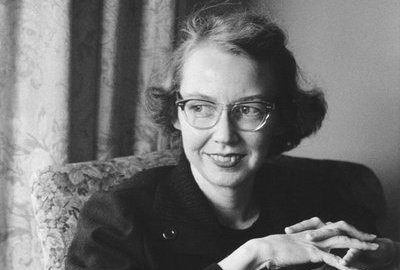
FlanneryFlannery O’Connor is a rather intriguing and an important Catholic woman of importance for us today. She is too often overlooked by Catholics and secularists alike and that is a sad point. George Weigel wonder aloud on several critical points about faith and reason, and faith, but he also opines about the lack of a concerted study of O’Connor’s sanctity. Is Weigel asking something important here?

You need to read Weigel’s most recent article, “Easter with Flannery O’Connor” because brings to light some new aspects of O’Connor’s witness to truth that I have not heretofore thought about in detail.

Weigel’s opening paragraphs read (to read the full article click on the link above):

This coming Aug. 3 will mark the golden anniversary of Flannery O’Connor’s “Passover,” to adopt the biblical image John Paul II used to describe the Christian journey through death to eternal life. In the 50 years since lupus erythematosus claimed her at age 39, O’Connor’s literary genius has been widely celebrated. Then, with the 1979 publication of The Habit of Being, her collected letters, another facet of Miss O’Connor’s genius came into focus: Mary Flannery O’Connor was an exceptionally gifted apologist, an explicator of Catholic faith who combined remarkable insight into the mysteries of the Creed with deep and unsentimental piety, unblinking realism about the Church in its human aspect, puckish humor—and a mordant appreciation of the soul-withering acids of modern secularism.

Insofar as I’m aware, there’s never been an effort to initiate a beatification cause for Flannery O’Connor. If such a cause should ever be introduced, The Habit of Being (and the lectures found in the Library of America edition of her collected works) should be the principal documentary evidence for considering her an exemplar of heroic virtue, worthy to be commended to the whole Church.

Wednesday of Holy Week: Jesus at Bethany

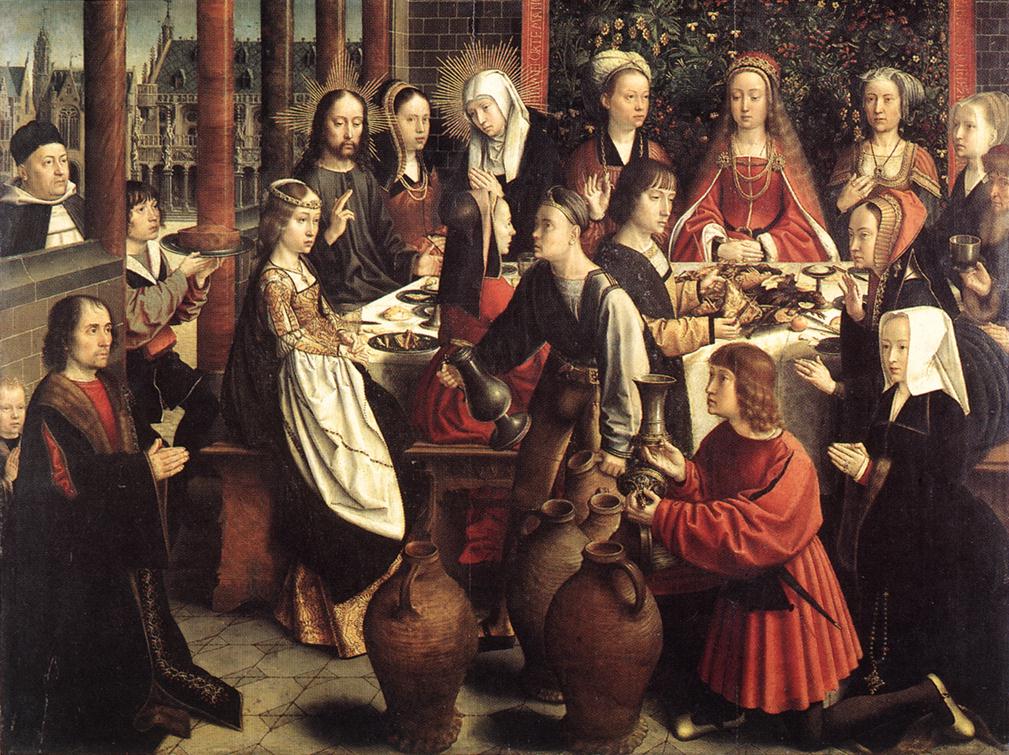
at BethanyToday, the Latin Church has the gospel of Judas betraying Jesus (see previous post today) and the Byzantine Church will chant the story of Jesus being anointed at Bethany. For me, this is another aspect of the Mystery of the Incarnation.

Another theological way of discerning the meaning of today’s witness before the Lord is that the Church is asking us to attend anew to the interior life where we are asked to have a singularity in the way we live God’s grace: how well have we lived our vocation? The converse to this aspect of interiority is that you and I have a certain terror in being the only one responsible for persons and works. This flip side can lead us to the rejection of life in the Garden of Eden (paradise).

The Judas event and the Lord’s anointing at Bethany have different thrusts, but the emphasis is the same: love breaks the chain of sin and division. Perfect Love does so in supreme way in drawing our heart to a new level of awareness.

This poetic text sets the stage for us.

O Lord, the woman who had fallen into a multitude of sins,
recognized Your divinity and joined the ranks of the myrrh-bearings.
Before Your burial, she offers You myrrh with her tears.
“Alas,” she says, “the stinging night of pleasure seizes me;
the dark and moonless love of sin grasps me.
Accept the stream of my tears and my copious weeping,
for You make the waters fall from the clouds into the sea.
Incline Your ear to the cry of my heart,
for You incline the heavens in Your ineffable condescension.
Allow me to kiss Your most pure feet,
drying them with the locks of my hair;
for these are the feet that Eve heard in Paradise,
and, trembling at Their approach, she hid herself.
O Lord, who can search out the number of my sins?
Who shall search the depth of Your judgments,
O God our Redeemer and the Savior of our souls?
In Your infinite love, do not despise Your servant.”