Devotion to the Sacred Heart of Jesus

sacre-coeurTwo of my friends, one from France and another from the Swiss Cantons, hadn’t heard of the reasons for the devotion to Sacred Heart or of the persons of Saint Margaret Mary and Saint Claude. Even the image of the Sacred Heart was puzzling to them. Both of these people are young, and one is a convert. I don’t think it is an exaggeration to say that today’s feast is one of the most theologically profound of the year. The Preface for the Mass (Novus Ordo) reads:

Father, all-powerful and ever-living God, we do well always and everywhere to give You thanks through Jesus Christ our Lord. Lifted high on the cross, Christ gave His life for us, so much did He love us. From His wounded side flowed blood and water, the fountain of sacramental life in the Church. To His open heart the Saviour invites all men to draw water in joy from the springs of salvation.

The Preface for the 1962 Missal reads:

It is truly meet and just, right and availing unto salvation, that we should in all times and in all places give thanks unto Thee, O holy Lord, Father almighty, and everlasting God; who didst will that Thine only begotten Son should be pierced by the soldier’s lance as He hung upon the Cross: that from His opened heart, as from a sanctuary of divine bounty, might be poured out upon us streams of mercy and grace; and that in His heart always burning with love for us, the devout may find a haven of rest, and the penitent a refuge of salvation.

Our theology of the Heart of Jesus revealed in this one phrase: “Unus militum lancea latus eius aperuit, et continuo exivit sanguis at aqua.” And we know from St. Justin Martyr (d. 165) that “We the Christians are the true Israel which springs from Christ, for we are carved out of His heart as from a rock.”

Ultimately, what the Solemnity of the Sacred Heart teaches us that we have been given the grace that we should not let the enemies of true religion set the agenda of life. So often the image of the divine secularists point to is an abstract god who has no relation to humanity in any way. The Christian’s response is that we believe in a God who is love, revealed in the Incarnate Son, Jesus. For the French there is the reminder of  the Vendée and for the Mexicans there are the Cristeros…indeed, we have the Lord.

What follows is a anthology for the feast:

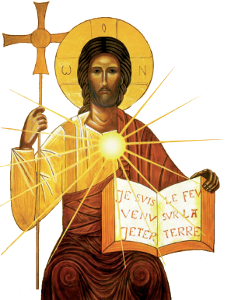
The Sacred Heart is shown wounded, encircled by a crown of thorns, surmounted by a Cross, and aflame with love for mankind. This symbol springs from the vision of the Sacred Heart had by St. Margaret Mary Alacoque.

“There is in the Sacred Heart the symbol and express image of the infinite love of Jesus Christ which moves us to love in return.” — Pope Leo XIII

The heart has always been seen as the “center” or essence a person (“the heart of the matter,” “you are my heart,” “take it to heart,” etc.) and the wellspring of our emotional lives and love (“you break my heart,” “my heart sings,” etc.) Devotion to the Sacred Heart of Jesus is devotion to Jesus Christ Himself, but in the particular ways of meditating on his interior life and on His threefold love — His divine love, His burning love that fed His human will, and His sensible love that affects His interior life. Pope Pius XII of blessed memory writes on this topic in his 1956 encyclical, Haurietis Aquas (On Devotion To The Sacred Heart).Below are a few excerpts which help explain the devotion:

54. …the Heart of the Incarnate Word is deservedly and rightly considered the chief sign and symbol of that threefold love with which the divine Redeemer unceasingly loves His eternal Father and all mankind.

55. It is a symbol of that divine love which He shares with the Father and the Holy Spirit but which He, the Word made flesh, alone manifests through a weak and perishable body, since “in Him dwells the fullness of the Godhead bodily.”

56. It is, besides, the symbol of that burning love which, infused into His soul, enriches the human will of Christ and enlightens and governs its acts by the most perfect knowledge derived both from the beatific vision and that which is directly infused.

57. And finally — and this in a more natural and direct way — it is the symbol also of sensible love, since the body of Jesus Christ, formed by the Holy Spirit, in the womb of the Virgin Mary, possesses full powers of feelings and perception, in fact, more so than any other human body.

58. Since, therefore, Sacred Scripture and the official teaching of the Catholic faith instruct us that all things find their complete harmony and order in the most holy soul of Jesus Christ, and that He has manifestly directed His threefold love for the securing of our redemption, it unquestionably follows that we can contemplate and honor the Heart of the divine Redeemer as a symbolic image of His love and a witness of our redemption and, at the same time, as a sort of mystical ladder by which we mount to the embrace of “God our Savior.”

59. Hence His words, actions, commands, miracles, and especially those works which manifest more clearly His love for us — such as the divine institution of the Eucharist, His most bitter sufferings and death, the loving gift of His holy Mother to us, the founding of the Church for us, and finally, the sending of the Holy Spirit upon the Apostles and upon us — all these, We say, ought to be looked upon as proofs of His threefold love.

60. Likewise we ought to meditate most lovingly on the beating of His Sacred Heart by which He seemed, as it were, to measure the time of His sojourn on earth until that final moment when, as the Evangelists testify, “crying out with a loud voice ‘It is finished.’, and bowing His Head, He yielded up the ghost.”Then it was that His heart ceased to beat and His sensible love was interrupted until the time when, triumphing over death, He rose from the tomb.

61. But after His glorified body had been re-united to the soul of the divine Redeemer, conqueror of death, His most Sacred Heart never ceased, and never will cease, to beat with calm and imperturbable pulsations. Likewise, it will never cease to symbolize the threefold love with which He is bound to His heavenly Father and the entire human race, of which He has every claim to be the mystical Head.

Devotion to the Sacred Heart has two elements: consecration and reparation:

We consecrate ourselves to the Sacred Heart by acknowledging Him as Creator and Redeemer and as having full rights over us as King of Kings, by repenting, and by resolving to serve Him.

We make reparations for the indifference and ingratitude with which He is treated and for leaving Him abandoned by humanity.

To carry out these general goals of consecration and reparation, there are quite specific devotions authorized by the Church.

Specific Devotions

From the earliest days of the Church, “Christ’s open side and the mystery of blood and water were meditated upon, and the Church was beheld issuing from the side of Jesus, as Eve came forth from the side of Adam. It is in the eleventh and twelfth centuries that we find the first unmistakable indications of devotion to the Sacred Heart. Through the wound in the side, the wounded Heart was gradually reached, and the wound in the Heart symbolized the wound of love.” (Catholic Encyclopedia)

St. John Chrysostom (b. ca. 347) in his 85th Homily on the Gospel of St. John wrote:

For “there came forth water and blood.” Not without a purpose, or by chance, did those founts come forth, but because by means of these two together the Church consisteth. And the initiated know it, being by water indeed regenerate, and nourished by the Blood and the Flesh. Hence the Mysteries take their beginning; that when thou approachest to that awful cup, thou mayest so approach, as drinking from the very side.

St. Margaret Mary Alacoque’s vision of the Sacred HeartThe waters of Baptism, and the Blood of the Eucharist, pouring forth from Christ’s side, brought the Church into existence just as Eve was formed from Adam’s side. And just as God took man and “breathed into his face the breath of life, and man became a living soul,” so at the Pentecost did the Holy Ghost come down over the Church and bring Her to life.

General devotion to the Sacred Heart, the birthplace of the Church and the font of Love, were popular in Benedictine and Cistercian monasteries, especially in response to the devotion of the Benedictine St. Gertrude the Great (b. 1256), but specific devotions became even more popularized when St. Margaret Mary Alacoque (1647-1690), a Visitation nun, had a personal revelation involving a series of visions of Christ as she prayed before the Blessed Sacrament. She wrote, “He disclosed to me the marvels of his Love and the inexplicable secrets of his Sacred Heart.” Christ emphasized to her His love — and His woundedness caused by Man’s indifference to this love.

He promised that, in response to those who consecrate themselves and make reparations to His Sacred Heart:

He will give them all the graces necessary in their state of life.

He will establish peace in their homes.

He will comfort them in all their afflictions.

He will be their secure refuge during life, and above all, in death.

He will bestow abundant blessings upon all their undertakings.

Sinners will find in His Heart the source and infinite ocean of mercy.
Lukewarm souls shall become fervent.

Fervent souls shall quickly mount to high perfection.

He will bless every place in which an image of His Heart is exposed and honored.

He will give to priests the gift of touching the most hardened hearts.

Those who shall promote this devotion shall have their names written in His Heart.

In the excessive mercy of His Heart that His all-powerful love will grant to all those who receive Holy Communion on the First Fridays in nine consecutive months the grace of final perseverance; they shall not die in His disgrace, nor without receiving their sacraments. His divine Heart shall be their safe refuge in this last moment.

“Take my yoke upon you, and learn of me; for I am meek and lowly in heart: and ye shall find rest unto your souls.” — Matthew 11:29
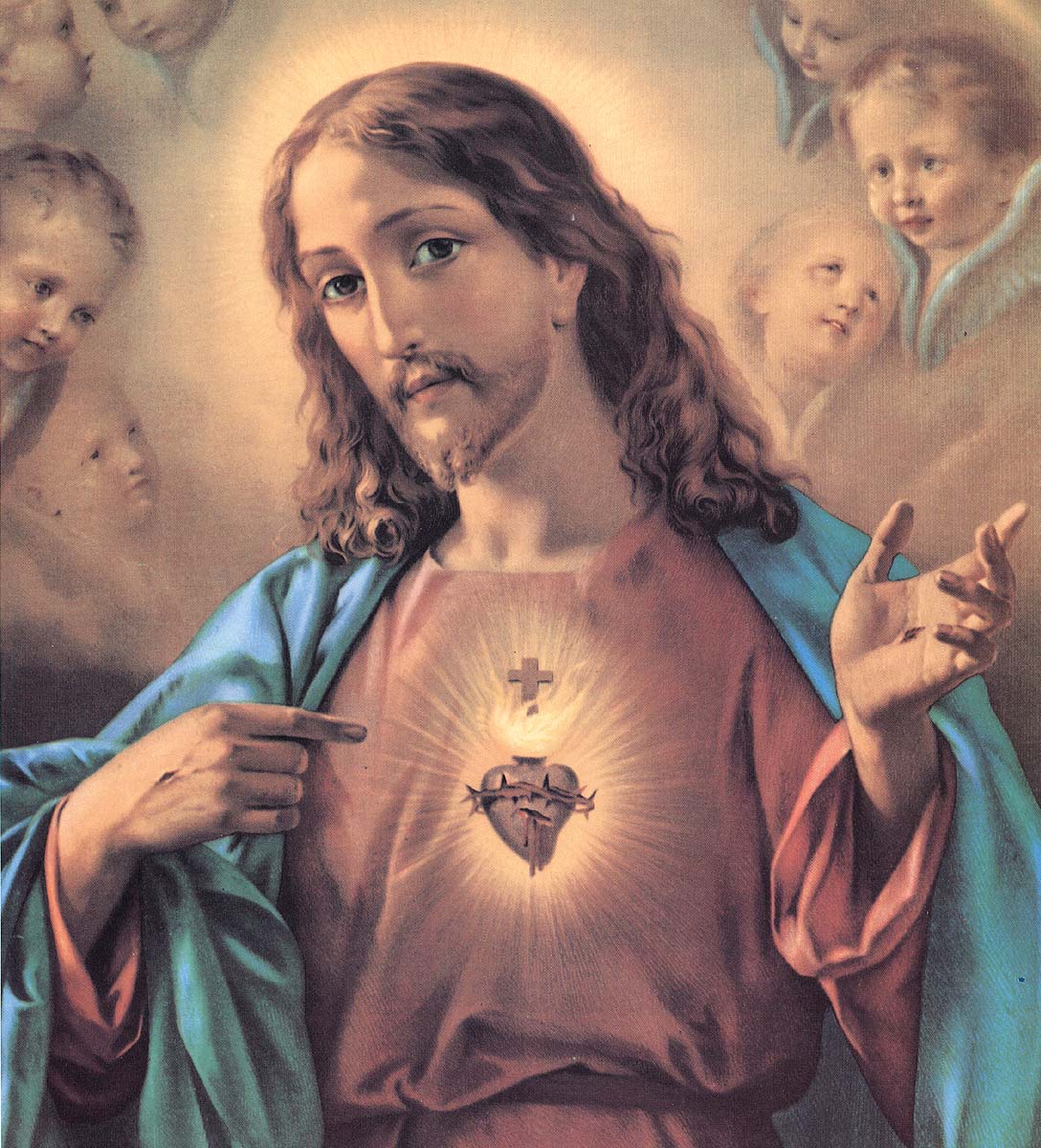
Sacred Heart of Jesus

Sacred HeartGod’s heart, as the expression of his will, is spoken of twenty-six times in the Old Testament. Before God’s heart men and women stand judged. […]

Yet another passage of the Old Testament speaks of God’s heart with absolute clarity: it is in the eleventh chapter of the book of the Prophet Hosea, whose opening lines portray the Lord’s love for Israel at the dawn of its history: “When Israel was a child, I loved him, and out of Egypt I called my son” (Hos 11:1). Israel, however, responds to God’s constant offer of love with indifference and even outright ingratitude. “The more I called them”, the Lord is forced to admit, “the more they went from me” (v. 2). Even so, he never abandons Israel to the power of its enemies, because “my heart”—the the Creator of the universe observes—“recoils within me, my compassion grows warm and tender” (v. 8).

The heart of God burns with compassion! On today’s solemnity of the Sacred Heart of Jesus the Church presents us this mystery for our contemplation: the mystery of the heart of a God who feels compassion and who bestows all his love upon humanity. A mysterious love, which in the texts of the New Testament is revealed to us as God’s boundless and passionate love for mankind. God does not lose heart in the face of ingratitude or rejection by the people he has chosen; rather, with infinite mercy he sends his only-begotten Son into the world to take upon himself the fate of a shattered love, so that by defeating the power of evil and death he could restore to human beings enslaved by sin their dignity as sons and daughters. But this took place at great cost—the only-begotten Son of the Father was sacrificed on the Cross: “Having loved his own who were in the world, he loved them to the end” (cf. Jn 13:1). The symbol of this love which transcends death is his side, pierced by a spear. The Apostle John, an eyewitness, tells us: “one of the soldiers pierced his side with a spear, and at once there came out blood and water” (cf. Jn 19:34). […]

To be “in” Jesus Christ is already to be seated in heaven. The very core of Christianity is expressed in the heart of Jesus; in Christ the revolutionary “newness” of the Gospel is completely revealed and given to us: the Love that saves us and even now makes us live in the eternity of God.

Benedict XVI
Solemnity of the Most Sacred Heart of Jesus
19 June 2009

Hans Urs von Balthasar remembered

Von BalthasarToday is the anniversary of death of Hans Urs von Balthasar, the renowned theologian of our era. Remembering Balthasar I also recall my dear friend, Jesuit Father Edward T. Oakes, who did much to make Balthasar’s theological perspective known and used.

Father Hans Urs von Balthasar (1905–1988), a Swiss Catholic theologian, is remembered as one of the 20th century’s great theologians yet was not never a university professor nor invited as a theological expert at the Second Vatican Council. Balthasar’s theological and philosophical output was massive which has influenced the course of theology today. His key idea was the idea that God’s relation to creation is the convergence of of Truth, Goodness, and Beauty.  It was Oakes who would remind me that Balthasar was the “kneeling theologian,” that is, appreciating the contemplative and liturgical tradition and indicating the way I ought to reflect on the Divine Majesty versus the academic or “sitting” theological approach (most often credited to people like Karl Rahner).

In 1929, he entered the Society of Jesus with a doctorate in literature. During theological studies for priesthood he found himself discouraged by the neo-scholastic theology offered having been attracted to the Church Fathers. He and the Swiss Reformed theologian Karl Barth had mutual interest in theological thinking; Balthasar later wrote a book on Barth.

From experience we know that we all have our complements. Balthasar’s was doctor and mystic, Adrienne von Speyr, whom he had received into full communion with the Church. Their complementarity was friendship in the Lord looking for greater communion in the Divine, Trinitarian Life. Balthasar and Speyr founded a Secular Institute, the Community of St John –which you can read about in the book, Our Task, that tries to bridge religious and lay vocations. At this point he was dismissed from the Society of Jesus.

In 1988, John Paul II announced his intention to name Balthasar to the College of Cardinals. He had been offered the red hat before, but declined its acceptance. He died two days before the consistory on June 26, 1988.

“In the trinitarian dogma God is one, good, true, and beautiful because he is essentially Love, and Love supposes the one, the other, and their unity.”

Prayers for Hans Urs von Balthasar: priest, theologian, cardinal-designate.

KofC brings McGivney to greater light in Rome

Lots of talk these days on those proposed for sainthood: Abp. Fulton Sheen, Msgr. Bernard J. Quinn, Sr. Bladina Segale, and of course, Michael J. McGivney (1852-90). As you know the New Haven, CT, native is revered now as the Venerable Servant of God, was a parish priest at St Mary’s Church (New Haven) in what is now the Archdiocese of Hartford and the founder of the Knights of Columbus. McGivney died early of TB.

Carl Albert Anderson the supreme knight of the KofC is in Rome this week for the ceremony which will impose the pallium upon the archbishop of Hartford Leonard Paul Blair by Pope Francis, and other meetings. One of the events was the June 25th presentation of the Italian edition of Parish Priest by Douglas Brinkley Julie M. Fenster. It was held at the Augustinianum, the school devoted to patristic study and steps from St Peter’s. Along with Anderson (remarks here) the book launch was presided over by Kevin Coyne from Columbia University’s School of Journalism and Father Giuseppe Costa, director of the Vatican Publishing House, which is publishing the book. More about the Rome event is here.

The synthesis makes the connection that McGivney was ahead of the times with his social awareness for the dignity of the human person, the poor and the family viz. the Gospel and Tradition, with what became the Church’s social doctrine articulated with the publication Rerum Novarum by Pope Leo XIII.

Hence, the argument is that the Knights of Columbus with its emphasis on charity and fraternity set the stage for greater and wholistic engagement in society in the post-industrial era and prompted by lay men and not the clergy that cared for the person as imago Dei and the encounter with Christ.

Domenico Agasso’s piece for the Vatican Insider, “McGivney prepared the Knights of Columbus to help Popes

Blandina Segale to be studied for sainthood

Blandina SegaleSister Bladina Segale, a Sister of Charity of Cincinnati, is now being studied for possible canonization. Segale who died at the tender age of 91 in 1941. The Santa Fe Archbishop Michael Sheehan is handling the cause.

The AP story says Sister Segale “challenged Billy the Kid, calmed angry mobs and helped open New Mexico territory hospitals and schools.”

She is the first from New Mexico to have a cause opened. The Sister of Charity was born in Cicagna, Italy, on January 23, 1850 and died on February 23, 1941. More of what the press is saying about Sister Bladina Segale can be found here.

If you are interested, you may want to find a copy of At the End of the Santa Fe Trail, a book containing the narrative and correspondence of Sister.

Sister Bladina joins a list many US citizens being considered for sainthood. Know, though, it could be several years before the advances since much work has to be organized and sanctity recognized. A Crisis Magazine article on Sister Bladina gives a good sense of who this woman is and her relevance for us today.

Friars of the Renewal –ordinary witness, extraordinary era

In my opinion, the Franciscans of the Renewal (the friars and the sisters) are among a few very dynamic communities in the USA who are actually living the gospel and being formed by sacred Tradition. Their following and their belonging to Jesus Christ is out-of-this-world. I may be biased because of my friendship and experience with many of the CFRs, but I think you might say the say if you went to pray and work among them. A recent article on the CFRs speaks a little to their charism…

Pastoral Challenges of the Family in the Context of Evangelization

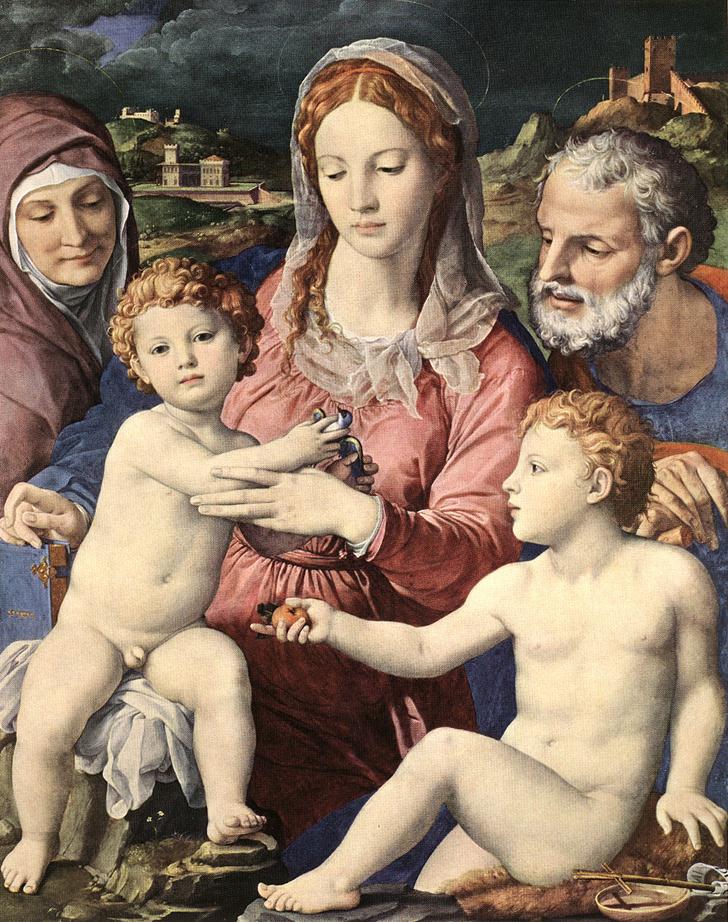
Holy Family ABronzinoIn advance of the October 2014 extraordinary Synod of Bishops on Marriage and family, the “instrumentum laboris,” —the working document of 75 pages— offers a broad picture of the ways the Catholic Church witnesses to the Gospel and teaches and lives the moral life and the significant work that needs to be done to adequately address contemporary challenges. The office for synods published “The Pastoral Challenges of the Family in the Context of Evangelization.

The Extraordinary General Assembly of the Synod of Bishops is the third of this category. One might say this is the first synod with such wide interest, international participation in the initial stages and hope for good work going forward.

The Pastoral Challenges of the Family” is based on the feedback and analysis requested from the national various Conferences of Bishops around the world late in 2013. So, besides the questionnaire, the document also incorporates the concerns of those who sent their reflections directly to the Pontifical Council for the family with the appropriate theological reflection. This is the first Synod for Lorenzo Cardinal Baldisseri.

The Holy Father has placed the work of the Synod under the patronage of the Holy Family. The Synodal prayer concludes the instrumentum labors.

Patriarchs Gregory and John meet

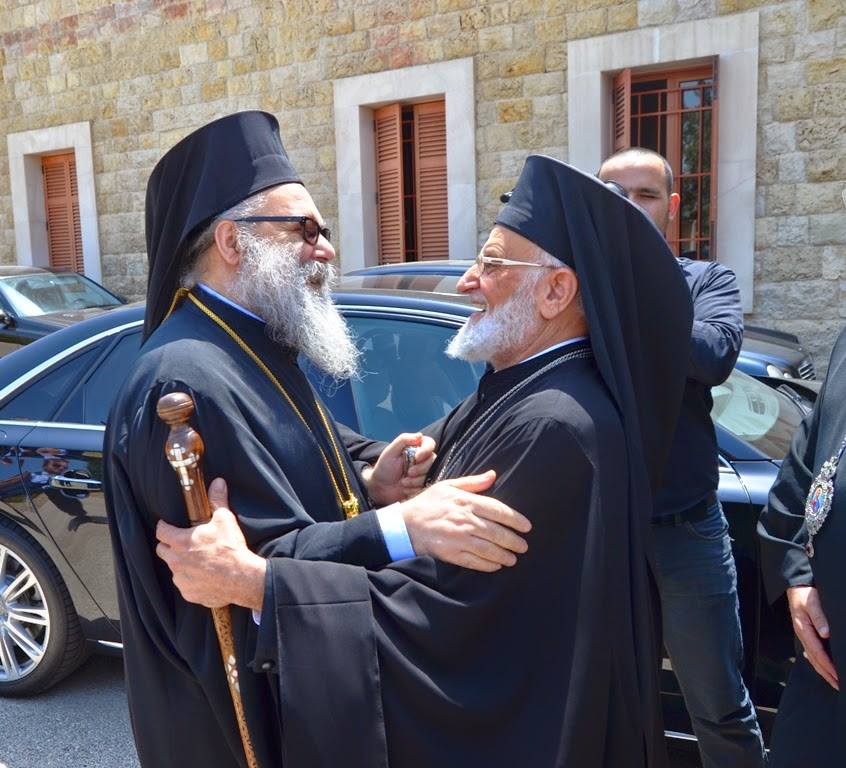
Orthodox and Catholic Patriarchs 2014The annual Synod of Bishops of the Melkite Church just finished meeting. The Melkite bishops from around the world meet together each year for some time in prayer, discussions on theology, liturgy, canonical process and the election of bishops. This year the Orthodox Patriarch of Antioch, John X, met with Melkite Patriarch Gregory III –a historic meeting.

The Melkites in the USA are governed by Bishop Nicholas J. Samra (of the Eparchy of Newton) and the Antiochian Orthodox Church is awaiting a new head of church since their Metropolitan Philip Saliba died not long ago. The new metropolitan is expected to be announced late next week.

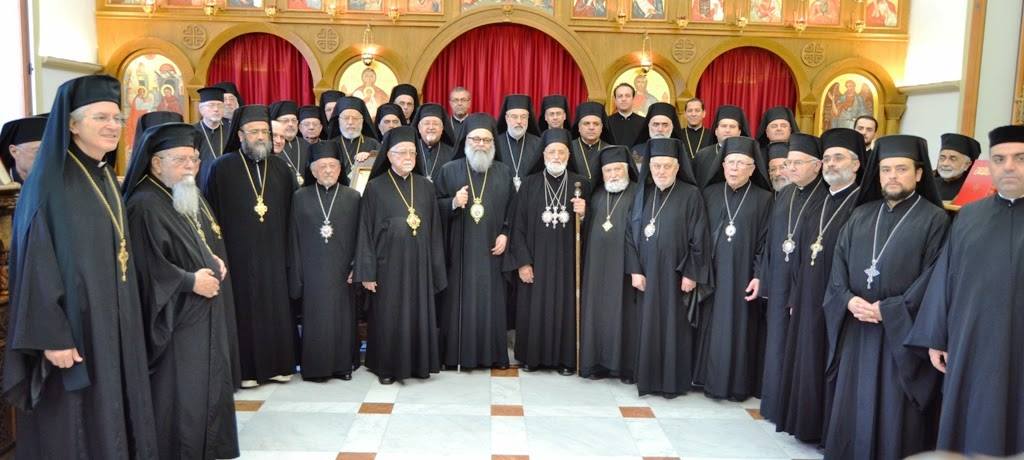
Melkite Synod 2014 meeting with Patriarch JohnSaint Peter and Paul, pray for us.
Saint Ignatius of Antioch, pray for us.

Nativity of Saint John the Baptist

Naming of St John BaptistChrist is the completion of the law for righteousness unto every one that believes. … For this reason the blessed Baptist is brought forward, as one who had attained the foremost place in legal righteousness, and to a praise so far incomparable. And yet even thus he is ranked as less than one who is least: “for the least, He says, is greater than he in the kingdom of God.” But the kingdom of God signifies, as we affirm, the grace that is by faith, by means of which we are accounted worthy of every blessing, and of the possession of the rich gifts which come from above from God. For it frees us from all blame; and makes us to be the sons of God, partakers of the Holy Ghost, and heirs of a heavenly inheritance.

St. Cyril of Alexandria
Sermon XXXVIII [Commentary on Luke]

Corpus Christi

Corpus Christi Waterbury CT

Our true adoration — of God Himself.

“O Jesus, you instituted this Sacrament, not through any desire to draw some advantage from it for yourself, but solely moved by love which has no other measure than to be without measure. You instituted this Sacrament because your love exceeds all words. Burning with love for us, you desired to give yourself to us and took up your dwelling in the consecrated Host, entirely and forever, until the end of time. And you did this, not only to give us a memorial of your death which is our salvation, but you did it also, to remain with us entirely and forever.”

St. Angela of Foligno