Stay in the Church, St Augustine exhorts

Today is the 19th Sunday through the Church year and we are reading at Mass Saint Matthew 14:22-33

A reflection on the reading from St. Augustine:

“The boat carrying the disciples – that is, the Church – is rocking and shaking amid the storms of temptation, while the adverse wind rages on. That is to say, its enemy the devil strives to keep the wind from calming down. But greater is he who is persistent on our behalf, for amid the vicissitudes of our life he gives us confidence. He comes to us and strengthens us, so we are not jostled in the boat and tossed overboard. For although the boat is thrown into disorder, it is still a boat. It alone carries the disciples and receives Christ. It is in danger indeed on the water, but there would be certain death without it. Therefore, stay inside the boat and call upon God. When all good advice fails and the rudder is useless and the spread of the sails presents more of a danger than an advantage, when all human help and strength have been abandoned, the only recourse left for the sailors is to cry out to God. Therefore, will he who helps those who are sailing to reach port safely, abandon his Church and prevent it from arriving in peace and tranquility?”

Saint Lawrence

St LawrenceSaint Lawrence, deacon and martyr, is clearly a disciple of Christ that we need to follow. He prayed and worked; he never reduced his ministry to mere activism.

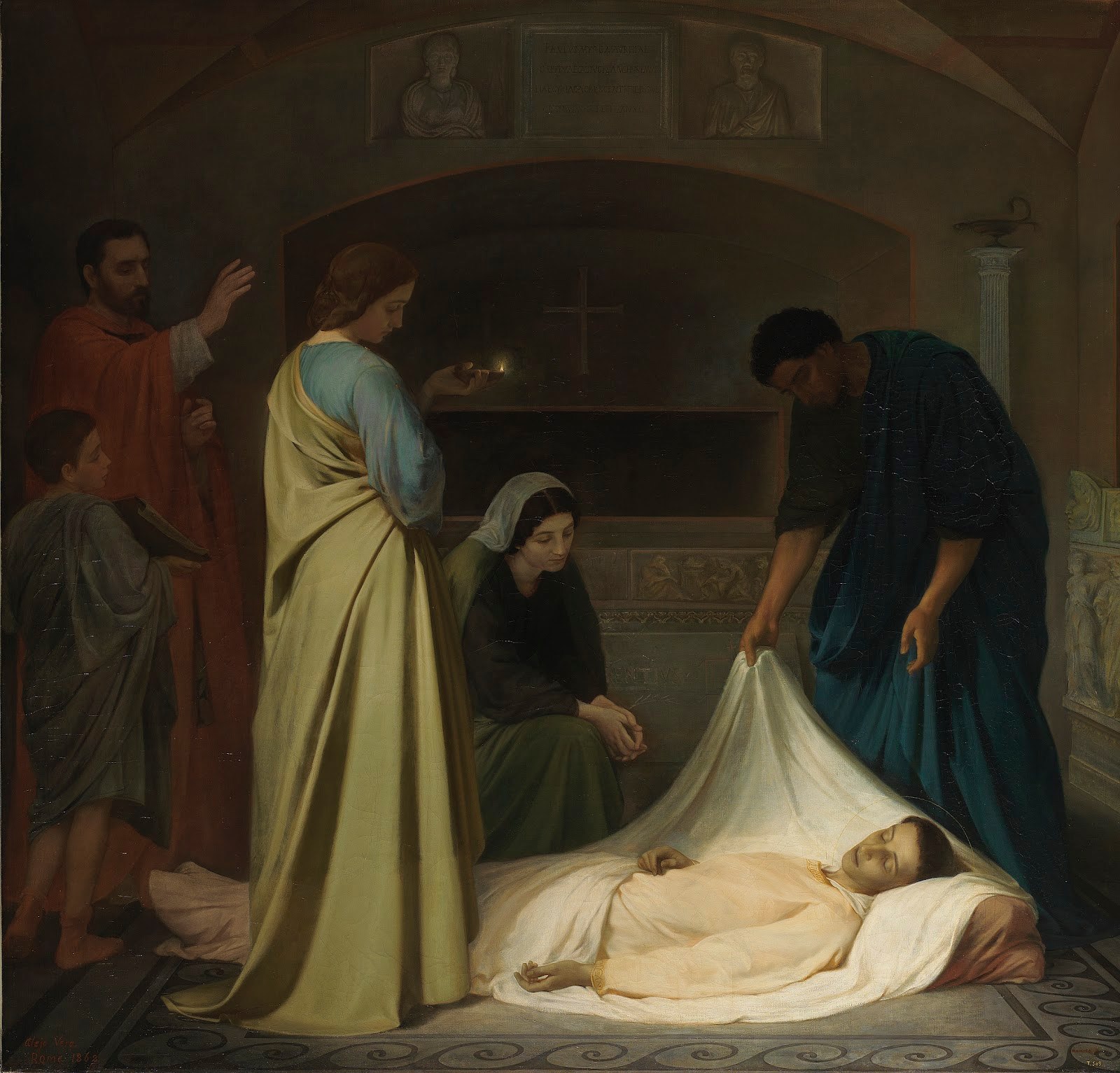
Saint Lawrence was Chief of the seven deacons of Rome. In the year 258 Pope Sixtus was led out to die, and Saint Lawrence followed beside him, weeping because unable to share his fate. Where are you going, my father, without your son? Where are you going, holy pontiff, without your deacon? Never did you offer a sacrifice without my serving you at the altar. In what way have I displeased you? The holy Pope comforted him with the words, I am not abandoning you, my son; a more difficult trial and a more glorious victory are reserved for you; in three days you will follow me.

This prophecy was fulfilled. After the Pope’s martyrdom the prefect of the city, knowing the rich offerings which the Christians put into the hands of the clergy, demanded the treasures of the Roman Church from Lawrence, their guardian. The Saint promised to show him, at the end of three days, riches exceeding all the wealth of the empire. He was granted the time of delay. The Archdeacon of Rome went about assembling the poor, the infirm, and the religious who lived by the alms of the faithful, and he brought them to the prefect on the appointed day. Behold the treasures I promised you; I add pearls and precious stones — these virgins and widows consecrated to God; the Church has no other riches. The prefect replied: How dare you play games with me, miserable one? Is this how you show your contempt for the imperial power?

Christ, whom Lawrence had served in His poor, gave him strength in the conflict which ensued. After being placed on the rack, he was stretched on a grill over a slow fire. He joked about his pains. I am roasted enough on this side, he said, perhaps you should turn me over. Soon, his gaze towards heaven, he gave up his soul to God. He was buried in the catacomb near the Tiburtine Way, called the Verano Field, a little over a mile from the city walls. The faithful watched there for three days to mourn their holy Archdeacon who had been so good to them. God, by the glory of this holy martyr, demonstrates the value He sets upon love for the poor. Innumerable prayers were offered at his tomb. Saint Lawrence continued from his throne in heaven his charity to those in need, granting them, as Saint Augustine says, the smaller graces which they sought, and leading them to the desire of better gifts.

Reflection: Our Lord appears before us in the persons of the poor. Charity to them is a great sign of predestination. It is almost impossible, the holy Fathers assure us, for any one who is charitable to the poor, above all for Christ’s sake, to perish.

Les Petits Bollandistes: Vies des Saints, by Msgr. Paul Guérin (Bloud et Barral: Paris, 1882), Vol. 9; Little Pictorial Lives of the Saints, a compilation based on Butler’s Lives of the Saints and other sources by John Gilmary Shea (Benziger Brothers: New York, 1894).

Saint Teresa Benedicta of the Cross

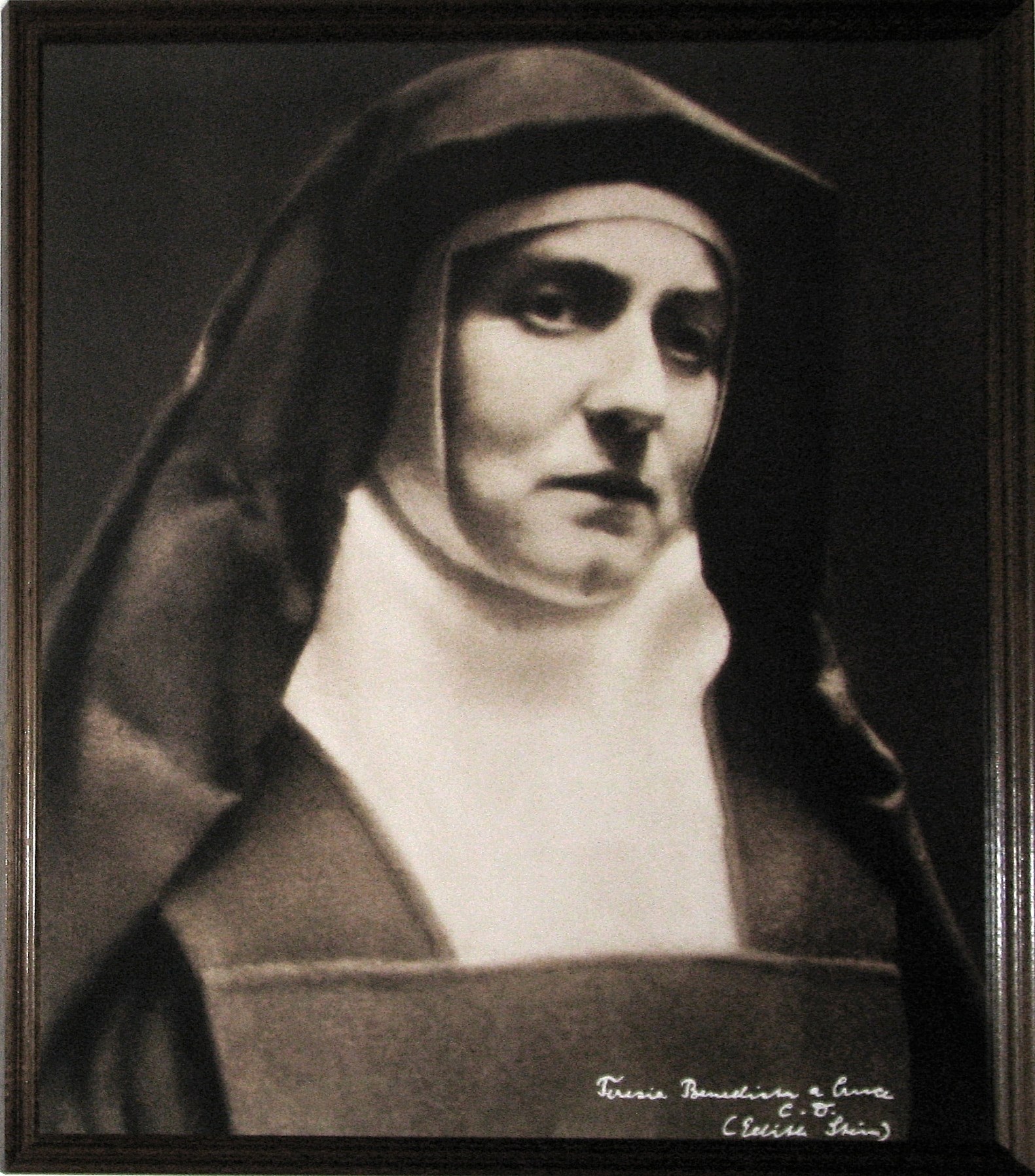
Edith SteinSaint Teresa Benedicta said: “love will be our eternal life.” She also said, “As for what concerns our relations with our fellow men, the anguish in our neighbor’s soul must break all precept. All that we do is a means to an end, but love is an end in itself, because God is love.”

This Carmelite saint of the 20th century  was killed for her love, for her abiding affection and love for her Divine Lover, Jesus Christ.

We know from experience that the measure of the person is recognized not by words, but by the actions one does in the face of diminishment, exhaustion, laziness, and persecution. Seeing ourselves in action is crucial for growing in our personal mission given to us by the Holy Spirit. Do we know what our mission is in this life?

We also know from experience based on regular self-reflection and discernment that what can sustain our hearts is the love we have for our Creator,  the Infinite, and the concern we have for the salvation of others. Of course, this concern is first based on acceptance that are saved by Grace. The concern for the destiny of others, hence, is the exact same as what Jesus had for the 12 Apostles, the disciples, and for each of us.

All this leads me to think of the ways I am a mature Christian. Recall that Saint Paul talks about the goal of Christian is to be mature in his or her relationship with Christ and neighbor, even when it we meet immaturity in the other person; to be mature in living as faithful members in the Church. We have to admit that some days this can be difficult and only the reasonableness of faith Christ and honest friendship makes this possible and beautiful. This is why Saint Teresa Benedicta of the Cross is a beautiful and reasonable witness: she understood the goal: eternal life. Can we follow her as she points to Jesus?

Saint Dominic

St Dominic receiving the rosary from BVMOne of the great saints is liturgically recalled today with the feast of Saint Dominic de Guzman. The founder of the Order of Preachers, who ws once a canon and a close collaborator with his bishop cared for the whole person in front of him with great humanity. The spiritual sons and daughters of Dominic carry with them the charism of being loving preachers, merciful confessors and engaging defenders of the Faith.

Tradition tells us that Our Lady gave the rosary to Saint Dominic to promote and to live. In the living of the mysteries of the rosary one lives the Paschal Mystery of Jesus; remaining close to devotion prevents sin and error   and thus maintaining the authentic Christian faith.

Here in CT we have several Dominican works: St Mary’s Priory & Church, Albertus Magnus College and the Springs Learning Center in New Haven; nearby in North Guilford there is Our Lady of Grace Monastery. There is a vibrant Third Dominican group

The photo shows the mosaic panel of St Dominic being presented with the Rosary by Our Lady in the Cathedral’s Lady Chapel.

From the Office of Readings for today:

“Wherever [Dominic] went he showed himself in word and deed to be a man of the Gospel. During the ay no one was more community-minded or pleasant toward his brothers and associates. During the night hours no one was more persistent in every kind of vigil and supplication. He seldom spoke unless it was with God, that is, in prayer, or about God, and in this matter he instructed his brothers. Frequently he made a special personal petition that God would deign to grant him a genuine charity, effective in caring for and obtaining the salvation of men. For he believed that only then would he be truly a member of Christ, when he had given himself totally for the salvation of men, just as the Lord Jesus, the Saviour of all, had offered himself completely for our salvation. So, for this work, after a lengthy period of careful and provident planning, he founded the Order of Friars Preachers.”

Saint Dominic, pray for us.

Transfiguration

transfiguration APrevitaleThe Law was given through Moses,
and prophecy came through Elijah,
but grace and truth have come through Christ the Lord.

May the Lord bless you as he has blessed the world on the Feast of the Transfiguration!

Prayers for the monks and oblates of Mount Saviour Monastery, Pine City, NY.

Saint John Mary Vianney

St John VianneyToday is the Feast day of Saint John Mary Vianney, the Curé d’Ars. He died on 4 August 1859, and was canonized and declared the patron of priests in 1929 by Pope Pius XI.

The Curé taught his parishioners primarily by the witness of his life. We recognize that from his example his people learned to pray, to visit Jesus frequently in the Tabernacle.

“One need not say much to pray well”, he explained to them, “we know that Jesus is there in the Tabernacle. Let us open our hearts to him, let us rejoice in his sacred presence. That is the best prayer”. And he would urge them: “Come to communion, my brothers and sisters, come to Jesus. Come to live from him in order to live with him… Of course you are not worthy of him, but you need him!”

Pope Benedict XVI wrote in his letter proclaiming the Year of the Priest, “In his time the Curé of Ars was able to transform the hearts and the lives of so many people because he enabled them to experience the Lord’s merciful love. Our own time urgently needs a similar proclamation and witness to the truth of Love: for God is Love (I John 4:8).”

Let us pray for our parish priests today.

Pope Francis’ prayer intentions for August

Pope Francis’ prayer intentions for the month of August

The general intention:  That refugees, forced by violence to abandon their homes, may find a generous welcome and the protection of their rights.

The mission intention: That Christians in Oceania may joyfully announce the faith to all the people of that region.

Using these intentions, let us be united in prayer with the Holy Father.

The American Czestochowa

Our Lady of CzestochowaA look at the influence of our devotion to Mary, the Mother of God under the title of Our Lady of Czestochowa. She is not only the Queen of Poland, but the Queen in America.

Here is a terrific documentary produced in 2005, the “American Czestochowa.

If you can make it to Jasna Gora, going to the National Shrine in Doylestown, PA, is a wonderful way to honor the Mother of God.

Our Lady of Czestochowa’s feast day is August 26.

Saint Ignatius of Loyola

Ignatius at ManresaThe Church liturgically recalls for us one of the Master’s of the spiritual life, Saint Ignatius of Loyola. The Pilgrim died in 1556 and was the author of the Spiritual Exercises and founder of the Society of Jesus.

It may be a little early to speak of a commemoration for the 500th anniversary of the Spiritual Exercises, but it may be good to keep this anniversary in mind. 2022 is the year when we will study and live the foundational experiences of Ignatius in Manresa. This picture shows Ignatius in awe in meeting the Lord as he writes his religious experience that gave rise to him following his vocation with prayerful  intensity. Do we have a similar conviction as Ignatius?

This 2008 animation of an Olive, gives a sense of the life Saint Ignatius of Loyola, written, produced and narrated by Jason Kapell of the Fairfield University Media Center. It is nicely done –remember it is short and sweet with a Spanish Olive narrating.

Saints Mary, Martha, and Lazarus of Bethany

Raising Lazarus Martha and Mary Hunterian PsalterOn the Universal liturgical calendar of the Church today’s feast is for Saint Martha of Bethany. Yet, on the Benedictine liturgical calendar the Church honors the three of Bethany: Mary, Martha, and Lazarus  described in the Gospels as saints. Revealed in sacred Scripture, these people are acclaimed as the much-loved friends of Jesus (according to Luke and John). In the Gospel of Luke ewe read the well-known story of hospitality noting Martha as a symbol of the active life and Mary of the contemplative. The Lord holds both women in tension of what the disciple is to be: a contemplative in action.

The Lord’s raising of Lazarus from the dead is an anticipation of resurrection and a sign of eternal life for the rest of us who are baptized into the Mystical Body of Christ. Resurrection from the dead becomes, with this pericopy a powerful “game-changer” in the life of every human being. The death and subsequent raising of Lazarus evokes in each of us the acknowledge that we do not make ourselves, that God is the only Creator of who we are and what we are about as persons (not as individuals). This gesture of the Lord’s invites each of us to a deeper faith in the Messiah.

So, why is honoring all three characters crucial in our Christian life? Each person: Mary, Martha and Lazarus are convicted in the friendship with Jesus. If friendship, then fidelity, and perseverance, gratitude and hospitality.

Why is this a true feast for Benedictine monks, nuns, sisters and Oblates (laity)?

Saint Benedict sees all persons as a gift of God. The greatest gift was the person of Jesus who received as the giftedness of each person when he said: “I was a stranger, and you welcomed me.” Our Holy Father Saint Benedict is quite direct in how we treat the stranger, how welcome the person who presents himself at the door, we definitive statements. In Chapter 53 of Rule of Saint Benedict we read:

All guests who present themselves are to be welcomed as Christ, for he himself will say: I was a stranger and you welcomed me (Matt 25:35). Proper honor must be shown to all, especially to those who share our faith (Gal 6:10) and to pilgrims. Once a guest has been announced, the superior and the brothers are to meet him with all the courtesy of love. First of all, they are to pray together and thus be united in peace, but prayer must always precede the kiss of peace because of the delusions of the devil. All humility should be shown in addressing a guest on arrival or departure. By a bow of the head or by a complete prostration of the body, Christ is to be adored because he is indeed welcomed in them. After the guests have been received, they should be invited to pray; then the superior or an appointed brother will sit with them. The divine law is read to the guest for his instruction, and after that every kindness is shown to him. The superior may break his fast for the sake of a guest, unless it is a day of special fast which cannot be broken. The brothers, however, observe the usual fast. The abbot shall pour water on the hands of the guests, and the abbot with the entire community shall wash their feet. After the washing they will recite this verse: God, we have received your mercy in the midst of your temple (Ps 47 [48]:10). Great care and concern are to be shown in receiving poor people and pilgrims, because in them more particularly Christ is received; our very awe of the rich guarantees them special respect.

The hospitality shown by the the Holy Three is what we come to know as their personal mission given by God, their personal “I Am” and not mere kindness to the other. In the person of Jesus we meet his enjoyment of their company because it show us how the beauty of human friendship and love is at the core of our DNA. The Church’s honoring Saints Mary, Martha and Lazarus is a sign of hope and promise for all who are in Christ Jesus.

Can we live as the Saints of Bethany? Can we live as Saint Benedict shows us?