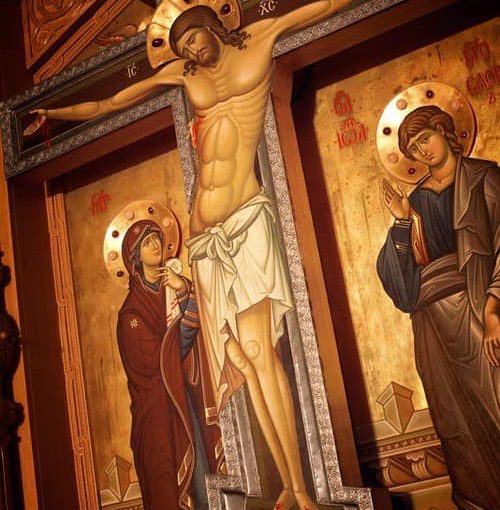
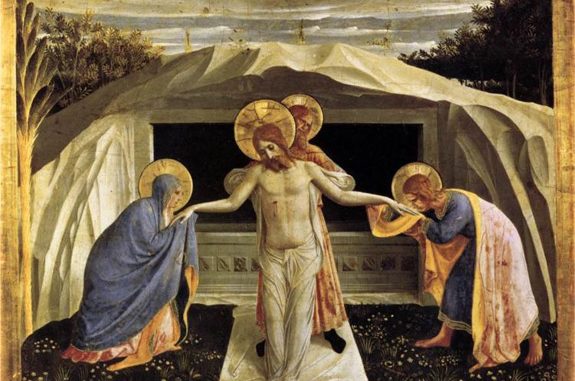
God’s Friday is a remarkable day to deeply ponder the fact of Jesus death on the cross and his shedding his blood for us. Christians believe that what is called Good Friday is the day of our salvation. The Byzantine tradition calls it “Holy and Great Friday,” but “Good” Friday is an appropriate name for it. It is a day of sorrow, however, and it is a holy day.
For, despite the pain and suffering of our Lord, this sacrifice was “good” for the salvation of all. There are many layers of meaning to this feast.
As Fr. David Petras reminds: “Jesus replaces the Passover Lamb, he becomes our food and drink. He establishes a spiritual kingdom as we are united in the one body of our Lord, and in the sacrifice of his blood. This is the fulfillment of all sacrifices, whose purpose is to unite God and us mortals, and to unite us to one another.”
From the Catecheses by Saint John Chrysostom, bishop
The power of Christ’s blood
If we wish to understand the power of Christ’s blood, we should go back to the ancient account of its prefiguration in Egypt. “Sacrifice a lamb without blemish,” commanded Moses, “and sprinkle its blood on your doors.” If we were to ask him what he meant, and how the blood of an irrational beast could possibly save men endowed with reason, his answer would be that the saving power lies not in the blood itself, but in the fact that it is a sign of the Lord’s blood. In those days, when the destroying angel saw the blood on the doors he did not dare to enter, so how much less will the devil approach now when he sees, not that figurative blood on the doors, but the true blood on the lips of believers, the doors of the temple of Christ.
If you desire further proof of the power of this blood, remember where it came from, how it ran down from the cross, flowing from the Master’s side. The gospel records that when Christ was dead, but still hung on the cross, a soldier came and pierced his side with a lance and immediately there poured out water and blood. Now the water was a symbol of baptism and the blood, of the holy Eucharist. The soldier pierced the Lord’s side, he breached the wall of the sacred temple, and I have found the treasure and made it my own. So also with the lamb: the Jews sacrificed the victim and I have been saved by it.
“There flowed from his side water and blood.” Beloved, do not pass over this mystery without thought; it has yet another hidden meaning, which I will explain to you. I said that water and blood symbolised baptism and the holy Eucharist. From these two sacraments the Church is born: from baptism, “the cleansing water that gives rebirth and renewal through the Holy Spirit,” and from the holy Eucharist. Since the symbols of baptism and the Eucharist flowed from his side, it was from his side that Christ fashioned the Church, as he had fashioned Eve from the side of Adam. Moses gives a hint of this when he tells the story of the first man and makes him exclaim: “Bone from my bones and flesh from my flesh!” As God then took a rib from Adam’s side to fashion a woman, so Christ has given us blood and water from his side to fashion the Church. God took the rib when Adam was in a deep sleep, and in the same way Christ gave us the blood and the water after his own death.
Do you understand, then, how Christ has united his bride to himself and what food he gives us all to eat? By one and the same food we are both brought into being and nourished. As a woman nourishes her child with her own blood and milk, so does Christ unceasingly nourish with his own blood those to whom he himself has given life.
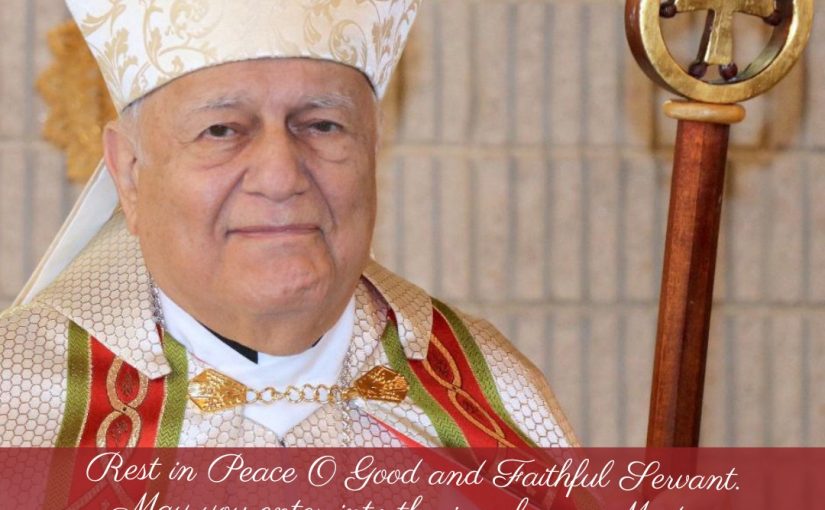
 After several months of prolonged sickness and more than 8 years of thrice weekly kidney dialysis, my friend of 37 years, Chorbishop Joseph Francis Kaddo made his transition to the Lord of Life, today at 4:30 a.m.
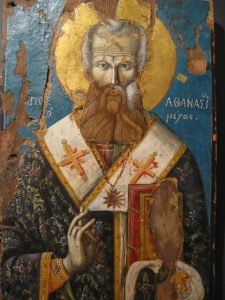 As move closer to the intensity of Holy Week we begin to refocus our spiritual eyes and hearts on what it means to be people of great, and holy desire by attending to the work the Lord has done for us. We are indeed people who thirst. We are people who desire to be in friendship with the Lord of Life who alone satisfies the needs of our hearts. The following portion of the Letter of the great bishop Athanasius iterates what we need, who we are, and what we are doing.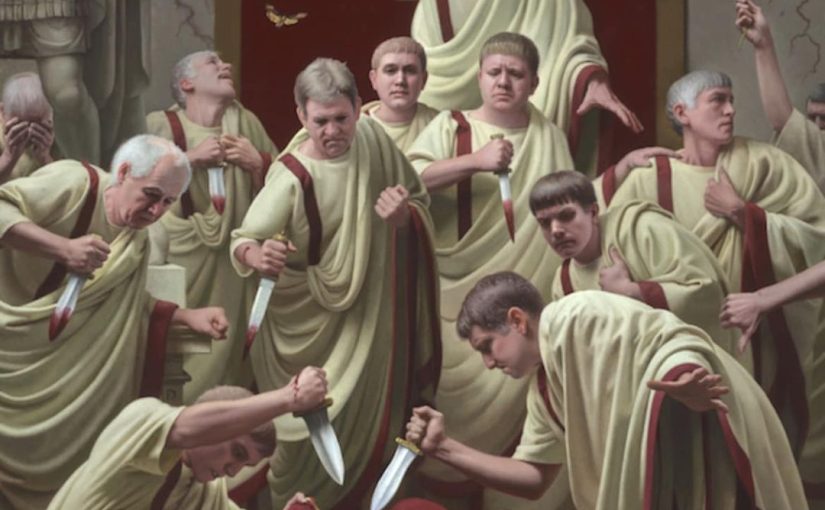
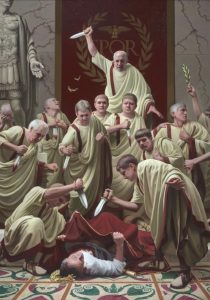 Watch your back today. You just never know where your enemies lurk and what’s in their hands.