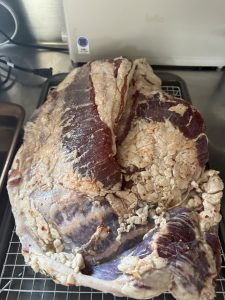

3 slabs of bacon in the fridge working on the pellicle. Smoking starts Thursday.
3 slabs of bacon in the fridge working on the pellicle. Smoking starts Thursday.
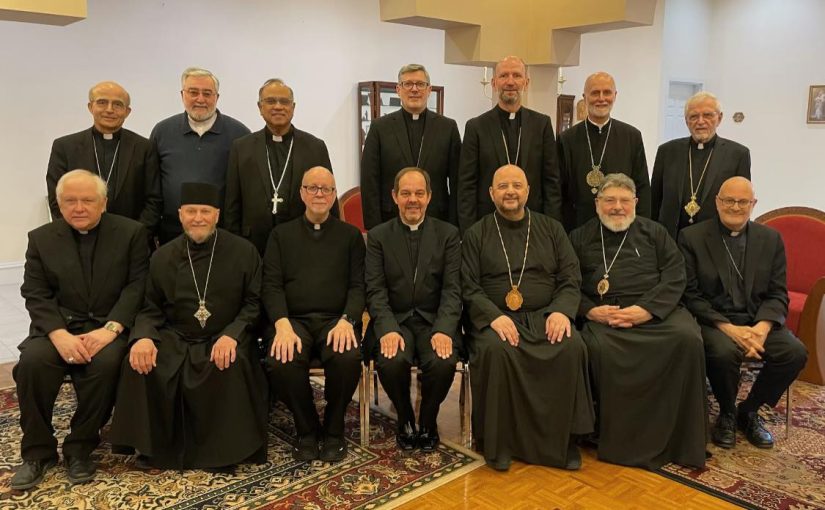
Meeting of the Eastern Christian Association 2026. The annual meeting.
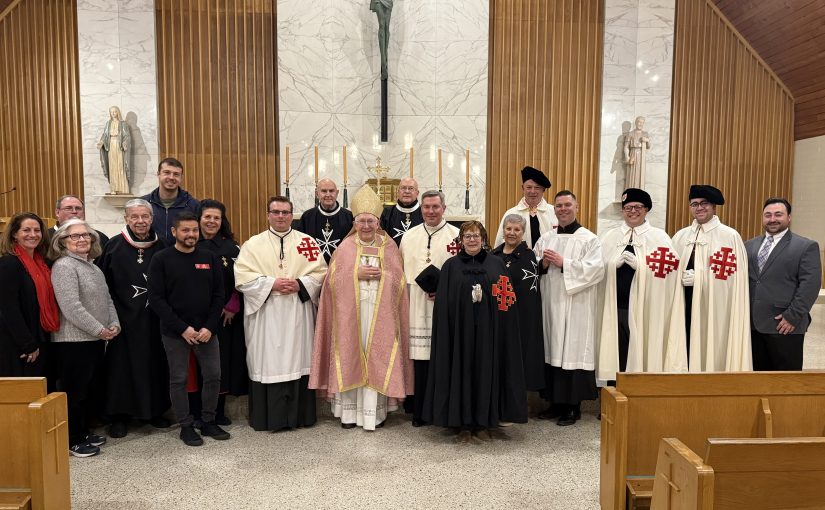
Solemn Vespers for Laetare Sunday was sung tonight at St. Theresa’s Church, North Haven. Archbishop Leonard P. Blair presided and preached.
Members of the Order of Malta – Connecticut North East Area and the Equestrian Order of the Holy Sepulchre of Jerusalem were present. The Archbishop is a member of the Order of Malta and the Equestrian Order of the Holy Sepulchre of Jerusalem.
Thank you to Father Robert L. Turner, KHS, pastor of the parish and Dominic Uleano, parish musician. Grateful too, for the three volunteers who helped manage the reception, Carrie, Nicolette, and Melanie and Luis Fuentes who made the empanadas.
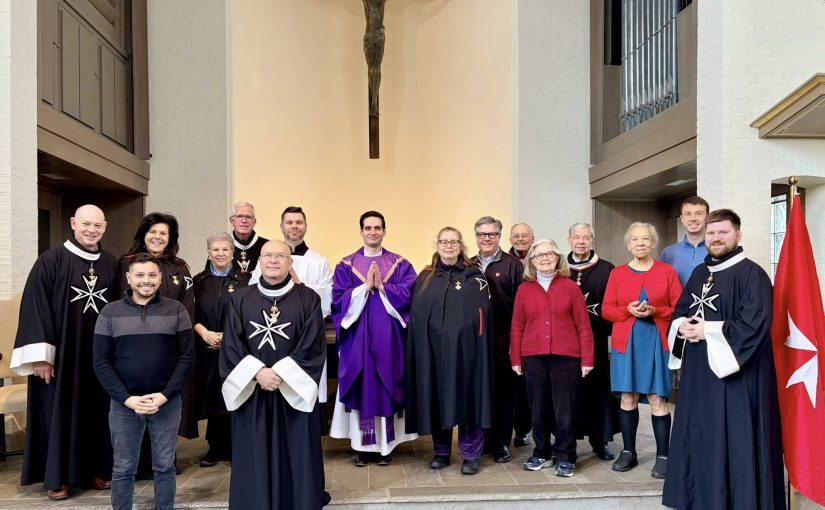
 At a recent Mass with the CT North East Area our chaplain, Fr. Joseph MacNeill, blessed vegetable and flower seeds for the coming growing season.
You may ask why we invoked God’s blessing upon the seeds. We bless seeds for several reasons: we give God glory and recognize Him as the creator and sustainer of all things (the purpose of the Order of Malta), we look forward to a harvest of food for our sustenance, and we recognize there is connection with what we hear in the parable of the sower. Ultimately it is God’s Providence that captures our attention.
In the Lord’s Prayer we ask for the daily bread. We are all beggars on a fundamental level. We have to ask, we extend our hand in supplication. The action and necessity of eating is grounded in our Church’s agricultural patrimony up to today. Our Order continues to support agriculture around the world and we do the same here in Connecticut where we support two gardens.
The majority of these seeds will be planted for feeding the needy and the homeless.
Perhaps the best reason to bless seeds is because it is a good, holy and fun thing to do. May the harvest “reach the pantries without hindrance.”
On Saturday, February 21, the Connecticut North East Area met for its Lenten Day of Recollection at St. Thomas More Chapel at Yale University, New Haven.
After the welcome by Bob O’Hara welcomed the group and prayer was offered by the deputy chaplain and Yale’s Catholic chaplain, Fr. Joseph L. MacNeill. Our Associate David Sellery spoke to us on Bl. Adrian Fortescue, a contemporary St. Thomas More. Saints are road maps for us because they demonstrate for us that the living the Gospel is possible. David’s presentation on Bl. Adrian Fortescue reveals Blessed Adrian Fortescue as a Knight for conscience, charity and courage.
Expands our understanding of what knighthood means for us today, embodying holiness, models conscience under pressure, reminds us it is not a nostalgia for the past but courage in each moment. Three things Bl. Adrian asks: how is my conscience tested now, where must faith stand quietly firm and where are we called to witness, not with swords but with integrity.
Fr. MacNeill, spoke on the purpose and spirituality of the Order of Malta, which are the reasons we engage in works of charity. He used an essay from the Journal of Spirituality (2014) and a presentation given by the now former Prelate of the Order, Bishop Jean Laffitte on essentials of our charism. Promotion of the glory of God, sanctification of members and then the service to the poor and defense of the faith. We can’t give what we don’t have. The point is that we need a well-formed and a thriving interior life is foundational because it is rooted in Jesus Christ before serving the poor and defending the faith. Benedictine Father Henry O’Shea says,
“In order to defend, one must have something to defend, one must know what one is defending. In order to serve the needy, one must be aware to the extent to which one is needy oneself. To breathe the ‘supernatural breath in the midst of everyday life,’ one needs to learn how to breathe in and out that supernatural air that is the breath of God, the breath of the Holy Trinity with which we were sealed by the Holy Spirit in our baptism and confirmation in Christ.”
The stress, therefore, is placed was on promoting God’s glory, working on our personal sanctification (the call to holiness, the interior life —our relationship with the Lord) and then to do the works of charity. Too often the first two points get eclipsed by the third. The Church has given us all tools for our spirituality and charitable work through the companionship of the Order.
The Mass readings for the day significantly echoed the talk on the spirituality of the Order.
We enjoyed a potluck lunch made by Gina, Jackie, Jeff, Luis and Paul. The Area members contributed goods to assemble nearly 200 blessing bags distributed to the needy in three cities, including the Malta House of Care in Hartford.
Blessed be God.
In his first Christmas address as pontiff, Leo XIV referenced the poem below by the acclaimed Israeli poet Yehuda Amichai.
As we enter the year 2026, let us pray for justice and peace.
Wildpeace
Not the peace of a cease-fire,
not even the vision of the wolf and the lamb,
but rather as in the heart when the excitement is over
and you can talk only about a great weariness.
I know that I know how to kill,
that makes me an adult.
And my son plays with a toy gun that knows
how to open and close its eyes and say Mama.
A peace without the big noise of beating swords into ploughshares,
without words,
without the thud of the heavy rubber stamp:
let it be light, floating, like lazy white foam.
A little rest for the wounds—who speaks of healing?
(And the howl of the orphans is passed from one generation to the next, as in a relay race: the baton never falls.)
Let it come
like wildflowers,
suddenly, because the field
must have it: wildpeace.
-Y. Amichai, “Wildpeace”, in The Poetry of Yehuda Amichai, Farrar, Straus and Giroux, 2015.
It is a longstanding Catholic practice to give thanks to God for the graces and blessings of the previous year and then to make petitions for the year to come. Pray the Te Deum (on December 31) as we end 2025 and the Veni, Creator Spiritus (on January 1) as we begin 2026.
A plenary indulgence with the reception of Confession, the Holy Eucharist and prayers for the Holy Father.
The Te Deum is also called the Ambrosian Hymn for its association with St Ambrose of Milan. The Veni, Creator Spiritus is used at Vespers Pentecost, Confirmation, and whenever the Holy Spirit is solemnly invoked.
Let us pray for one another.
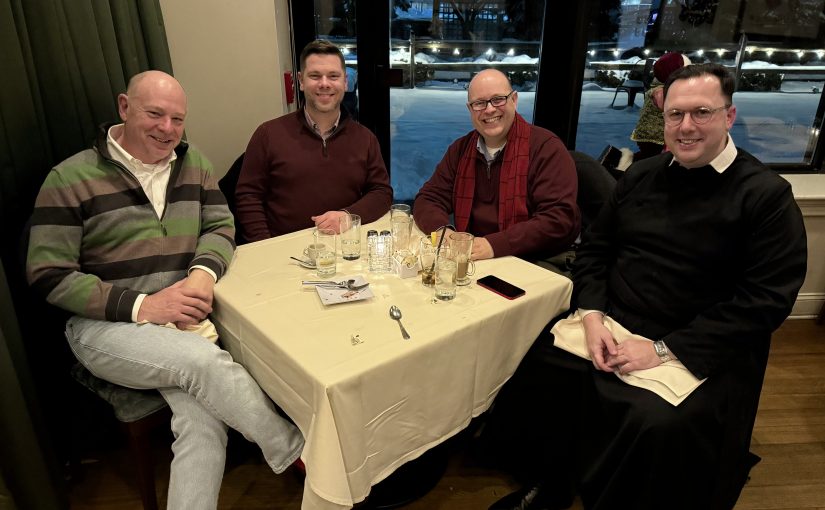
Four friends met for dinner tonight to celebrate Christmas and friendship, especially with Brother Paul Murray, of the Congregation of the Oratory. Paul is aggregated to The York Oratory in England and preparing for ordination is visiting family and friends for a week.
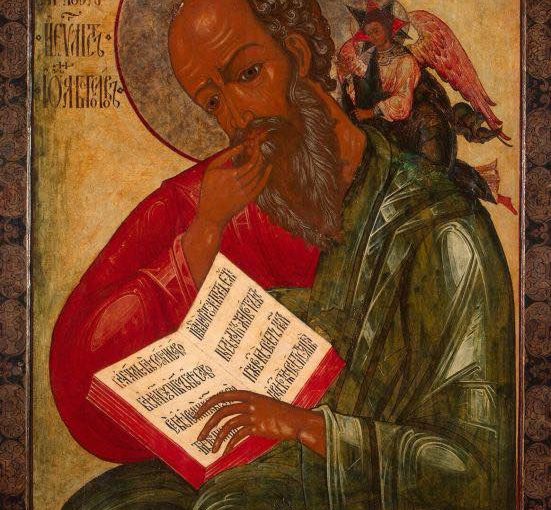
The Latin Church today recalls the liturgical memory of the great and holy apostle and evangelist, John. He’s also referred in sacred Scripture as the Beloved Disciple. In art we see the young John laying his head on the chest of Our Savior –more than a mere metaphor, it is what every follower of Jesus ought to do, or aspire to do. John’s Gospel speaks eloquently of God’s love for humanity and portrays salvation in and through Jesus in a different light than the synoptics.
I recommended today as a day to pray for the Order of the Holy Sepulchre of Jerusalem through the intercession of St John not because he is directly connected with the Order but precisely because what is mentioned above, but also because “in Your poverty we might become rich…” [Ambon Prayer]. We hear this theological datum, God became poor for our sake, but do we believe it? There is wisdom here.
The point I am trying to make here is that our lives –seen as a whole– is to have a space for Christ Jesus in our hearts and minds. After all, we are to practice the presence of God! When you and I make room for Jesus, He doesn’t just show up; He transforms the space He’s given. When you and I make room for Christ, He brings peace to our chaos. Therefore, let’s make room for the miracle, and you’ll be amazed at what God will do!
Connecting St John with the Order of the Holy Sepulchre is an opportunity to discover what our vocation and mission is in the Order for the sake of the Kingdom and the salvation of all people in Christ crucified and risen.
Image: Nectarius Kuluksin (—1679), John the Evangelist in Silence, (tripping on wooden panel, 1679), 109 x 85 cm. Hermitage Museum, Saint Petersburg, Russia.
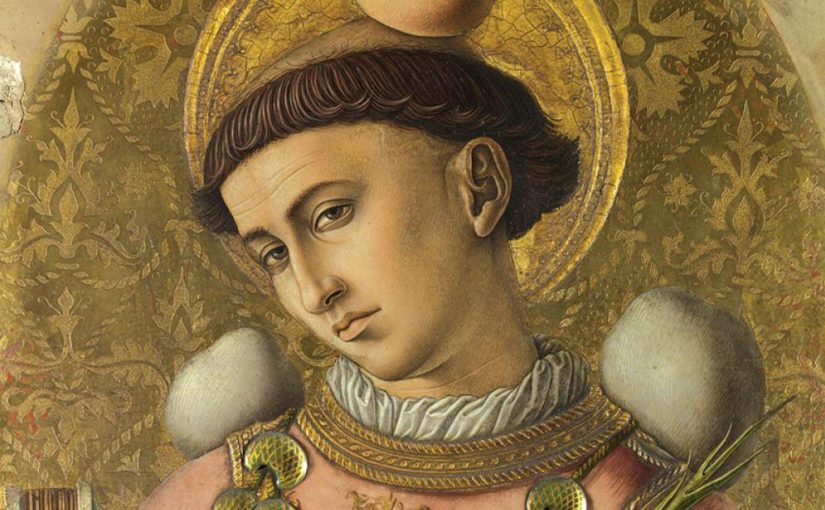
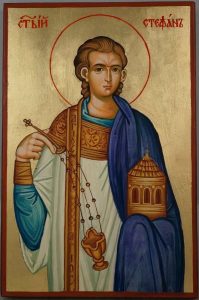 On the Byzantine liturgical calendar today is dedicated to the first-martyr, the holy deacon Stephen. The Latin Church recalls the remembers the apostles and evangelist St John.
A blessed name day to all those named Stephen or Stephanie – also special festal greetings to all deacons on this day! Thank you for your ministry!
“First-martyr and apostle of Christ, you fought the good fight. You convicted the tyrants of their wickedness. When you were killed by stoning at the hands of sinners, you received a crown from God’s right hand while you cried out: Lord, do not hold this sin against them.” [Troparion of the feast]
The Church gives us the feast of St. Stephen immediately after Christmas to make something clear. On Christmas we learned “the son of God became man,” and today we see the purpose—“so that we might become God” (CCC 460). The account of Stephen’s preaching and martyrdom shows us what it looks like to become like God.