PAZ with Sasnta and his helpers 2011.JPG: May 2010 Archives

All in a day...

| | Comments (0)
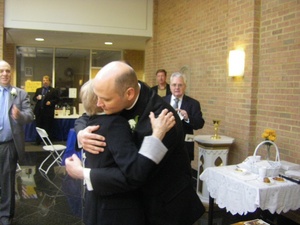
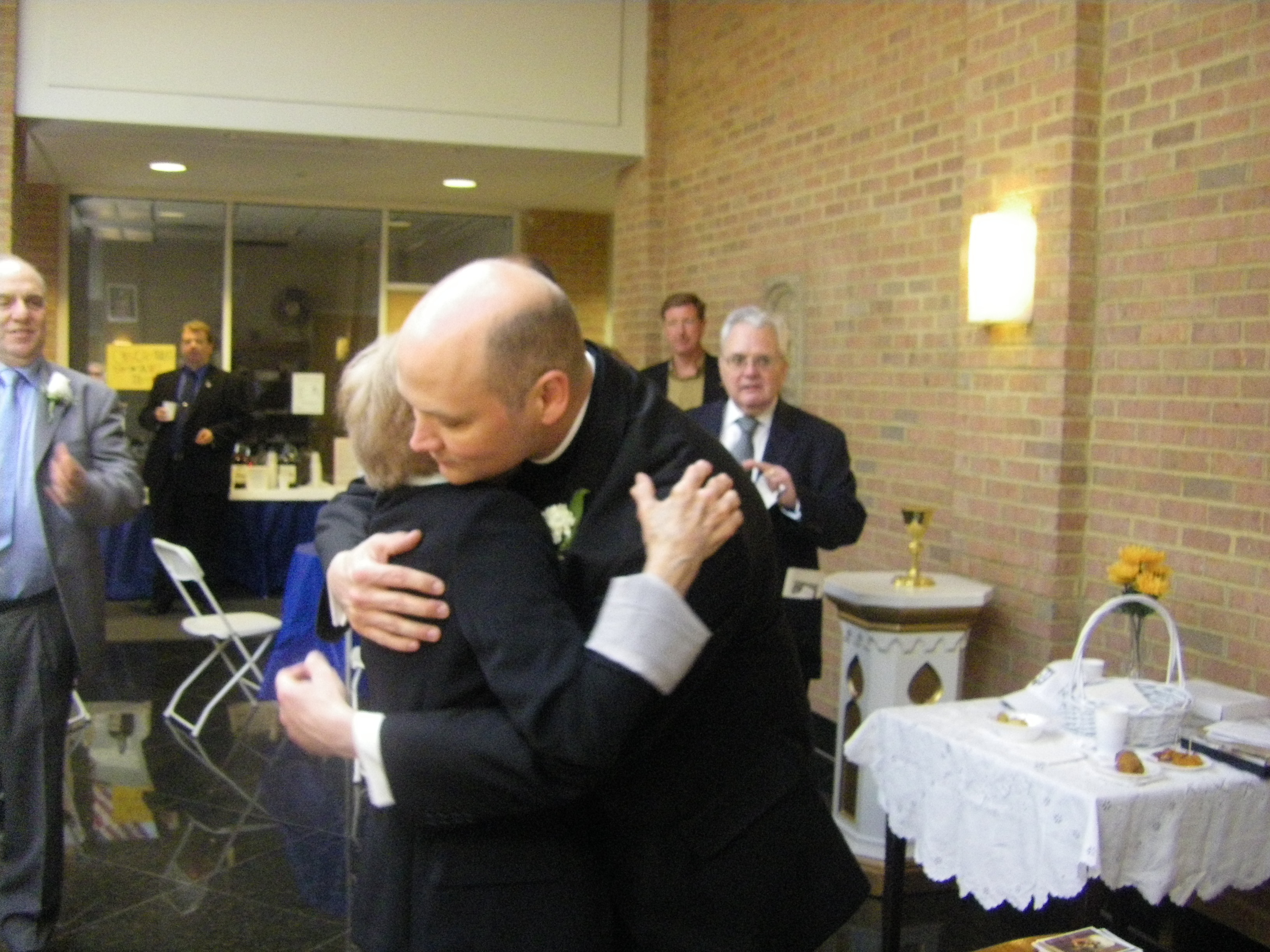
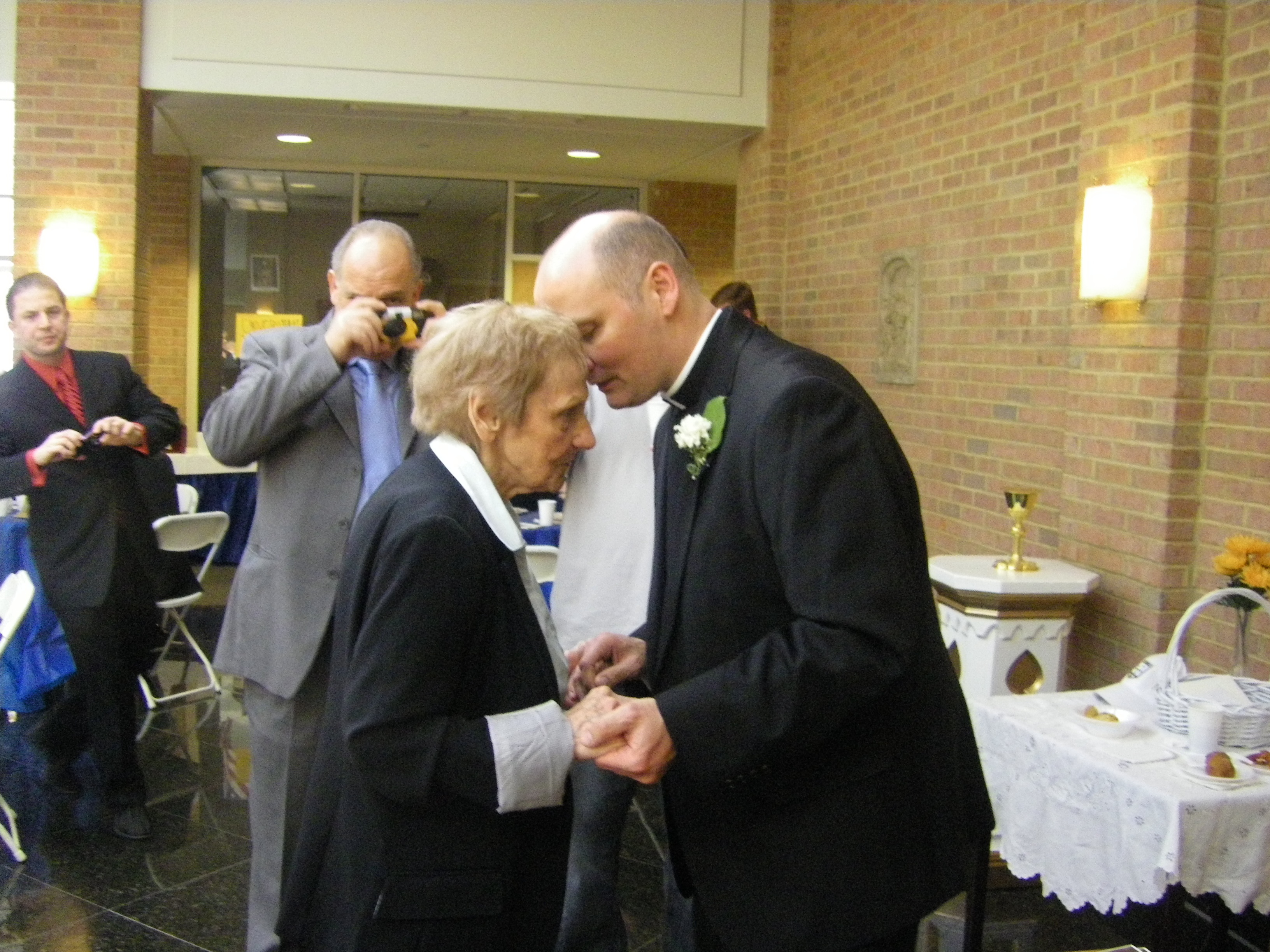
Tom Roslak with his Mom May 16 2010.jpgToday was a glorious day! Besides the picture perfect day it was a perfect day to celebrate Mass for the first time by the recently ordained.  A few seminarians and I had the privilege to be a part of the "First Mass festivities" of Father Thomas A. Roslak at the Church of the Holy Rosary, Staten Island, NY.

The new priest did a very good job celebrating the Mass, leading others in prayer: he'll be a great priest.

Father Thomas' family and friends came to pray and to spend time with each other on this special day. Twelve priests from the archdiocese assisted 
Tom Roslak with his Mom2 May 16 2010.jpg
at Mass. The host pastor, Father Robert Aufieri was a most gracious and delightful host to all of us.


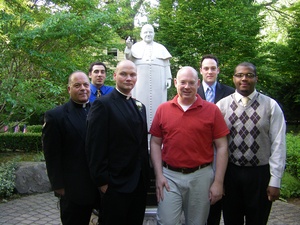
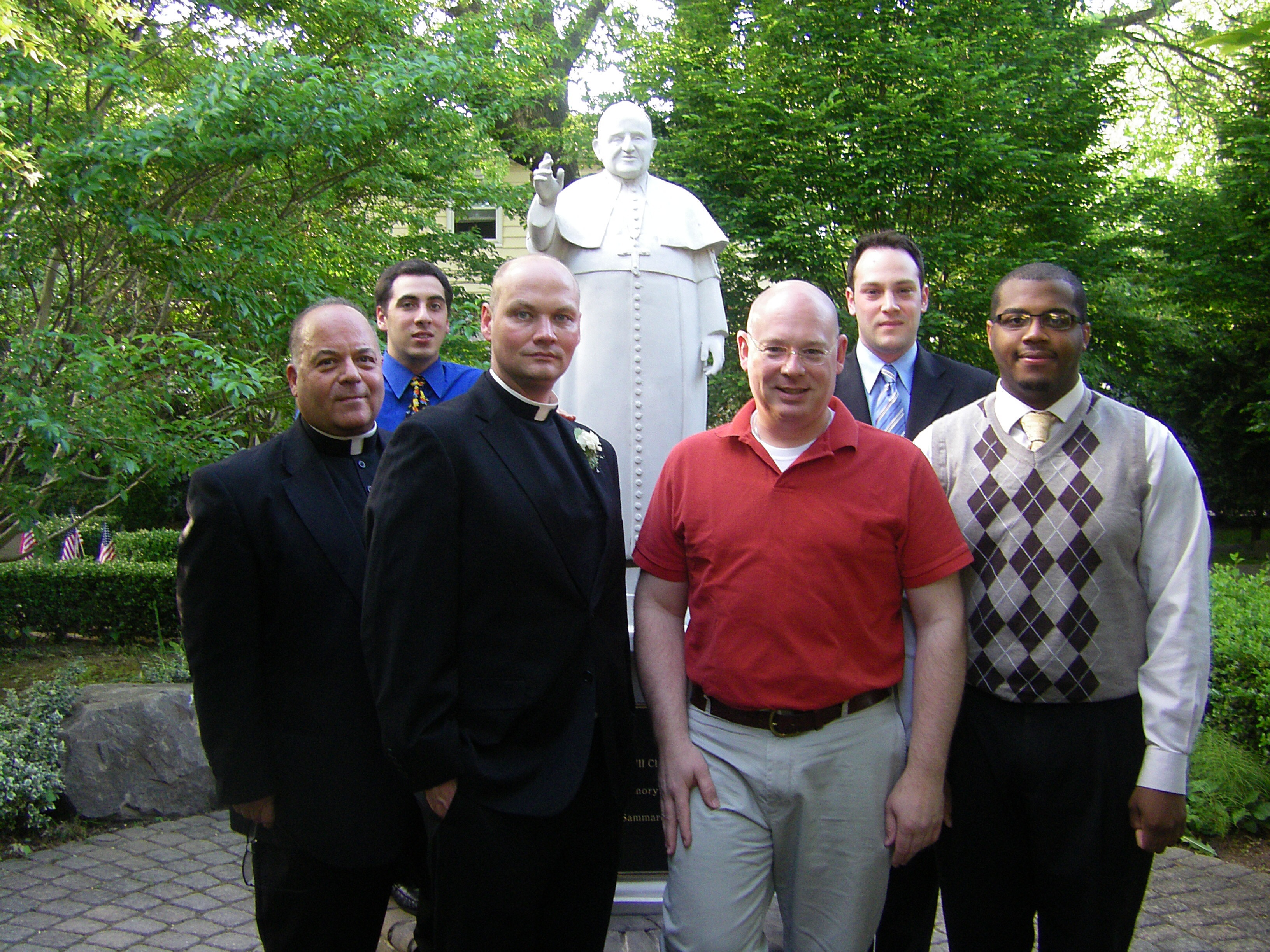
Thomas Roslak, RJ Aufieri and seminarians May 16 2010.jpg


Fathers Aufieri & Roslak PAZ, Kareem Smith Robert Rodriquez and Richard Mirano

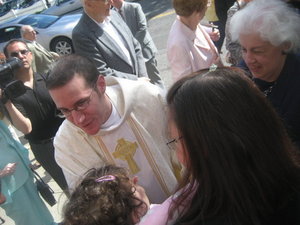
Dan Tuite with friends.jpg


Father Daniel Tuite with some friends.

Bookmark and Share

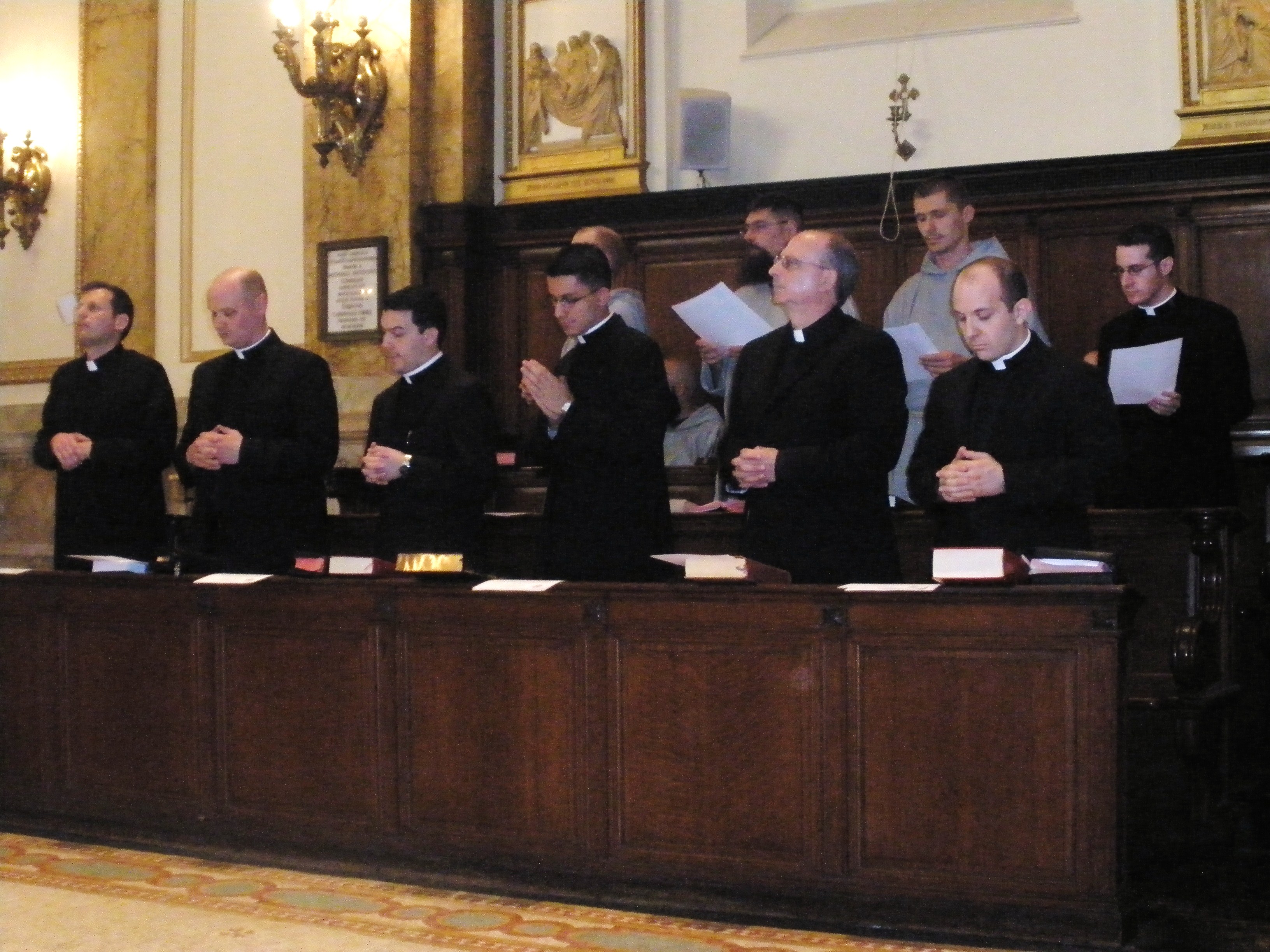
Profession of Faith and Oath of Office.JPGThe Church asks those who are to be ordained and those who take an office of leadership to take an Oath of Fidelity. Pope John Paul II outlined the Church's expectations her ministers in a 1998 motu proprio Ad Tuendam Fidem, and concretely expressed in the "Profession of Faith and The Oath of Fidelity on Assuming An Office to be Exercised in the Name of the Church."

Cardinal Joseph Ratzinger's commentary notes that the Church's profession of faith has been received by the faithful, ordained and laity, as a P5130045[1].JPGline of continuity of what is authentically believed about the Blessed Trinity and the Church's share in the life of the Trinity through the ages. The profession of faith and the propositions contained therein are testimonies of the Christian faith handed down through the millennia.

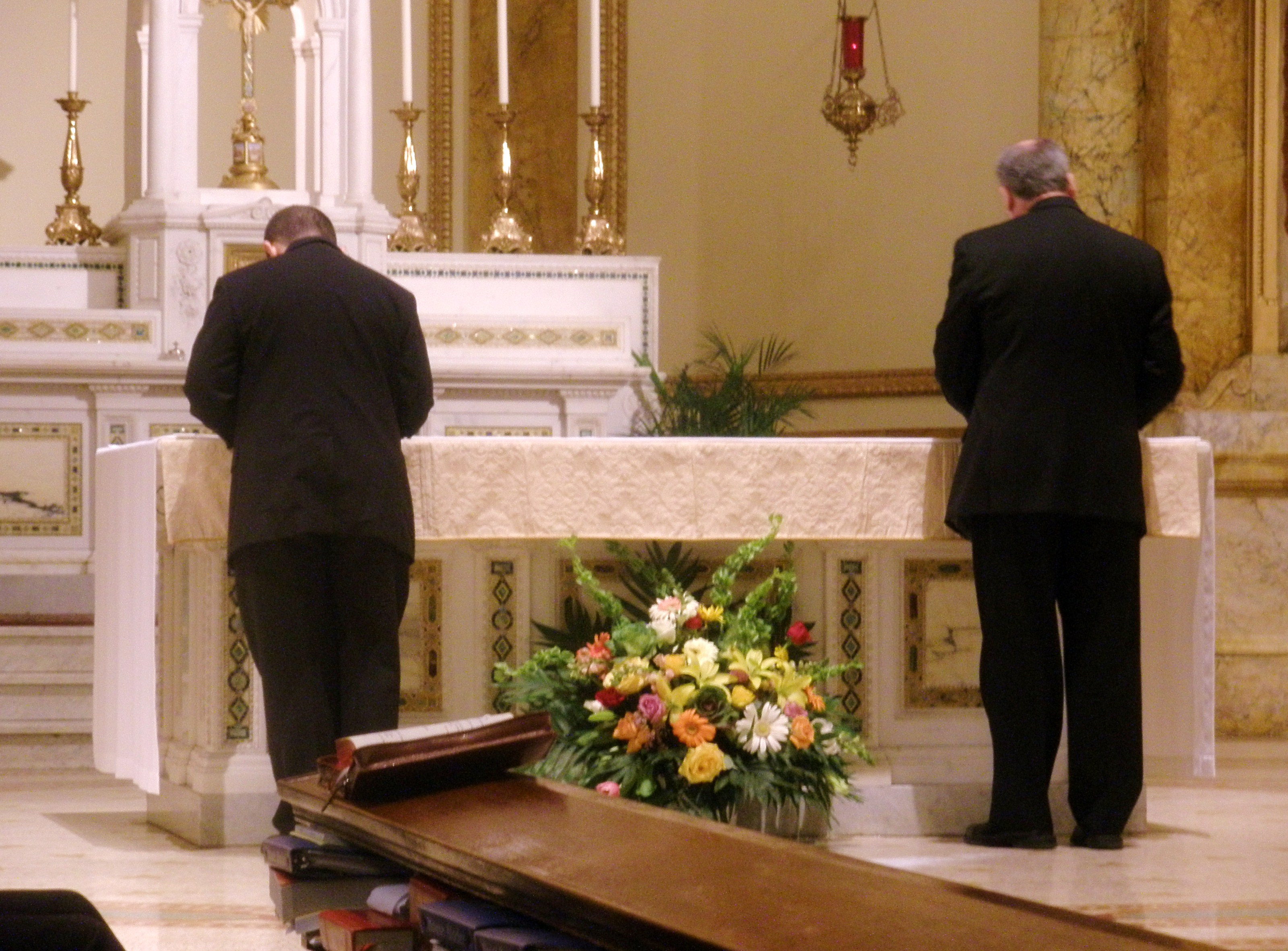
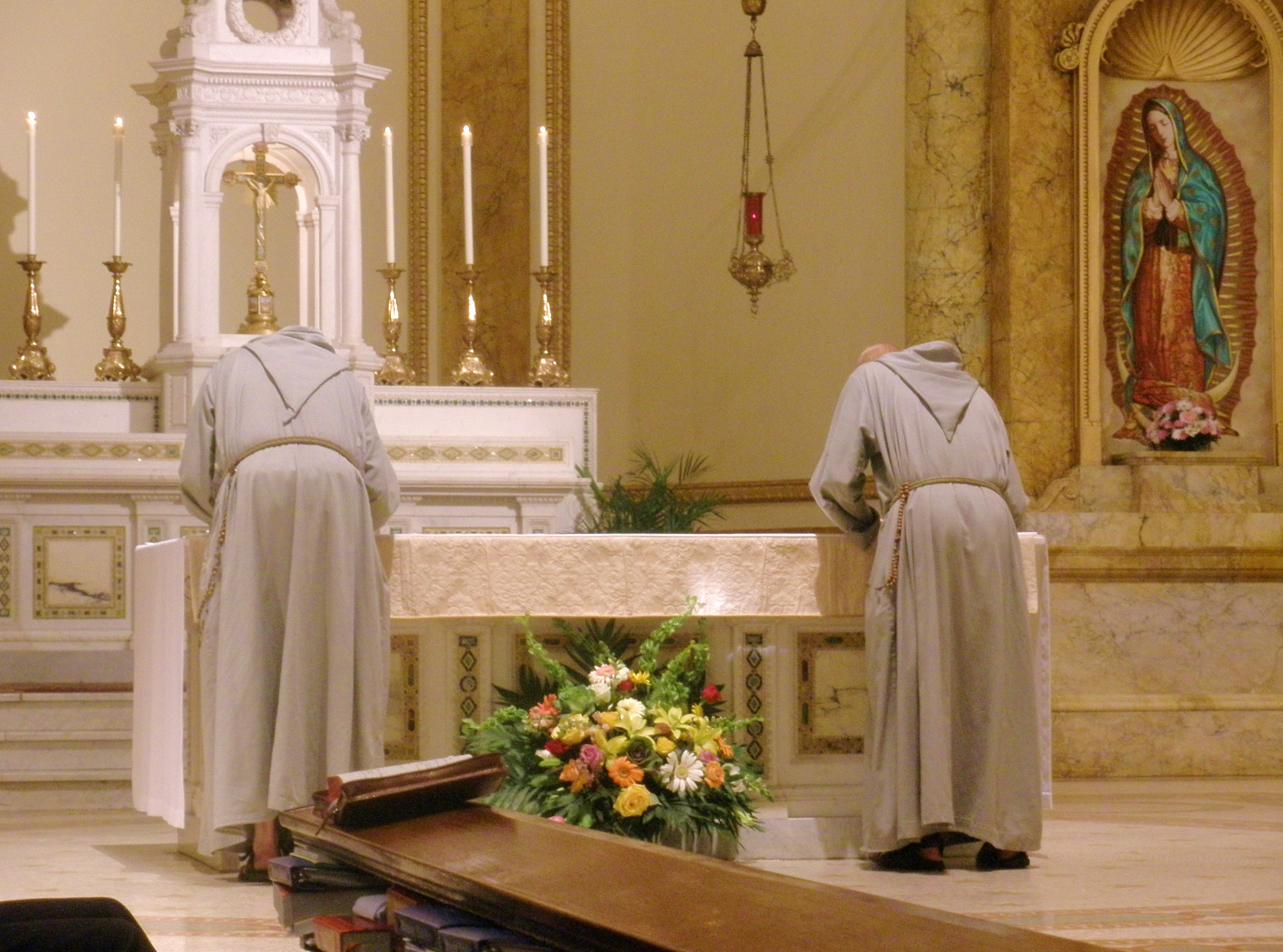
Essentially, the deacons who made their profession of faith and the oath of office tonight are witnesses of the truth of the resurrection of Christ not only as baptized Christians but very soon to be more closely connected to the work of Christ with their souls changed at the deepest part and signing the profession of faith and oath of office.JPGrecognized in heaven by the laying on of hands and the prayer of the bishop, as priests. The mandate of the profession and the oath recognizes that these deacons are called to serve humanity enlightened by Christ as missionaries of Christ to the City and the world for the express purpose of growth and life in Christ. Further, taking the oath tells us that they no longer teach their own word but THE Word, Jesus Christ.

Acknowledged this evening is the life-long desire to conform life to Christ crucified and risen guided by the teaching of the Church.All this is CFRs sign profession and oath.JPGmade possible by listening attentively to the Word of God and to tasting Him in the Eucharist, thus satisfying the sure yearnings of the human heart.

Here they begin to be more and more serious in preparing to make an account of the hope that they have known.


We are grateful for the photos taken by Esteban Sanchez, a second year theologian at Saint Joseph's Seminary.

Bookmark and Share
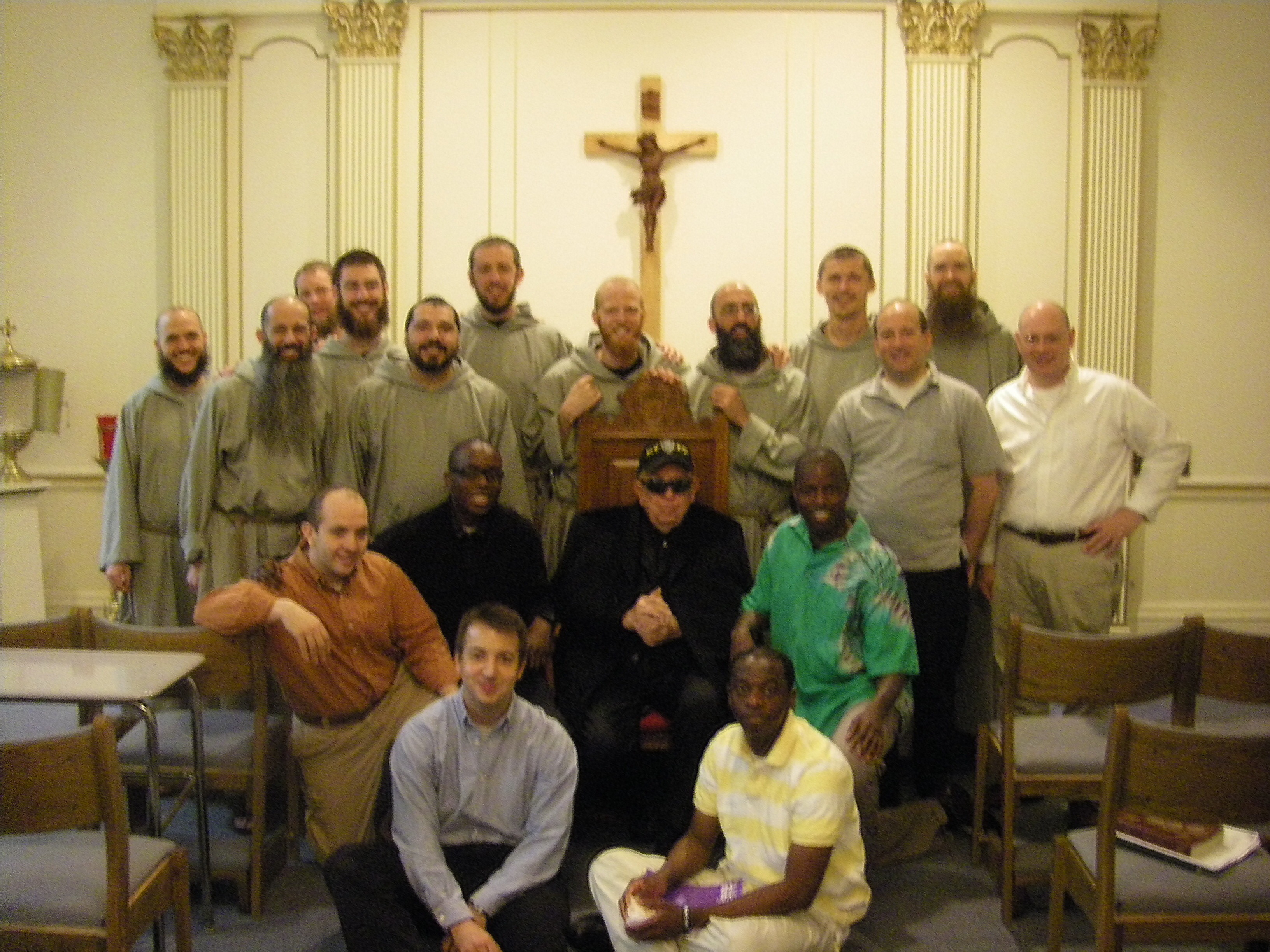
LAlbacete with SJS2 May 14 2010.jpgMonsignor Lorenzo Albacete was the retreat master for this year's annual spiritual exercises here at Saint Joseph's Seminary, Yonkers, NY. Here's a picture of some of the retreatants. Diocesan seminarians and the Franciscan Friars of the Renewal attended.

Monsignor Albacete is a priest of the Archdiocese of Washington and the ecclesial assistant for the Fraternity of Communion and Liberation in the United States of America.
Bookmark and Share
GT Walsh consecrating chalices2 May 14 2010.jpg

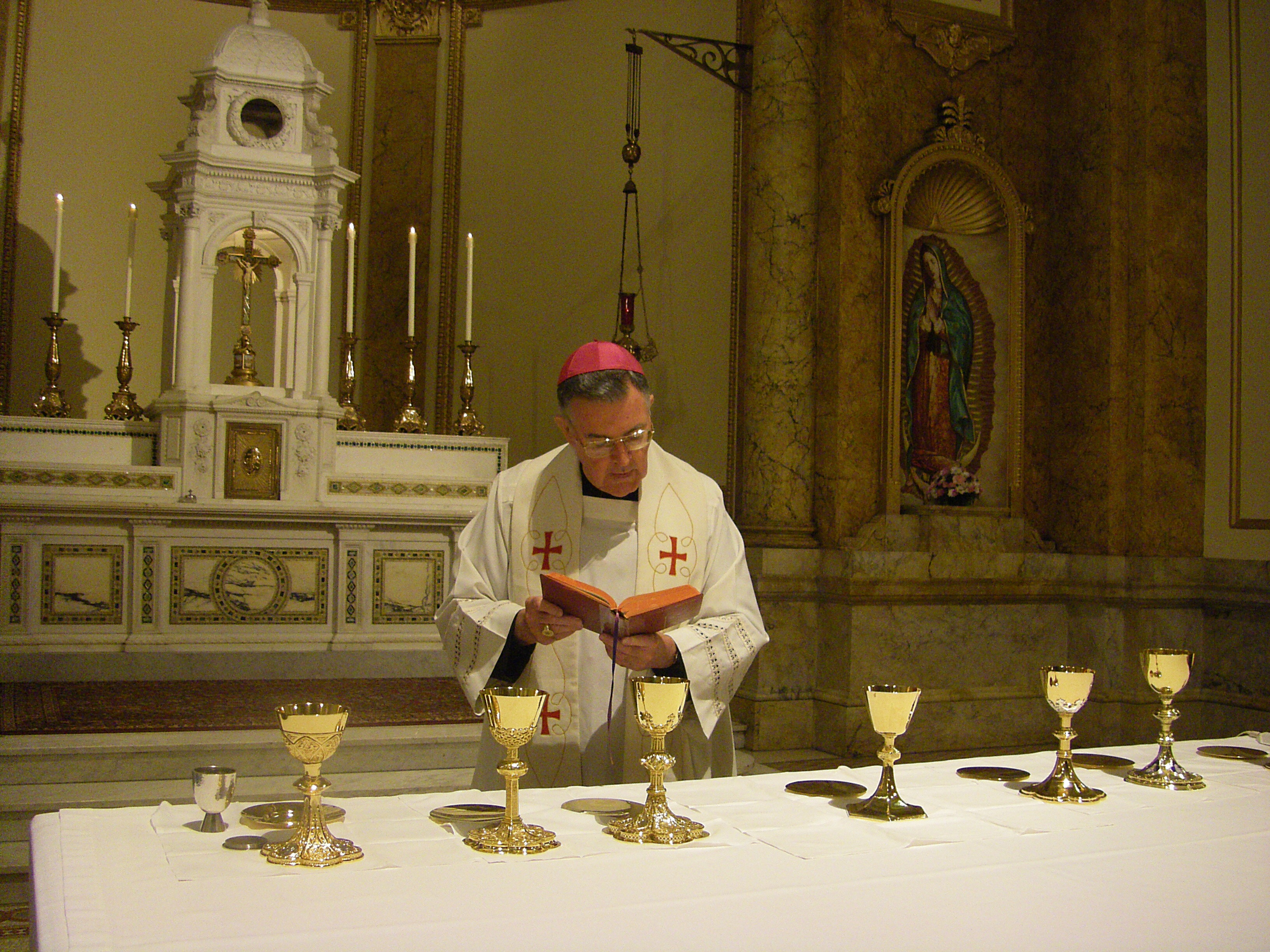
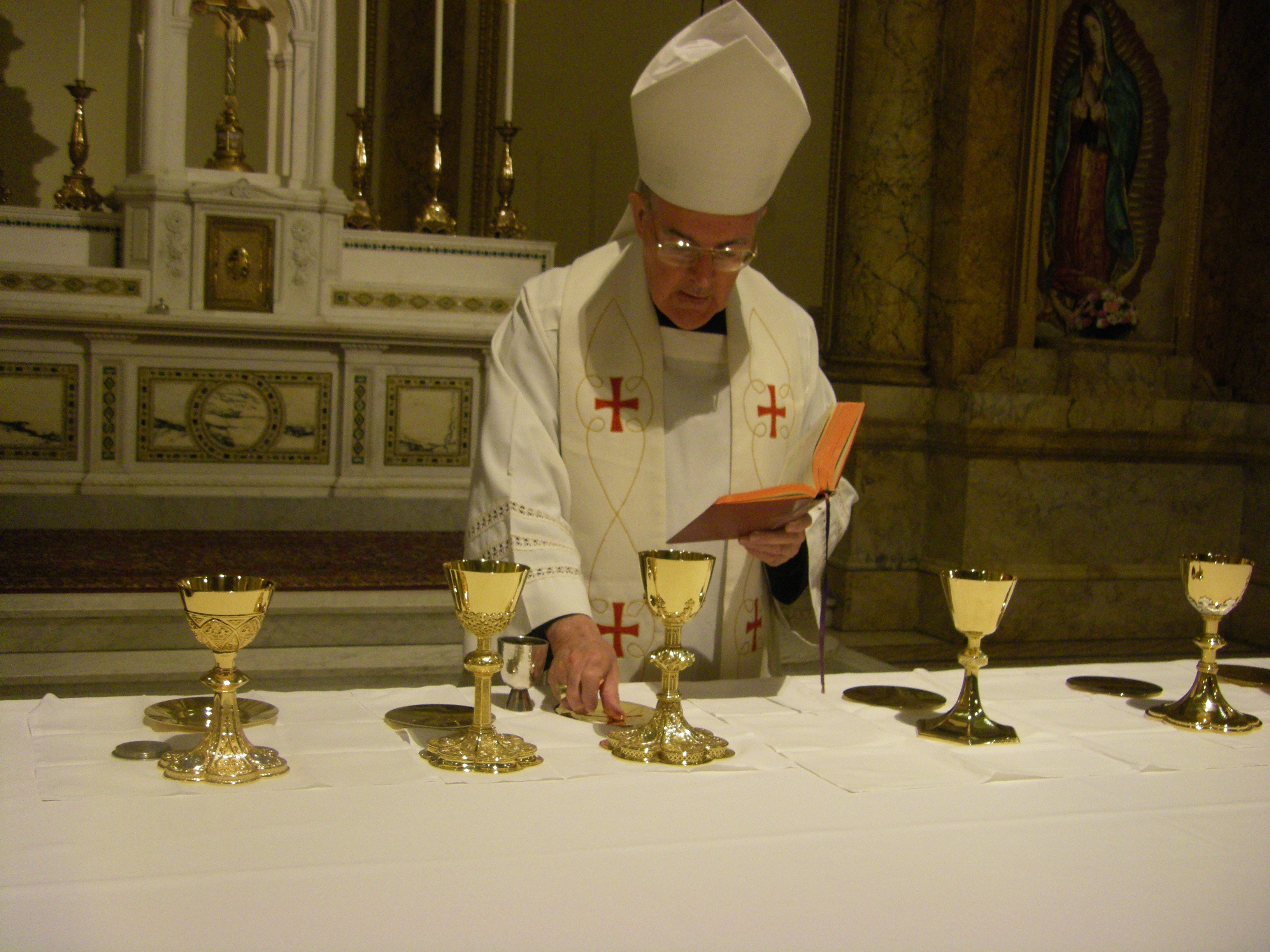
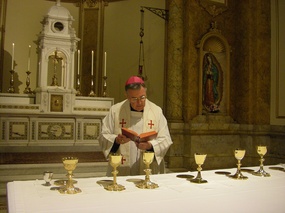
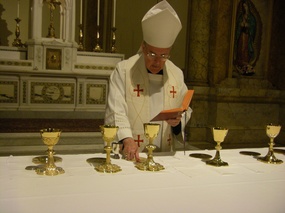
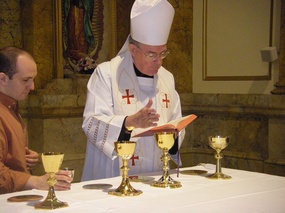
Today, following the last conference of our annual spiritual exercises, the Most Reverend Gerald T. Walsh, Rector of Saint Joseph's Seminary, consecrated seven patens and chalices of those to be ordained priests tomorrow. That today is also the feast of Saint Matthias, an apostle, what a great day to consecrate chalices and patens.

It is important to note that while a priest can be delegated to consecrate these sacred items used for divine worship, the bishop, standing in the place of Christ with the fullness of priesthood, is the visible sign of unity with the Roman Pontiff. Moreover, the bishop is the chief liturgist and administrator of the sacraments in the diocese with all ministry, whether presbyteral or diaconal, oriented toward him for the salvation of God's people. Hence, it is not merely a "nice" thing for the bishop to consecrate a priest's paten and chalice, it is essential that he do it (if not impeded by some serious event) because of the nature of what is being done: living the sacramentality given to us by Christ himself. Catholics do not presume to do things on their own but they live in communion with the bishop, in harmony and order.

According to preparatory note, this consecration is typically done by a bishop but may be delegated to a priest. The consecration may take place on any day. The following are prepared: holy chrism and whatever materials necessary for cleansing and wiping the chalice and paten as well as the bishop's hands. The chalice and paten should be placed on a table covered with a white-linen cloth or on the altar. It several chalices and patens are to be consecrated the bishop performs the anointings successively on each of them, but he says the orations only once and in the plural form. The bishop, standing and wearing the rochet, white stole, and gold-embroidered mitre, says:


Celebrant: Our help is in the name of the Lord.

All: Who made heaven and earth.

C: Let us pray, my dear brethren, that by the help of God's grace this paten may be consecrated and hallowed for the purpose of breaking over the body of our Lord Jesus Christ, who suffered death on the cross for the salvation of us all.

Removing his mitre, says:

C: The Lord be with you.

All: May He also be with you.

C: Let us pray.

Almighty everlasting God, who instituted the laws of sacrifice, and ordered among other things that the sprinkled wheaten flour should be carried to the altar on plates of gold and silver; be pleased to bless, hallow, + and consecrate this paten, destined for the administration of the Eucharist of Jesus Christ, your Son, who for our salvation and that of all mankind chose to immolate Himself on the gibbet of the cross to you, God the Father, with whom He lives and reigns, forever and ever.

All: Amen.

Having put the mitre on, the bishop dips the thumb of his right hand into the holy chrism, anoints the paten from rim to rim in the form of a cross, then rubs the holy chrism all over the upper side of the paten saying:
GT Walsh consecrating chalices May 14 2010.jpg

Lord God, may you deign to consecrate and to hallow this paten by this anointing and our blessing, + in Christ Jesus our Lord, who lives and reigns with you forever and ever.

All: Amen.

Then he proceeds to the blessing of the chalice saying:

Let us pray, my dear brethren, that our Lord and God, by His heavenly grace and inspiration, may hallow this chalice, about to be consecrated for use in His ministry, and that He may add the fullness of His divine favor to the consecration performed by us; through Christ our Lord.

All: Amen.

Removing his mitre, says:

C: The Lord be with you.

All: May He also be with you. 
GT Walsh consecrating chalices3 May 14 2010.jpg

C: Let us pray.

O Lord our God, be pleased to bless + this chalice, made by your devout people for your holy service. Bestow that same blessing which you bestowed on the hallowed chalice of your servant, Melchisedech. And what we cannot make worthy of your altars by our craft and metals, do you nonetheless make worthy by your blessing; through Christ our Lord.

All: Amen.

With the mitre on, the bishop dips the thumb of his right hand into the holy chrism and anoints each chalice on the inside from rim to rim in the form of a cross saying:

Lord God, may it please you to consecrate and to hallow this chalice by this anointing and our blessing, + in Christ Jesus our Lord, who lives and reigns with you forever and ever.

All: Amen.

Removing his mitre, says:

C: The Lord be with you.

All: May He also be with you.

C: Let us pray.

Almighty everlasting God, we beg you to impart to our hands the virtue of your blessing, so that by our blessing + this vessel and paten may be hallowed and become, by the grace of the Holy Spirit, a new sepulchre for the body and blood of our Lord Jesus Christ; through Christ our Lord.

All: Amen.

The hands are now cleansed.

This rite is taken from the Roman Pontifical of 1962. It was published in Philip T. Weller's 1964 The Roman Ritual: Complete Edition (the one volume). Thanks continuously goes to God for the fine work that Father Weller did for the Church is pulling together Roman Ritual in English.
Bookmark and Share
This week the seminarians of Saint Joseph Seminary are doing the spiritual exercises guided by Monsignor Lorenzo Albacete, a priest of the Archdiocese of Washington, DC, and the ecclesial assistant for the Fraternity of Communion and Liberation.

Time will be spent in prayer, silence, and fasting. Pray for us.
Bookmark and Share

Thanks be to God the Spring semester is finished with today's exams. The seminarians gathered for a brief cookout in the cloister with the professors and some guests. An overnight off from the seminary before the seminarians begin the annual week's retreat on Monday morning with Monsignor Lorenzo Albacete. Remember, a week from today is the priestly ordination for our 10 seminarians.

Keep us all in your prayers.

Bookmark and Share
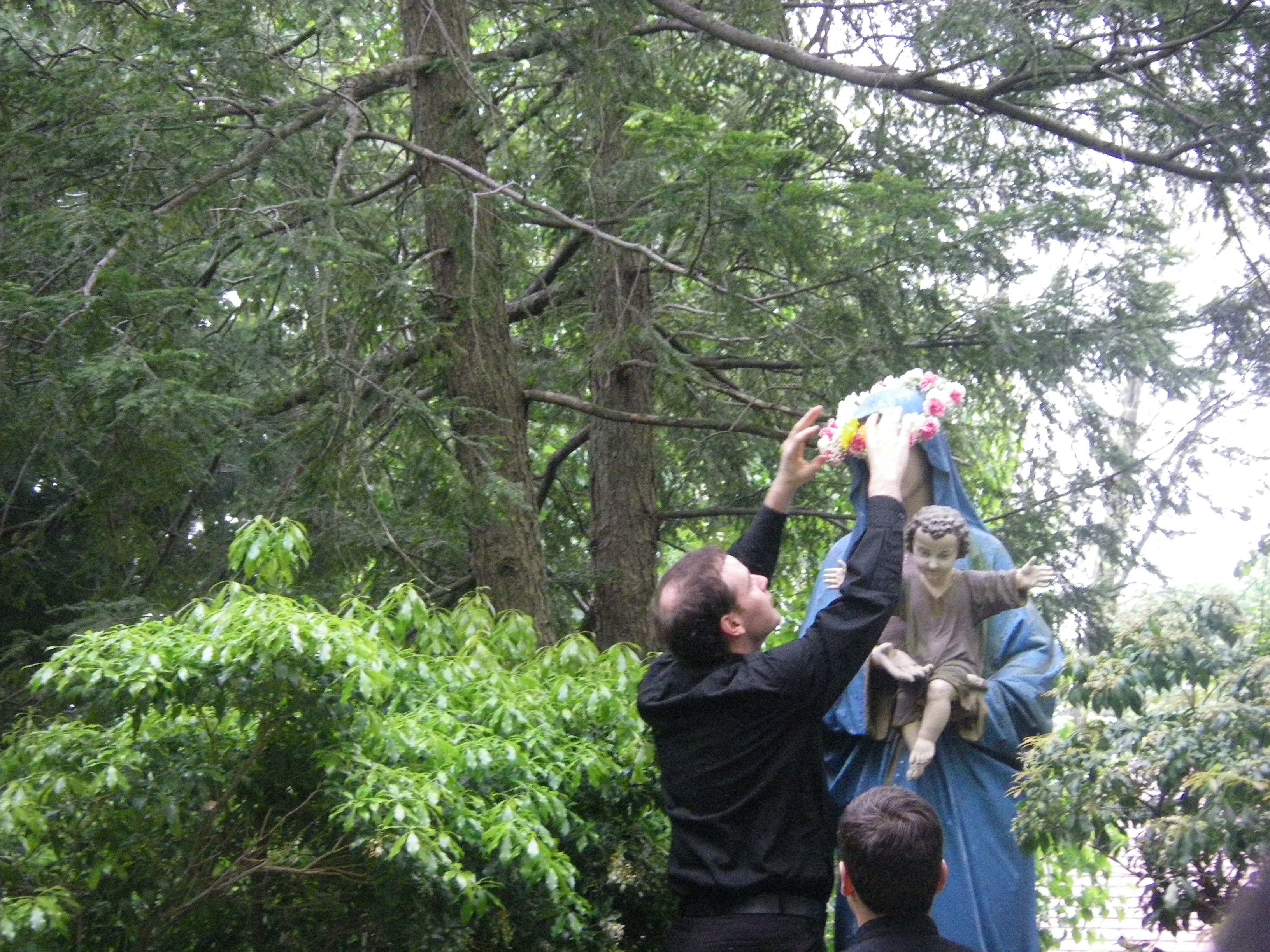
Fr Szivos blesses crown 2010.jpgThe practice of adorning the Blessed Mother's statue or icon developed as a pious custom of the people in their familiar surroundings. By the sixteenth century the coronation images of the Blessed Virgin Mary became widespread. While it is not as prevalent today, a ceremony of crowning of Mary continues to be a sincere yet profound spiritual and human gesture on the part of the faithful in front of Mary's beauty.

Something gestures of the past continue today and evoke great sentiment for holiness observed in such a great woman like Mary, Mother of God. I fondly recall when I was a student at Saint Stanislaus Church & School (New Haven, CT) the sisters of the Congregation of the Holy Family of Nazareth instilled in me and my fellow students a great love for the Blessed Virgin under the titles of the Immaculate Conception and Our Lady of Czestohowa by singing a daily hymn to Mary, frequently rosary praying, and the yearly May Crowning following the First Holy Communion Mass. Somewhere I have photos of Sister Rosetta training us in the third grade to execute the ritual correctly and piously. 

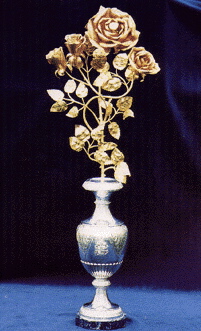
Golden Rose.jpg
Indeed, for a long time the popes --Pius XII, Paul VI, John Paul II and now Benedict XVI-- have endorsed this custom. What good Catholic can deny the extraordinary value of remaining close to Mary and showing a modicum of affection to her? As I bring my own mother flowers, so I bring my heavenly Mother flowers. This crowning of Blessed Mary is sign of our confidence in her spiritual motherhood. A fitting custom revived by the current Holy Father (something done by his predecessors) is the giving of the Golden Rose to a Marian Shrine he visits, showing his filial devotion.

The 1987 Marian Year provided an opportunity for the Church to strengthen a sincere devotion to Mary. What developed in the Marian year was a renewal of the venerable tradition of honoring images of Mary in homes, parish church, religious houses and seminaries with the promulgation of the Order of Crowning an Image of the Blessed Virgin Mary. The Order describes the Marian honor of crowning as follows:

Patric crowns BVM 2010.jpg
The queen symbol was attributed to Mary because she was a perfect follower of Christ, who is the absolute "crown" of creation. She is the Mother of the Son of God, who is the messianic King. Mary is the Mother of Christ, the Word Incarnate... "He will be great and will be called Son of the Most High; the Lord will give Him the throne of His father David; and He will reign over the house of Jacob forever; and of His kingdom there will be no end" (Lk 1:32-33). Elizabeth greeted the Blessed Virgin, pregnant with Jesus, as "the mother of my Lord" (Lk 1:41-43). Mary is the perfect follower of Christ. The maid of Nazareth consented to God's plan; she journeyed on the pilgrimage of faith; she listened to God's Word and kept it in her heart; she remained steadfastly in close union with her Son, all the way to the foot of the Cross; she persevered in prayer with the Church. Thus, in an eminent way she won the "crown of righteousness" (II Tim 4:8), the "crown of life" (Jas 1:12; Rev 2:10), the "crown of glory" (I Pet 5:4) that is promised to those who follow Christ. (Order of Crowning an Image of the Blessed Virgin Mary, NCCB, 1987)

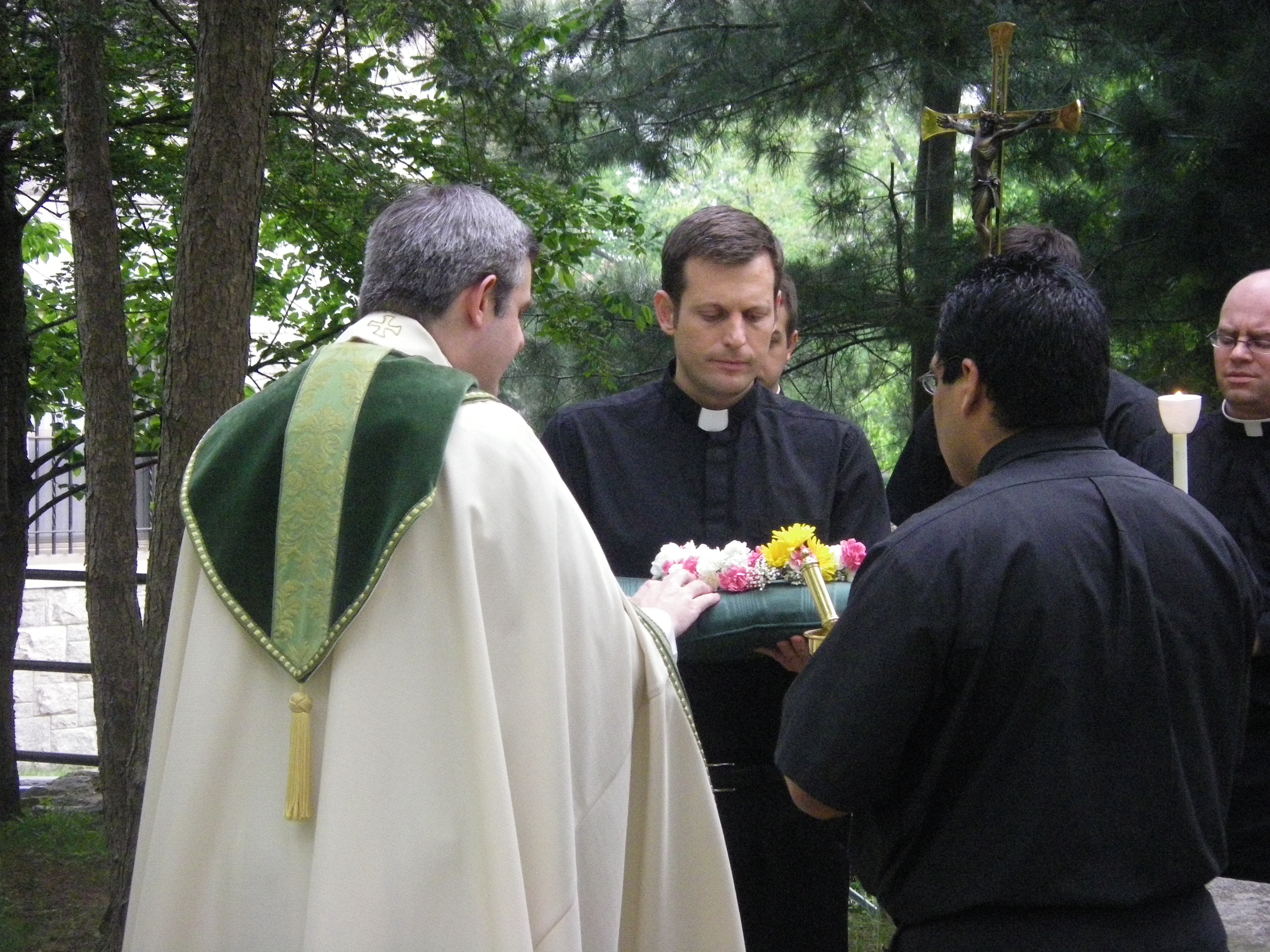
Following First Vespers for the Fifth Sunday of Easter last evening, the seminarians formed a procession to the grotto of Our Lady, Cause of Our Joy, to crown her with flowers. Saint Joseph Seminary is placed under the title of Mary, Cause of our joy and we invoke her solicitude frequently by this title. Father Charles Szivos, one of the seminary's spiritual directors, led us in the decades of the rosary pertaining to the Virgin, the Assumption and the Coronation of Mary before he blessed the crown of flowers and the statue.
Bookmark and Share

About the author

Paul A. Zalonski is from New Haven, CT. After years of study, work and trying to find meaning in life, he still has a sense of humor. He is a member of the Fraternity of Communion and Liberation, a Catholic lay ecclesial movement and an Oblate of Saint Benedict. Contact Paul at paulzalonski[at]yahoo.com.

Categories

Archives

Humanities Blog Directory

About this Archive

This page is a archive of entries in the PAZ with Sasnta and his helpers 2011.JPG category from May 2010.

PAZ with Sasnta and his helpers 2011.JPG: April 2010 is the previous archive.

PAZ with Sasnta and his helpers 2011.JPG: December 2010 is the next archive.

Find recent content on the main index or look in the archives to find all content.