Once a semester
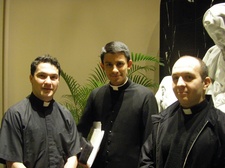
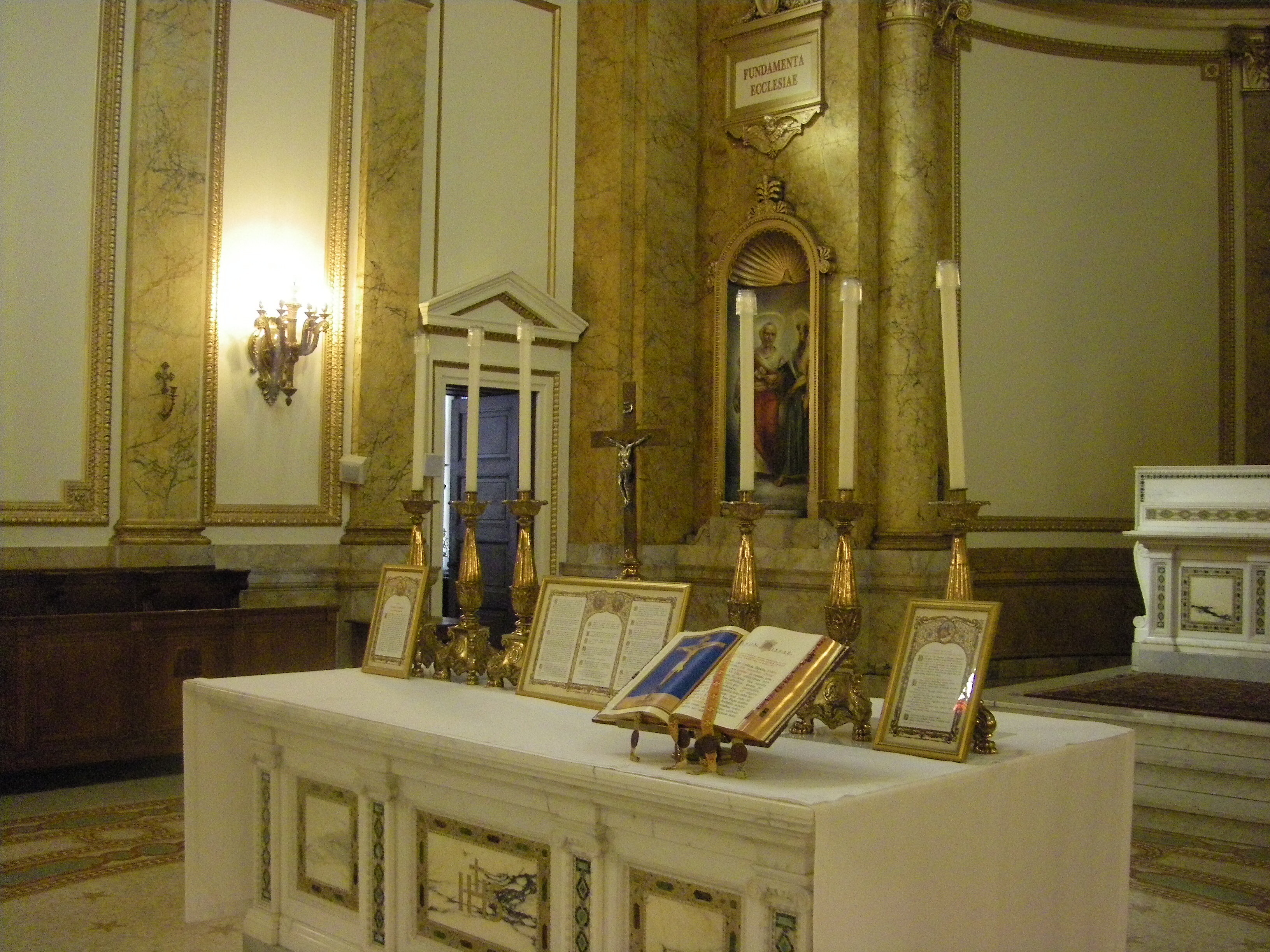
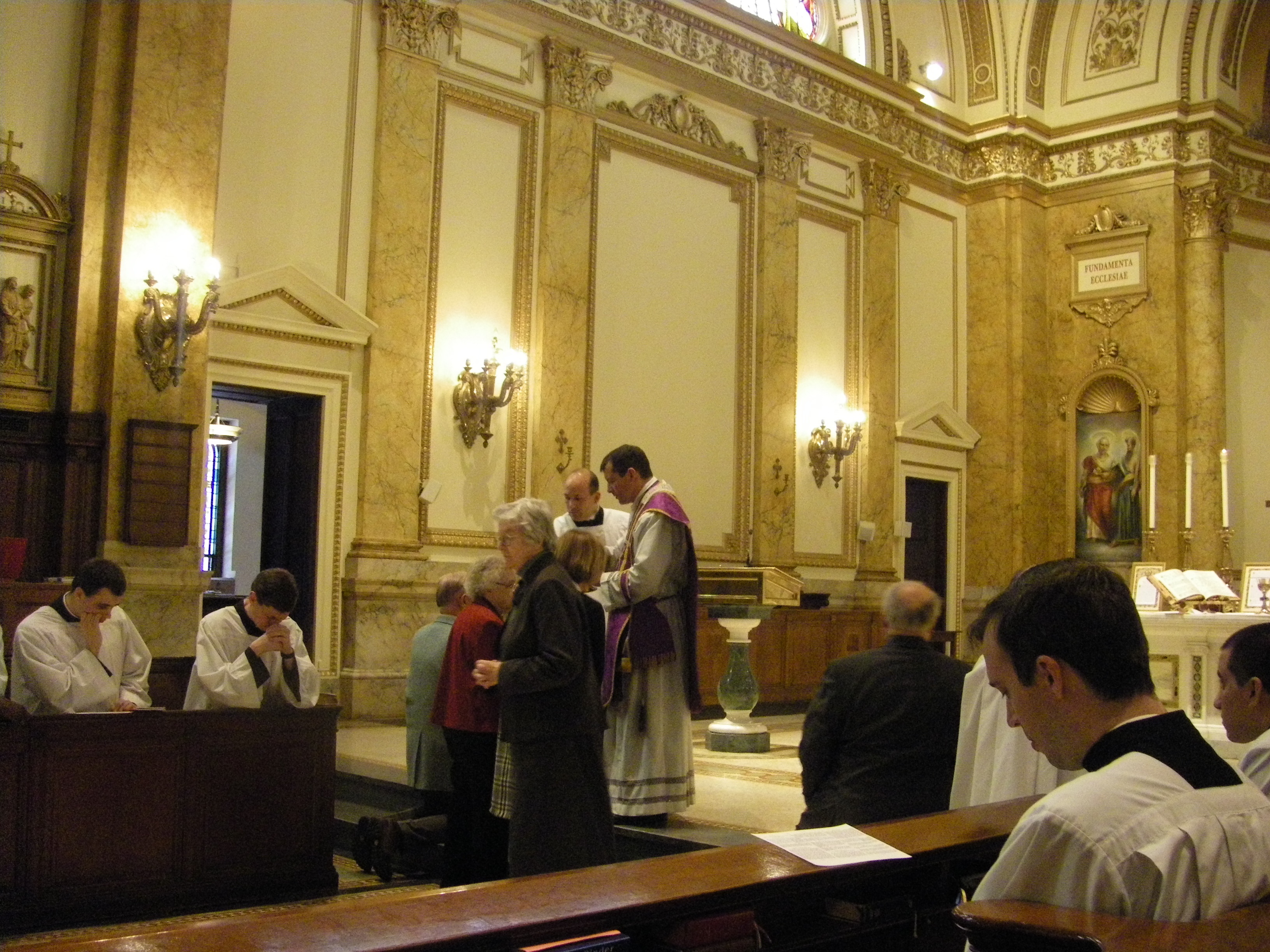
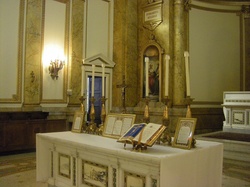
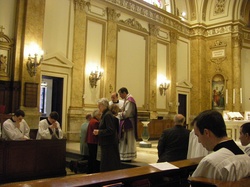
St Joseph's Seminary (Dunwoodie) schedules a Mass to be celebrated in the
Extraordinary Form, i.e., the Mass of Blessed John XXIII (also known as the
usus antiquior). The celebrant for Mass was the Reverend Father Greg J. Markey,
priest of the Diocese of Bridgeport, pastor of the Church of Saint Mary,
Norwalk, CT and the server was seminarian Ken Riello (who is knowledgeable in this Mass). Under Father Markey's leadership his parish celebrates a solemn
high Mass according to the Missal of Blessed John XXIII every Sunday and a low
Mass each Wednesday.
In his homily, Father Greg noted the concern for John 8 in
relation to Jesus' identity: Who are you?
Every Christian is faced with this question
every day. Who is Jesus? What difference does Jesus make for me?
How do I know who Jesus is? What criteria do I use to verify if Jesus is truly
the Son of God?
At Mass we attempt to answer these questions. It is at the
Sacrifice of the Mass that we hear the words of Scripture proclaimed, Eucharist
shared, hope expressed and love demonstrated. It is at Mass that faith, given
as a gift from God, helps us to know who Jesus is, in fact. Father Markey
recalled for us that Mass is the unbloody sacrifice of Christ done for the
atonement of our sins and it is our spiritual nourishment, the Bread of Life,
the Medicine for our immortality.
Using a brief moment for catechesis Father
Markey noted two (among many) distinguishing differences between the Ordinary
and the Extraordinary Forms of the Mass: the priest facing liturgical east (ad
orientem) and the use of Latin.
Far from creating barriers, the priest facing
east means that one is facing God; he leads people to salvation. It is not, as Markey
noted, meant to be interpreted as an example of clerical hierarchy. Quite the
opposite, this gesture lessens the clericalized culture of some priests and
laity today. The gesture of the priest facing liturgical east is as ancient as
belief itself is. In fact, Christians retained this gesture until after Vatican
II when the Liturgy was re-oriented. Theologically, the eastward position of
the priest together with the laity, is an act of receiving and offering of bread
and wine to be transformed into the Body and Blood of Christ by the work of the
Holy Spirit.
The use of the Latin language is not very persuasive for many
people. That the Church retains Latin for the Missal of Blessed John XXIII is
likely to be more neuralgic than the priest facing God. People are familiar now
with English but the Church, at this time, uses Latin in the Liturgy as a
sacred language much in the same way as Jews use Hebrew and Muslims use Arabic.
A sacred language like Latin is not impossible to learn nor is completely
foreign to those who speak a romance language. And like everything in life, one
can learn the grammar and the vocabulary.
At various times Cardinal Ratzinger-now-Pope Benedict XVI has argued for a "hermeneutic of continuity" in assessing
the work of the Second Vatican Council. This approach to the Council is an
interpretation that understands its implementation rooted in the living, breathing and beautiful Tradition of
the Church. As the Pope stated in Summorum pontificum, "In more recent
times, the Second Vatican Council expressed a desire that the respectful
reverence due to divine worship should be renewed and adapted to the needs of
our time. Moved by this desire our predecessor, the Supreme Pontiff Paul VI,
approved, in 1970, reformed and partly renewed liturgical books for the Latin
Church. These, translated into the various languages of the world, were
willingly accepted by bishops, priests and faithful. John Paul II amended the
third typical edition of the Roman Missal. Thus Roman Pontiffs have operated to
ensure that "this kind of liturgical edifice ... should again appear
resplendent for its dignity and harmony." Hence, one can say we certainty
that Pope Benedict's contention is that any essential break or discontinuity
with the Church's doctrine would be contrary to the intentions of Pope John
XXIII and the Council Fathers, and therefore contrary to the Faith.
In 2007,
Pope Benedict made the Traditional Latin Mass (what he calls the Extraordinary
Form of the Roman Rite) acceptable in the main stream Catholic Church no doubt
one of the most dramatic papal initiatives since the Second Vatican
Council. Pope Benedict is convinced that the Mass according to the Missal
of 1962 contains an enduring beauty as well as the capacity of restoring
authentic Catholic worship. The Holy Father tells us, "I am convinced
that the crisis in the Church that we are experiencing today is, to a large
extent, due to the disintegration of the liturgy."
While this form of the Mass
ought to be regularly celebrated in parishes, following the mind of Pope
Benedict, the need for proper formation of the higher and lower clergy is a
non-negotiable as well as a thorough catechesis of the faithful. The grammar of
the "old Mass" is lost on some people given the "normative" experience of the
Mass is that of the Missal of Paul VI (and even there a bit of reformation
needs to be accomplished, too). Our Seminary chooses to make Blessed John
XXIII's missal available once a semester, at this time, for which we are
grateful. But it needs to be said that to date, there is neither conversation
nor formation on the place of both forms of the Mass in Church and how they
work in the lex orandi tradition. Questions of calendars, ritual, language,
lectionary, devotions, sacraments, discipline, etc all need to be dealt with.
There are some here who argue that the Pope is turning back the clock on the
"progress of Vatican II" by allowing "this Mass" to be done and stand therefore
in the way of any meaningful education. One may have to ask the question: what progress is Vatican II about and how do know when we make progress? "Shrill" is not the posture we need in
priestly formation. What better way to learn one way of praying the Mass than
praying in another? Surely organic development means something in studying,
praying and living the Liturgy, no?
The motu proprio Summorum pontificum
Pope Benedict's
letter to bishops regarding Summorum pontificum.
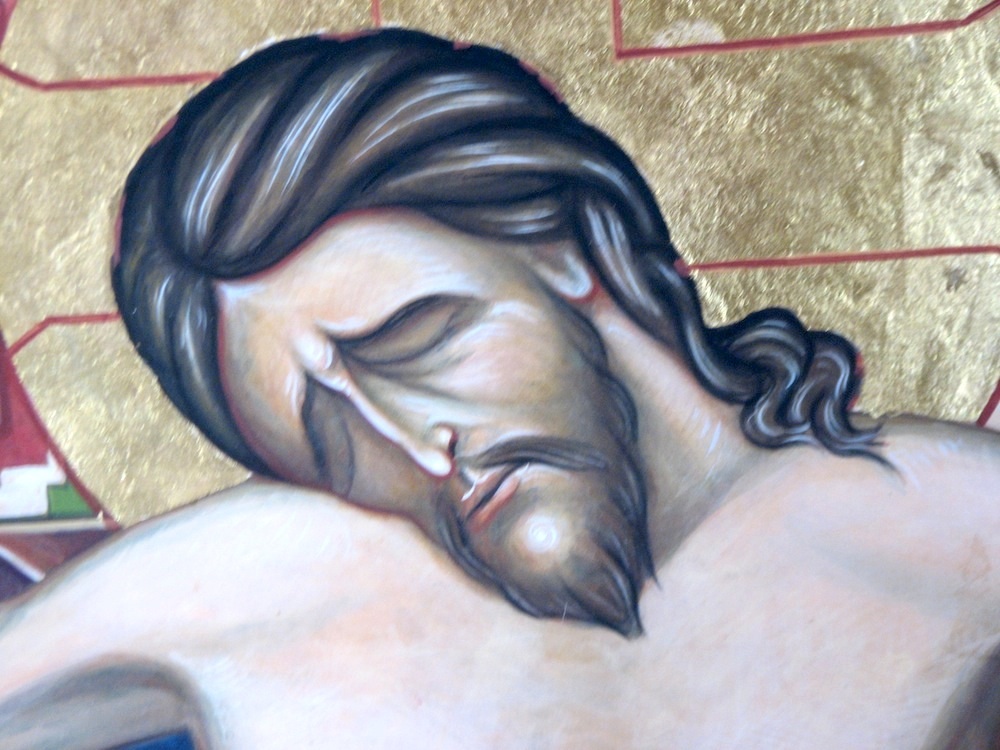 The Most Reverend Gerald T. Walsh, Rector of St Joseph's Seminary (Dunwoodie), Yonkers, NY, invites you to attend the various services during Holy Week.